



In January 1649, a stunned crowd gathered outside Whitehall to witness the unthinkable: a king stepping onto a scaffold. Moments later, Charles I was dead – tried and executed by his own subjects. For the first time in its history, England was without a monarch.
What followed was the most radical political experiment in British history. The House of Lords was abolished, the monarchy swept away, and the British Isles were declared a republic. Yet, within just 11 years, the monarchy was restored with exuberant celebration.
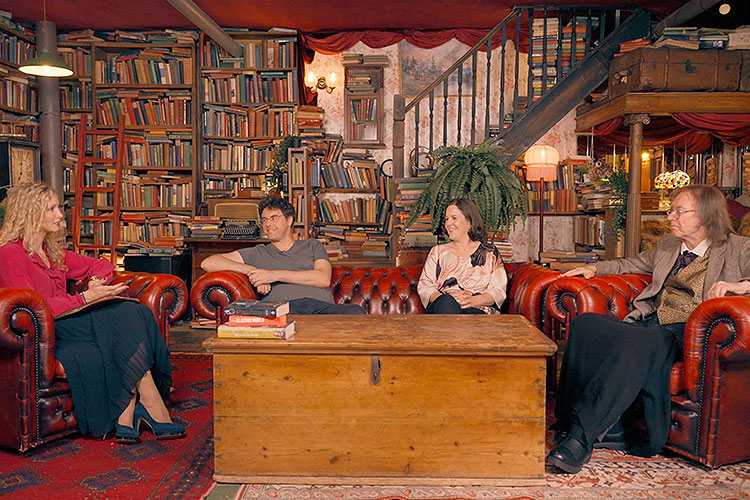
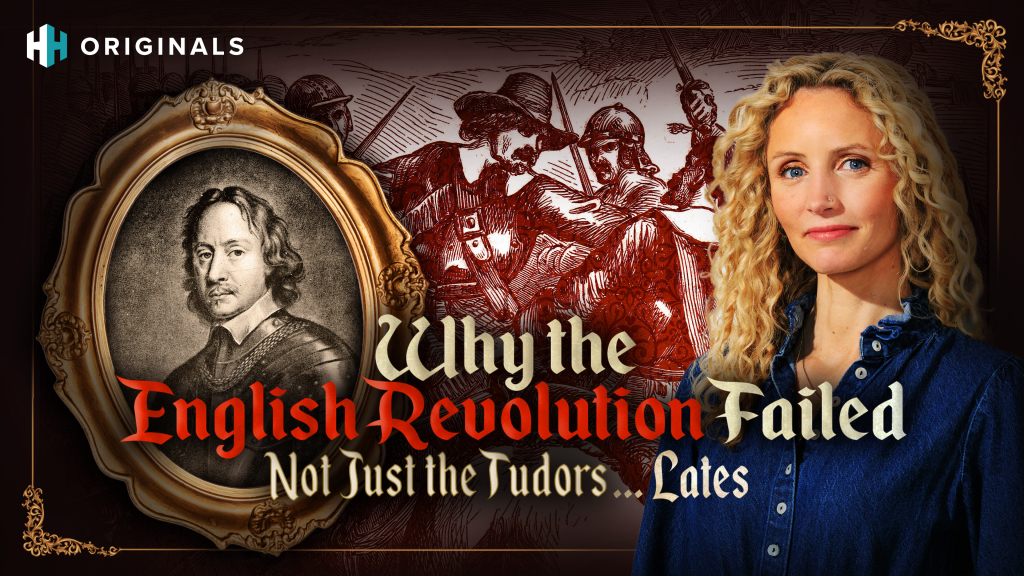
In a special panel edition of Not Just The Tudors…Lates – Why the English Revolution Failed, Professor Suzannah Lipscomb sits down with leading historians Dr Jonathan Healey, Dr Miranda Malins, and Professor Ronald Hutton to unpick the decade of the “Interregnum.” Together, they ask: was the English Republic doomed from the start, or was it a missed opportunity that changed the world?
 Watch Now
A republic born of a coup
The panel begins by addressing how unlike modern revolutions driven by popular uprisings, England’s republic was established via a military coup d’état.
“The execution of King Charles I wasn’t what the majority of Parliamentarians wanted,” explains Dr Miranda Malins. “There was no plan to wheel out in January 1649. The regime was a hasty fudge that spent the next decade desperately trying to retrospectively legitimise itself.”
Professor Ronald Hutton adds that the British public never quite forgave the Republic for its origins. To maintain power, the regime required a standing army, which meant heavy taxes. The people were effectively being asked to pay for a military force to prop up a government they didn’t ask for – creating a recipe for instability.
The tyranny of the “free state”
The republic was justified through providence – the idea that God had granted the New Model Army victory – and the sovereignty of the people. However, the leadership never actually trusted the people.
“The tension at the heart of the republic,” says Hutton,“is that its establishment is justified in terms of the will and sovereignty of the people but at no point do those in charge feel able to trust the people to validate their power”. This was not a modern democracy; the franchise was restricted, and the government quickly turned on its most radical supporters, such as the Levellers, who called for genuine legal equality and religious freedom.
By removing the King but leaving the social order (and the wealth of the gentry) intact, the Republic failed to provide the infrastructure for a truly new kind of politics.

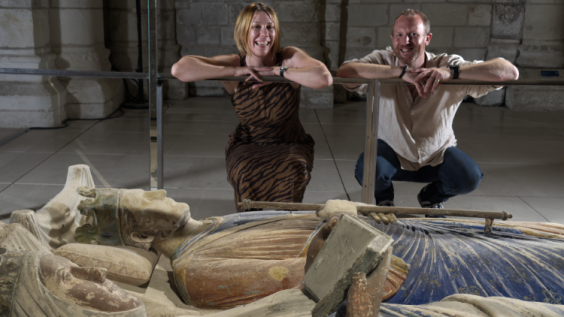
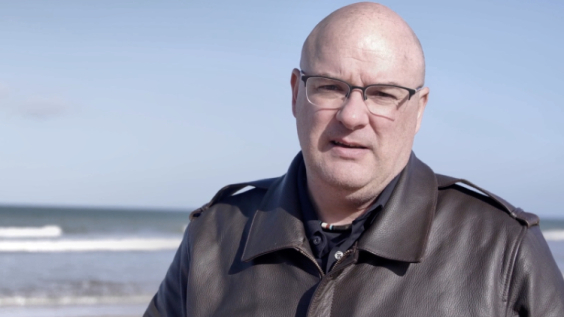
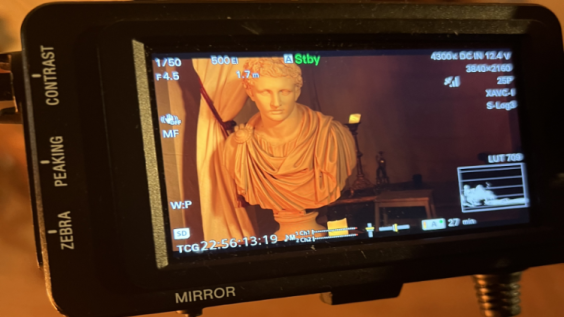
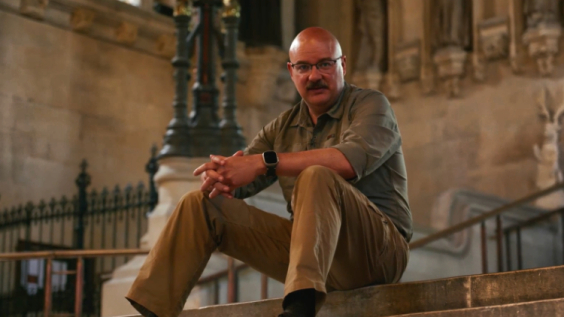
Production shots from filming
Image Credit: History Hit
An imperial project: conquering the archipelago
One of the most significant – and brutal – achievements of the Republic was the forced unification of the British Isles.
“In 1649, the English unilaterally decided to kill a British monarch,” says Malins, setting off a chain reaction across Ireland and Scotland. Under Oliver Cromwell, the Republic embarked on a “metropole” project, imposing English republicanism at the point of a sword.
The campaign in Ireland was particularly devastating, resulting in the loss of an estimated 20% of the population according to Jonathan. Professor Hutton argues that the trauma of this period established a Protestant supremacy that would define Irish history until the 20th century. “In many ways, from the Irish point of view, the damage is still there,” he remarks. “The bloodshed in my lifetime can be traced directly to those events.”
The rise and fall of the Protector
By 1653, the experiment shifted. Frustrated by a stagnant Parliament, Cromwell famously cleared the house by force on 20 April, eventually becoming Lord Protector of the Commonwealth of England, Scotland, and Ireland on 16 December 1653.
Was this a return to monarchy in all but name? Jonathan points out that for a lot of people there was an irony as because the Protectorship was unprecedented, that for them meant that the power of the Protector was potentially unlimited.
Yet Miranda Malins suggests that while Cromwell acted like a monarch – issuing over 80 ordinances in his first few months – he was trapped. The regime reforms were “not radical enough for the radicals, it’s too monarchical, but equally it’s not legitimately monarchical and royal enough for the royalists, and so he can’t really please anybody”.
When Cromwell died in September 1658, the lack of a clear succession plan proved fatal. His son, Richard Cromwell, was a “country gentleman” who lacked his father’s military clout. Without Oliver’s ability to balance the competing factions of the army and Parliament, the house of cards collapsed into chaos, with Charles II the beneficiary of this.

Oliver Cromwell by Samuel Cooper
Image Credit: After Samuel Cooper, Public domain, via Wikimedia Commons
Failure or “unfinished business”?
If the Republic lasted only 11 years, can we call it a success?
Jonathan Healey jokes that it “did alright to last as long as it did,” but the panel agrees the legacy is profound. The Interregnum prevented a “healing” that might have occurred under a more conservative settlement, allowing a diversity of Protestant opinion to flourish that could never again be suppressed.
“We’ve been, in many ways, a two-party system ever since,” Hutton observes, “where Cavalier and Roundhead turned into Whig and Tory” and down through the centuries. The dynamic of ‘stabilised disagreement’ that defines British politics today was born in this short-lived republic, he argues.
So why is this period often ignored in our national story? The panel suggests a ‘state-sponsored amnesia’ began with Charles II, who promised a general amnesty and encouraged people to forget previous conflicts, and made it illegal to threaten the King’s life or to advocate for the return of a republic. We prefer the neat narrative of kings and queens over the “back alley” of a failed commonwealth.
As Ronald Hutton concludes, the republic was not ultimately a failure because “it’s a prelude to the victory of democracy and toleration in the 1680s, and everything that is good about us follows from that …the republic is not so much a failure as unfinished business.”