




When we think of Ancient Egypt, our minds conjure images of colossal pyramids, golden sarcophagi, and the towering figures of pharaohs like Rameses. But what laid the foundation for history’s most iconic civilisation?
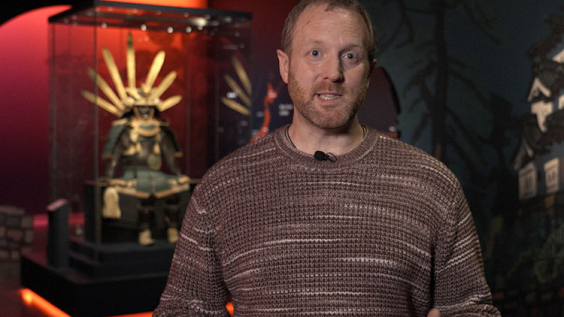
In the sixth and final episode of History Hit’s series exploring the remarkable collections of the Ashmolean Museum in Oxford, presenter Dan Snow joins Dr Liam McNamara, Keeper of Antiquities, to journey into Egypt’s distant past – long before the pyramids in The Ashmolean Up Close: Origins of Ancient Egypt. Through extraordinary artefacts from the Predynastic period (c. 4,000–3,100 BC), they uncover how early beliefs, artistry, and power structures along the Nile laid the essential foundations for the world we recognise as Ancient Egypt.
 Watch Now
The early Nile: chaos and control
Over 6,000 years ago, Egypt was divided between the fertile Lower Egypt in the north and the arid Upper Egypt in the south. Yet, even in these scattered agricultural communities, a powerful culture was already forming. Regional chieftains were emerging as centralised rulers, laying the groundwork for future dynasties.
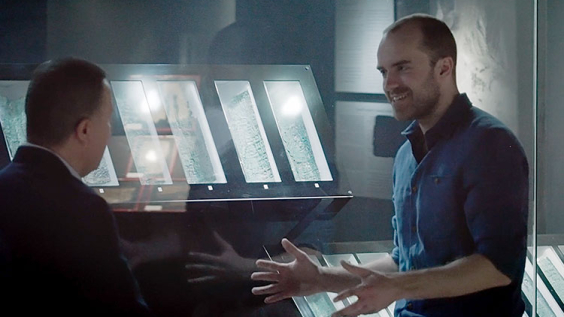
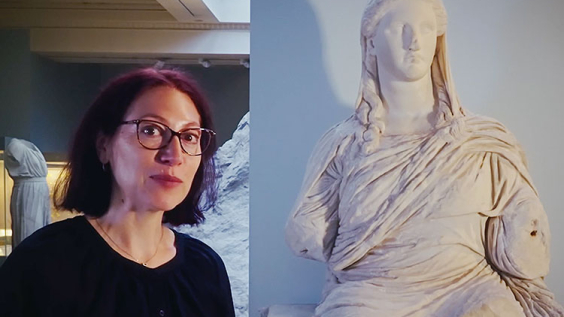
While the Ashmolean’s collection features fascinating grand pieces from this era like the large limestone statue of the Ancient Egyptian fertility god Min (c. 3,300 BC), the greatest insights into the world these early gods and rulers emerged from come from smaller, finely crafted objects. In the documentary, Dan is granted special access to rare collection items dating from 3,600 BC onwards – objects that were already considered ancient by the time of the great pharaohs.
Dan is shown a realistic pottery hippo as well as a model of a carved scorpion – objects that were symbols of power, reflecting the early Egyptians’ attempts to control chaos and dominate the natural landscape.
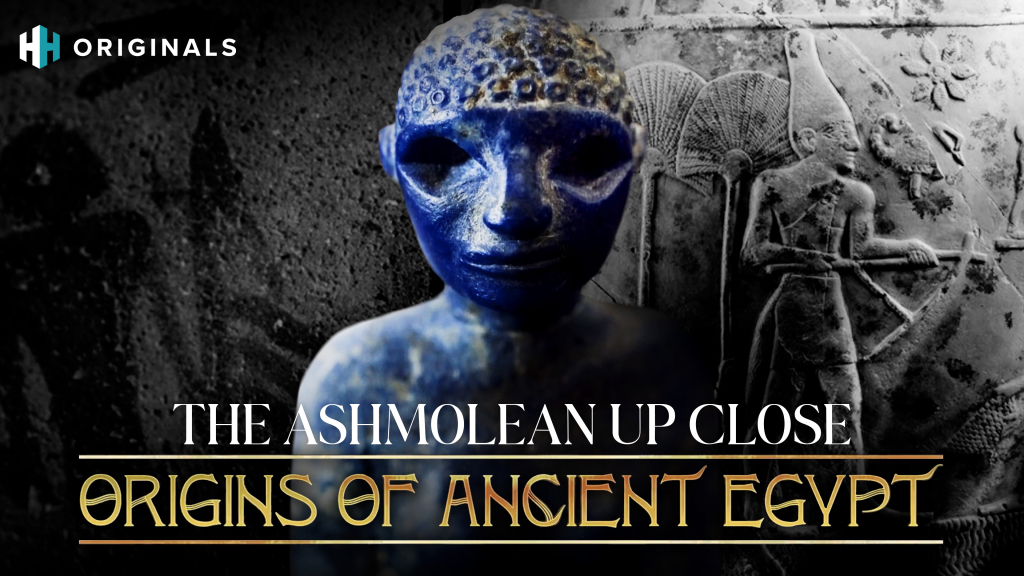
Status was also shown through the materials such objects were made from, highlighting the surprising far-reaching trade connections across the ancient world. Dan examines a small blue figurine made from Lapis lazuli, a material whose nearest source was Badakhshan in Afghanistan. This highlights the surprising, far-reaching trade connections across the ancient world long before the height of the New Kingdom.
Other objects, such as a ceremonial palette (a common item in high-status burials), were often carved and decorated with images associated with the rulers’ burgeoning power and prestige, including mythical creatures.

Dan Snow talks to Dr Liam MacNamara about the statue of the Ancient Egyptian fertility god, Min.
Image Credit: History Hit
King Scorpion’s colossal macehead
One of the Ashmolean’s most remarkable objects offers a rare glimpse into the emergence of Egypt’s earliest rulers and the first steps towards unification: a colossal macehead. Although maceheads were originally weapons, this stunning limestone fragment, discovered in Hierakonpolis (the capital of Upper Egypt), is thought to have been created solely for ceremonial purposes as a symbol of authority.
Liam explains to Dan that this colossal macehead belonged to ‘King Scorpion’ – an actual name, not a nickname. The ruler is pictured in the centre, deliberately shown on a much larger scale than all other figures, establishing his absolute authority.
Dan notes the striking familiarity of the image that looks very much like the depictions of Pharaohs such as Rameses, despite the fact this mace head was made way before the Pharaoh period. King Scorpion is wearing the white crown of Upper Egypt and the traditional royal costume, including a bull’s tail hanging behind his leg – a symbol of power and virility that persisted for millennia.
Unlike later pharaohs often depicted taking on military enemies, King Scorpion is shown holding a pick, seemingly breaking open an irrigation canal he is standing upon. Liam clarifies that the idea of controlling the annual inundation of the Nile was a vital royal prerogative, demonstrating that the ‘enemy’ here was the natural world, ensuring abundance for his people.
Despite living hundreds of years before the First Dynasty, Dan notes how the depiction of King Scorpion looks “like a Pharaoh in all but name.” Liam agrees, noting that he’s wearing exactly the same crown and costume as Rameses would thousands of years later – showing an extraordinary continuity that proves kingship was already fully formed in the Predynastic period, with King Scorpion being one of the earliest kings of Egypt.

Close-up of King Scorpion’s macehead, showing the image of him in a similar way to the Pharaohs, and with hanging birds visible near the top, denoting ‘subject people’.
Image Credit: History Hit
The dawn of empire
The macehead holds further clues about the formation of the Egyptian state, including a row of little lapwing birds hanging from their necks at the top of the mace head. Liam explains that these birds in later hieroglyphs write the word for ‘subject people’. Since the King is wearing the crown of Upper Egypt (the South), these birds likely represent regions he has conquered.
Furthermore, Egyptologists speculate that the missing side of the macehead may have shown King Scorpion wearing the red crown of Lower Egypt. Dan notes that this would show “pretty much all of Egypt brought under one sovereign,” confirming the theory that this object may document the initial unification of Upper and Lower Egypt, suggesting King Scorpion might have been the Alfred the Great or Charlemagne of Ancient Egypt – the singular figure who brought together the disparate territories under one banner.
Nevertheless, as Liam points out, while “King Scorpion was clearly a very high status ruler, it’s important to know that there’s a long history of development before this.”
This pivotal moment marks the transformation into the Egypt we recognise, hundreds of years before the first dynasty or pyramid stood. “Long before the infamous Ancient Egypt of Pharaohs and pyramids, early communities along the Nile were laying the foundations of one of history’s most enduring cultures,” concludes Dan. “These objects in the Ashmolean’s collection capture a pivotal moment, the dawn of kingship, the roots of belief, and the early unification of a land that would one day become legendary.”