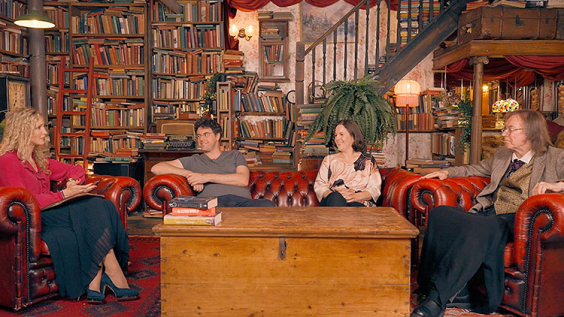




Imagine a single small town where the “shot heard ’round the world” sparked a military revolution – followed decades later by a literary one. Concord, Massachusetts, is not just a scenic New England village; it is the cradle of the American mind. In History Hit’s special seasonal film, Big Stories from a Small Town: The Real Lives Behind Little Women and Walden, Dan Snow explores the extraordinary heritage of this remarkable town that nurtured a cluster of great American writers and thinkers, particularly in the 19th century, including literary giants like Louisa May Alcott and Henry David Thoreau.
In an age of rapid industrialisation, these thinkers turned inward – engaging with the era’s most pressing questions around female independence, civil liberties, and harmony with nature. Dan discovers the special places where their famous words were penned, which collectively helped shape the American identity – themes of the past that still inspire today.
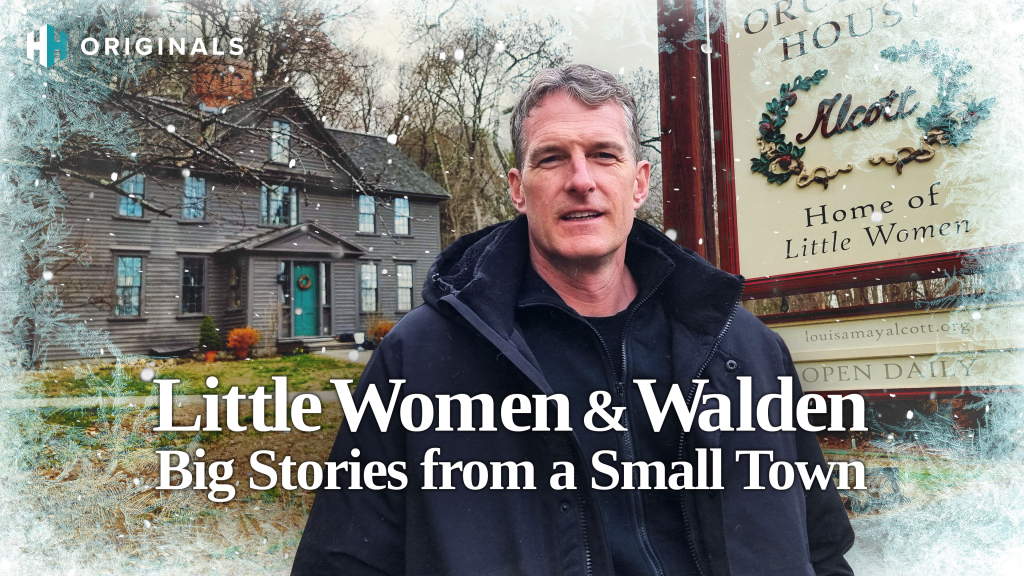 Watch Now
Inside Orchard House: the heart of ‘Little Women’
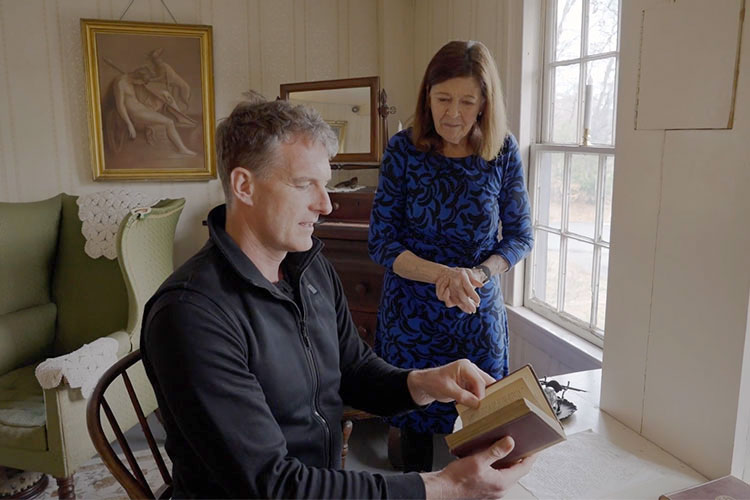
Dan’s journey begins at Orchard House, the weathered brown home where Louisa May Alcott lived with her parents and sisters in 1858. Here, he sits at the simple semi-circular desk where Louisa May wrote her compelling, quintessential American coming-of-age story: ‘Little Women’.
While the March sisters of fiction are beloved worldwide, the reality of the Alcott family was even more compelling. Guided by Executive Director Jan Turnquist, Dan gets a personal insight into Orchard House where he explores rooms preserved in time and filled with original intimate artefacts that reveal insights into the family’s life. Some of these include a whimsical hidden inkwell within an owl’s head (reflecting Louisa’s personal tastes), and the poignant keyboard belonging to Lizzie Alcott (the sister immortalised as the gentle, tragic Beth). Even the walls tell a story, adorned with the original sketches and paintings of the youngest sister, May.

Owl inkwell given to Louisa May Alcott
Image Credit: History Hit
Orchard House served as the model for the March family home in ‘Little Women’, a novel that famously champions a household fuelled by love, creativity and tireless endeavour. At the centre of this world, Louisa placed a character mirroring herself: Jo March, the quintessential image of a strong-willed, independent, and creative young woman.
In the film, Jan explains to Dan how the real Alcotts were radical egalitarians. In an era defined by rigid social hierarchies, they held a steadfast belief in the absolute equality of all people, regardless of gender or race. This revolutionary spirit led Louisa’s father, Bronson, to found the Concord School of Philosophy, one of America’s first adult education programs, hosted right in the family living room.
Concord’s radical spirit
Concord’s reputation for independent thinking was forged long before the Alcotts arrived. In 1775, at the Old North Bridge, local militia faced British troops in the opening clash of the Revolutionary War – the “shot heard ’round the world.”
By the mid-19th century, that spirit had evolved into the Abolitionist Movement. The Alcotts didn’t just talk about freedom; they lived it. While residing at Hillside (now known as The Wayside), the family operated as a secret safehouse for the Underground Railroad, sheltering those escaping slavery on their perilous journey toward Canada.
Ellen Garrison: A civil rights pioneer
Concord was more than a literary hub; it was a sanctuary where previously enslaved people could find both community and a voice. Outside the historic Robbins House, Dan meets museum president Nikki Turpin to uncover the legacy of Ellen Garrison, an African American educator whose fight for equality predated the modern Civil Rights Movement by a century.
Growing up in the Concord School District, Ellen was a brilliant student, yet was not immune to the sting of prejudice. Aged 12, she was nearly forced out of a local town parade, only for a white friend to grab her hand so they could walk together in a defiant display of racial harmony, realised long before Martin Luther King Jr’s “dream” was ever spoken.
In 1866, Ellen took her activism to the national stage. Testing the new Civil Rights Act, she took a seat in a “whites-only” waiting area at a Baltimore train station. Decades before Rosa Parks refused to give up her seat, Ellen was forcibly removed for daring to claim her legal rights. Her story, preserved at the Robbins House, serves as a powerful reminder that Concord’s literary greatness was inextricably linked to its moral courage.
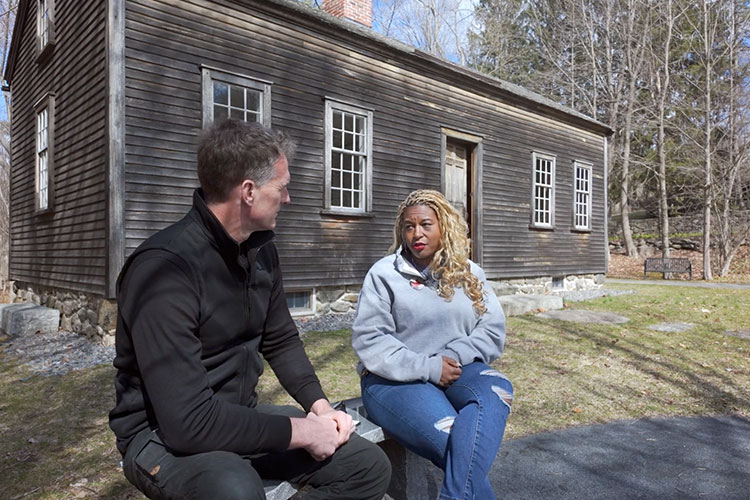
Dan meets with the Robbins House museum’s president Nikki Turpin outside Ellen Garrison’s house.
Living deliberately
No pilgrimage to Concord is complete without a visit to the tranquil shores of Walden Pond. In 1845, a 27-year-old Harvard graduate named Henry David Thoreau embarked on a radical experiment in self-reliance, moving into the woods to “live deliberately” and strip life down to its barest essentials.
Dan visits a precise replica of Thoreau’s 10-by-15-foot cabin. Contrary to the myth of the lonely hermit, Thoreau famously enjoyed “solitude but not isolation.” With the railroad only 300 yards away and a steady stream of visitors (including the Alcott family), Thoreau’s retreat was less about escaping society and more about finding a new way to inhabit it. Over the course of 2 years, 2 months, and 2 days, he observed the natural world with a unique blend of scientific precision and spiritual awe.
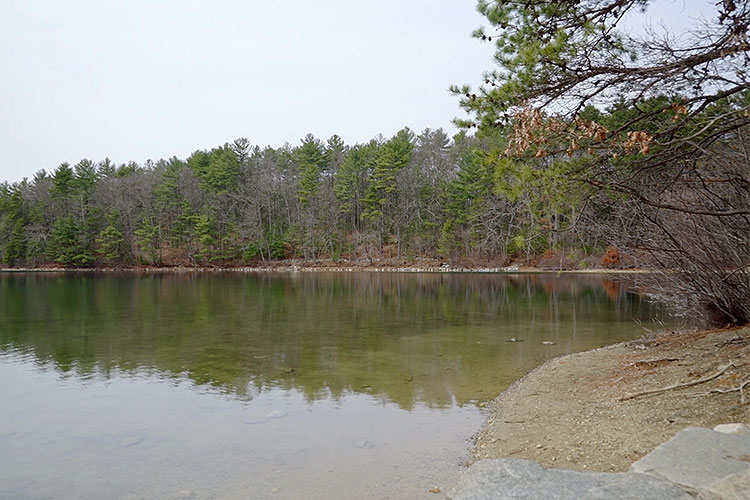
Walden Pond, Concord
Image Credit: History Hit
His masterpiece, ‘Walden, Or Life In The Woods’, wasn’t just a book about trees; it was a manifesto for the individual soul. Dan speaks with local expert Richard Smith to learn how Thoreau’s nature excursions with a young Louisa May Alcott provided her with the sense of escape and independence she so deeply craved. To truly step into Thoreau’s world, Dan even takes a bracing, chilly dip in Walden pond, experiencing firsthand the ‘refreshing’ morning ritual that Thoreau used to do.
A legacy for today
The authors of Concord were concerned with the questions that still haunt us: What does it mean to be genuinely free? How do we connect with a world that is moving too fast? Whether it is the domestic warmth of Little Women or the transcendental silence of Walden, these “small town” stories contain the biggest ideas in history.