



About British Camp
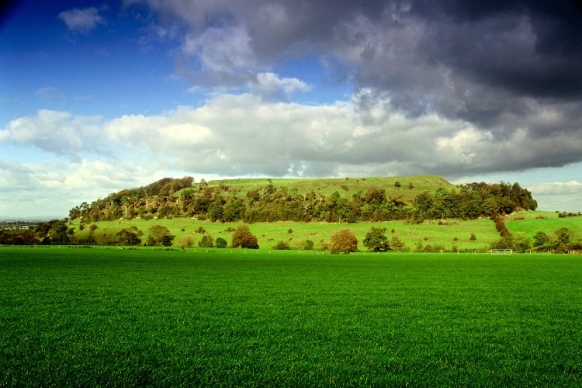
British Camp is an Iron Age hillfort in the Malvern Hills with distinctive tiered ramparts, located at the top of Herefordshire Beacon.
History of British Camp
British Camp is an Iron Age hillfort at the peak of Herefordshire Beacon, with expansive views over the surrounding countryside. Four phases of prehistoric building have been identified at British Camp, which situate construction of the hillfort at different points in the 1st millennium BC. Its distinctive pattern of earthworks have led to the structure being associated with a layered wedding cake.
These multi-tiered defences enclose an area of 18 hectares. At 338 metres high, British Camp has excellent views of Wynds Point, a major route through the hills. The hillfort had four gateways and was populated by dozens of hut circles likely consisting of wooden structures with thatched roofs. This suggests the existence of a large settlement at British Camp.
Popular folklore has often attributed the last stand of British chieftain Caractacus against invading Roman forces, recorded by Roman writer Tactius, to British Camp. However other sites are generally considered more likely candidates for Caractacus’ fateful confrontation. A Norman castle was built on the site and the uppermost layer of British Camp is part of this Norman fortification.
Shire Ditch, which dates to the 13th century, runs north to south along the ridge of the hills. It connects British Camp with Clutter’s Cave. Sometimes known as Giant’s Cave, it once sat above a spring and may have been the dwelling of a medieval hermit.
British Camp today
British Camp is owned and maintained by Malvern Hills Conservators. It is protected as a Scheduled Ancient Monument. Archaeology has revealed evidence of the hillfort’s original structure and its enlargement.
Getting to British Camp
British Camp is a 30 minute drive from Worcester. A car park at British Camp affords the most direct route to the summit of Herefordshire Beacon. It is also the beginning of a popular circular walking route, which incorporates the summit and Swinyard Hill. It lasts about 2 hours and involves uphill and downhill walking.
Featured In

Hillforts in England
From Old Oswestry to Cadbury Castle, here are 5 of the best hillforts in England.

Worcestershire Historic Sites
Explore the people and places of Worcestershire's past at these historic sites.

Herefordshire Historic Sites
Discover cidermaking history and timber frame architecture at Herefordshire's best historic sites