


About Blore Heath
The Battle of Blore Heath took place on 23 September 1459 and formed part of the conflict known as the Wars of the Roses between the Houses of Lancaster and York over the succession to the English throne.
Blore Heath history
The Battle of Blore Heath was the second battle of the Wars of the Roses and it’s bloodiest yet. Over 3,000 men died viciously fighting in these fields on a cold, late September afternoon, 560 years ago. Local legend has it that the streams and watercourses around the area ran red with blood for three days following the battle.
Before the two sides met at Blore Heath, they had reached an agreement under which the Duke of York would succeed Henry VI, but this only created the illusion of peace and the conflict was ignited once again at Blore Heath. The Battle of Blore Heath ended with the Yorkists defeating the Lancastrians.
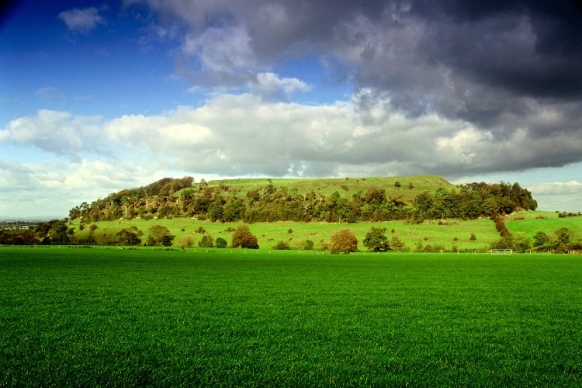
Blore Heath today
Today, the battle site at Blore Heath has been enclosed and preserved, but there is little to see except for Audley’s Cross, marking the spot where James Touchet, the fifth Baron Audley, was killed.
A cross was erected on Blore Heath after the battle to mark the spot where Audley was slain. It was replaced with a stone cross in 1765. Audley’s Cross stands on Blore Heath to this day. Audley is buried in Darley Abbey in Derbyshire.
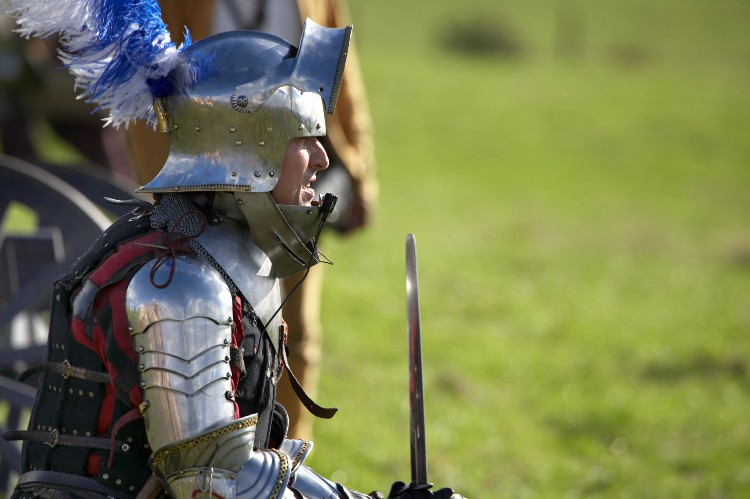
Between 1998 and 2010, an annual re-enactment was held that attracted thousands of visitors. The re-enactment was a weekend festival of Medieval history and heritage, culminating in a re-enactment of the events of the Battle of Blore Heath.
Getting to Blore Heath
The site is 2 miles east of Market Drayton, North Shropshire on A53. The nearest railway station is Stoke-on-Trent, which is 15 miles away.
Access around the battlefield is possible by a public footpath and by a small lane that runs from Blore to the A53, though the A53 is a busy road and unsuitable for parking or walking.
Featured In

Staffordshire Historic Sites
Experience Staffordshire's history at these historic sites.