



About The Serapeum
The Serapeum in Alexandria, Egypt, was an ancient temple dedicated to the worship of the Greco-Egyptian deity Serapis. Serapis was a combination of Osiris (god of fertility) and Apis (a sacred bull) in humanised form, both accepted by the Ptolemaic Greeks of Alexandria as their protector.
Built by Ptolemy III in the 3rd century BC, the Serapeum also housed an important library which may have served as an annex of the Great Library of Alexandria.
The Serapeum history
The Serapeum of Alexandria was built during the reign of Ptolemy III Euergetes, between 246 and 222 BC. The site was a rocky plateau overlooking the sea and was by contemporary accounts, was the most impressive of all temples in Alexandria’s Greek quarter. The temple was made of marble and boasted an image of Serapis and housed an offshoot of the Library of Alexandria.
In late 69 AD or early 70 AD Vespasian visited the Serapeum to help confirm his place as the rightful Roman Emperor during the civil war he fought with Vitellius. The Serapeum was closed in July 325 AD on the order of Emperor Constantine during the persecution of the pagans.
Unfortunately, the Serapeum was then destroyed in 391 AD as religious conflict broke out – either by a Christian mob or by Roman soldiers on instructions from the Christian authorities of the Roman Empire. The Serapeum was the final stronghold of pagans who fortified themselves within the temple, although ultimately it was sacked and destroyed.
The Serapeum today
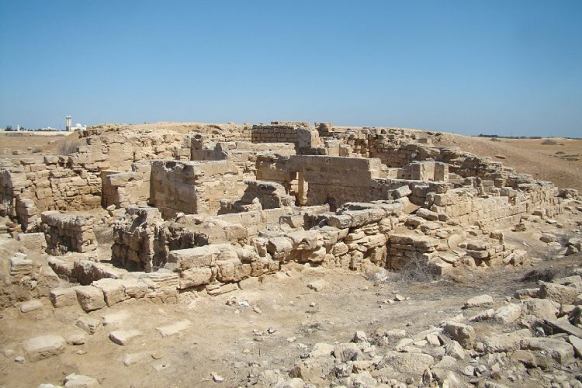
Today, there is little to see at the Serapeum site, though access to the underground library remains and is worth a visit. What remains above ground is the colossal Pompey’s Pillar, a Roman triumphal red-granite pillar erected by Diocletian which according to ancient writers, marks the ‘Acropolis’ of the Serapeum.
Other artefacts from the Serapeum can be found in the Greco-Roman Museum of Alexandria.
Getting to The Serapeum
Nestled within Alexandria’s ancient heart, the Serapeum is just off Karmooz street along from the Kanal Al Mahmoudeya Al Bahri road through the city, joining the highway 75. The Serapeum is a 17 minute drive from the international airport, and a half hour walk to Alexandria’s train station.
Featured In

Greek Temples
The ultimate guide to the very best Greek temples in the world, from Agrigento to Paestum and more, includes an interactive map surviving temples from Ancient Greece.