


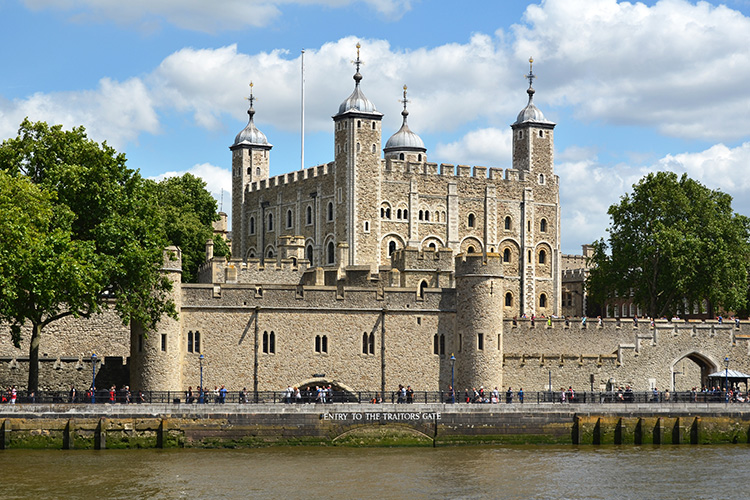

When you think about the Tower of London, what comes to mind? Likely, it’s the imposing stone fortifications, the grim dungeons, and the block where countless heads met their fate. But the Tower’s story is far more complex and captivating than its reputation for bloodshed. Behind the portcullises and imposing battlements, lies the heart of a vibrant medieval palace – a symbol of royal power, prestige, and even luxury.
In History Hit’s new documentary, Power House: The Medieval Tower of London, Dan Snow goes beyond the well-known history to explore a time of immense change for the Tower in the 13th century. He uncovers how this Norman citadel was transformed into a magnificent, medieval ‘super fortress’ and a royal residence fit for kings.
Join Dan as he pulls back the curtain on this iconic fortress to reveal its hidden history as a medieval powerhouse.
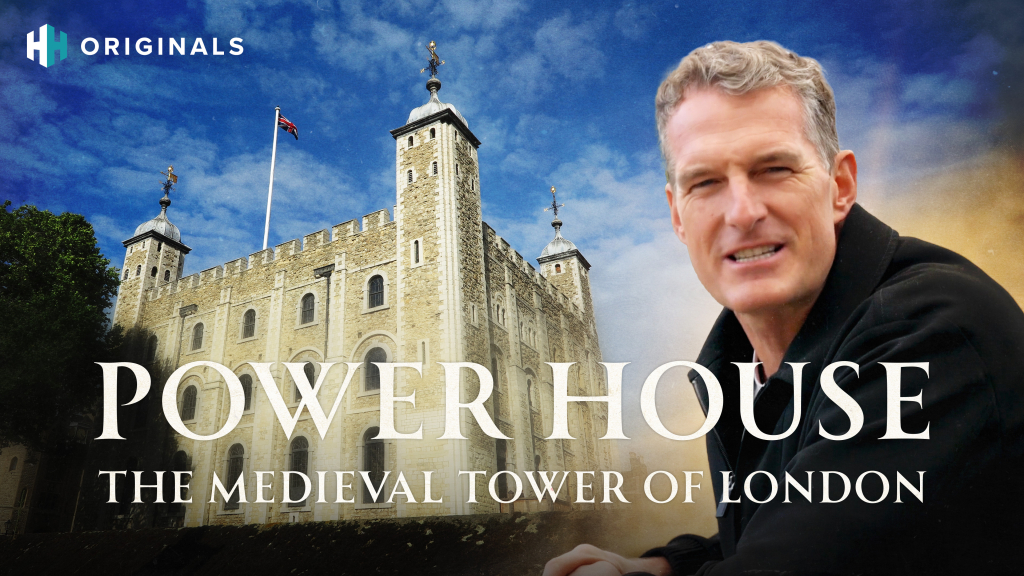 Watch Now
Not just a prison
The Tower’s full name – His Majesty’s Royal Palace and Fortress of The Tower of London – offers a powerful clue to its dual purpose. It wasn’t just a military stronghold; it was a bustling royal court and residence, teeming with a diverse community of soldiers, servants, and monarchs. Dan delves into this hidden world, revealing how the Tower was, in every inch, a luxurious medieval palace.
Focusing on the 13th and 14th centuries, the programme explores the royal apartments built under Henry III and Edward I. These have been refurbished to reflect their original grandeur. Dan meets with Dr Charles Farris, the Public Historian for the History of the Monarchy, and the curator of a new palace exhibition containing several original items typical of palace life lent by the London Museum. Inside the restored Royal Apartments in St Thomas’s Tower, Dan is struck by their comfort and elegance, a contrast to the stark, cold image we tend to have of medieval castles.
Dr Farris explains how these rooms would have been lavishly decorated with intricate wall paintings, luxurious hangings, and fine furniture. The new exhibition, which uses original design notes from King Henry III to recreate the vibrant wall paintings that once adorned the queen’s chambers, brings this lost opulence to life.
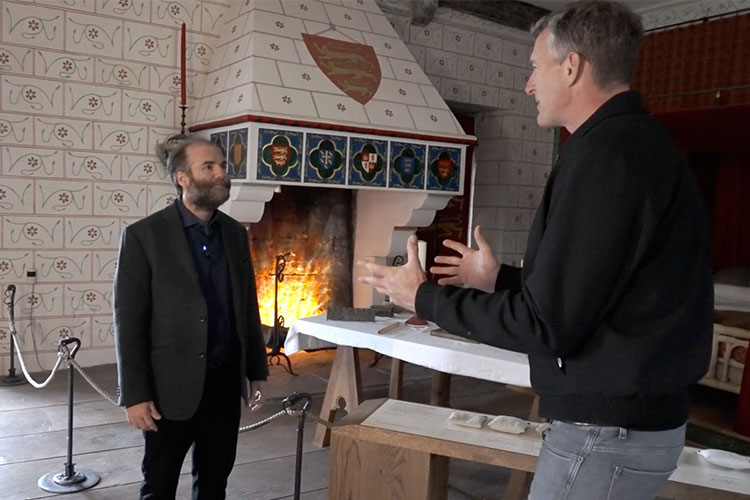
Dan Snow talks to Dr Charles Farris, Public Historian for the History of the Monarchy, in the refurbished Royal Apartments, St Thomas’s Tower, Tower of London.
Image Credit: History Hit
An expensive yet essential statement of power
The kings who invested so much in the Tower were not doing so on a whim. In an age of unrest, with the throne itself nearly lost during the reigns of Henry III and his son Edward I, the Tower’s fortifications were essential for security. But the palace served an equally important political purpose: projecting power
Kings like Edward I, often short on money, spent a fortune building such lavish palaces across their kingdom. As Dan learns, the lavish construction and opulent interiors were a deliberate message to visiting foreign dignitaries that England was a formidable, top-tier nation, and as Dr Farris says, “not a country that you mess with”.
Despite this massive investment, the Tower’s royal residents were rarely home. For instance, King Edward I spent a mere 53 days there over his entire 35-year reign, as a king’s rule depended on constant travel to command his vast territories and keep his nobles in check.
The rise of a medieval super fortress
The 13th century was a golden age of building for the Tower. It was constantly upgraded, transforming from a simple Norman stronghold into a multi-layered defensive masterpiece. Under King Henry III and particularly his son Edward I, the Tower was almost a permanent building site.
The documentary explores how Edward I, inspired by the massive castles he saw on crusade, initiated a monumental building project at the Tower. The military upgrade included a new layer of defensive outer walls, a state-of-the-art entrance featuring the Byward and St. Thomas’s Towers, and a permanent wet moat. Dan, guided by the Tower’s Curator of Historic Buildings, Alfred Hawkins, gets a close-up look at these engineering marvels.
Alfred also shows Dan one of the most incredible surviving relics of this period: the original portcullis of the Byward Tower. Carbon-dated to the 13th century, it is believed to be the oldest working portcullis in England.
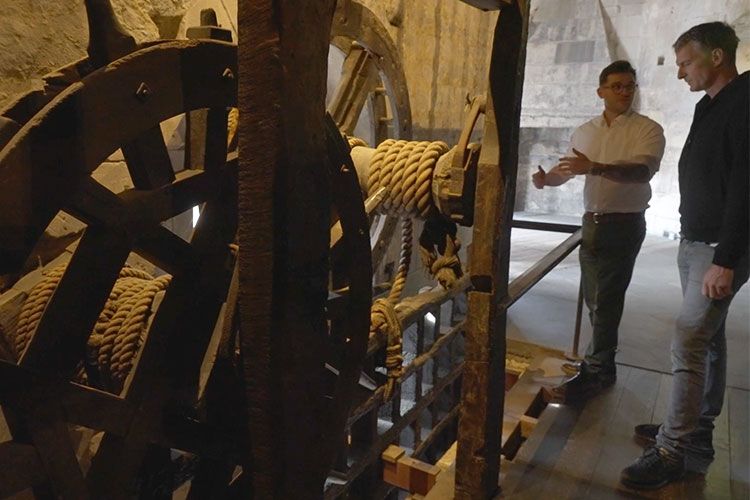
Dan Snow talks to the Tower’s Curator of Historic Buildings, Alfred Hawkins and sees the original portcullis for the Byward Tower.
Image Credit: History Hit
The business of kings
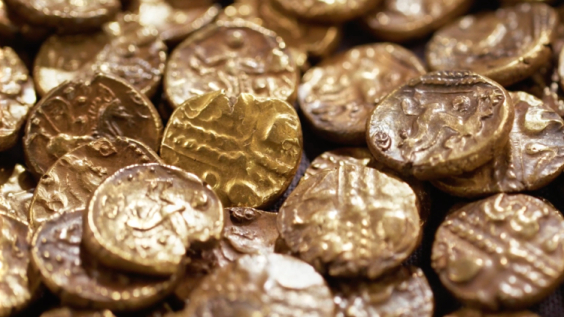
The Tower’s newfound security also had a crucial economic purpose: housing the Royal Mint. Bringing the mint inside the fortress walls was a strategic move to consolidate royal power and control. Dan discovers how the Tower literally became a place for making money, and the relevance of the ‘Byward Angel’ painting in displaying the king’s ‘divine power’.
Ultimately, the Tower of London is a microcosm of medieval kingship, encapsulating within its ancient walls the monarch’s many roles: magnificent ruler, fierce warrior, pious leader, and family man.
Watch Power House: The Medieval Tower of London and see the Tower in a whole new light.