



200 years ago, the sound of the world changed forever. It wasn’t the roar of a battlefield or the clamour of a new factory; it was the rhythmic chug of a steam locomotive, a sound that marked the birth of the modern railway and ignited a revolution that would reshape society.
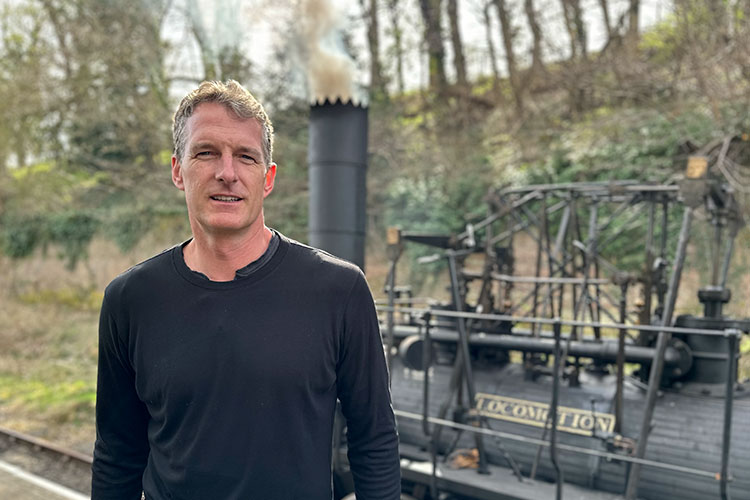
In a new documentary, Steam: 200 Years on the Tracks, Dan Snow climbs aboard a working replica of the very first passenger-carrying locomotive. He investigates its inaugural journey, a short trip in the north of England that would set in motion an extraordinary chain of events, from the bustling tracks of today to the interconnected, globalised world we now inhabit.
 Watch Now
A revolution on the tracks
The Industrial Revolution, the very beginning of our modern world, was in desperate need of a transport solution. While canals had provided an essential, if slow, network for moving goods, by the 1820s, a new kind of speed was needed. The answer came in the form of Locomotion No. 1, the brainchild of legendary father-and-son engineers, George and Robert Stephenson. George Stephenson, known as “the Father of the Railways,” had no formal education but possessed an unparalleled mechanical genius that would change everything.
The original purpose of the Stockton and Darlington line was simple: to transport coal from the mines of Shildon to the port of Stockton-on-Tees. But the Stephensons had a different vision. On its first journey on 27 September 1825, Locomotion No. 1 towed a passenger carriage named Experiment. This was the first time in history that a steam locomotive carried paying passengers on a public railway.
Dan gets exclusive access to a modern test run of a meticulously rebuilt replica of the locomotive, a machine that is the ancestor of every train that has ever run. On 27 September 2025, Locomotion No. 1’s inaugural journey will be recreated, 200 years on to the day, to mark its anniversary. As he rides the train, he marvels at the engineering on display, seeing firsthand how the simple mechanics laid the groundwork for a global network.
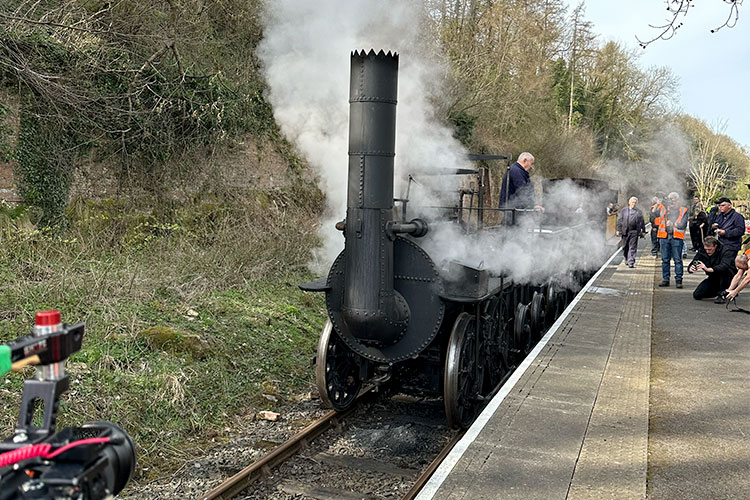
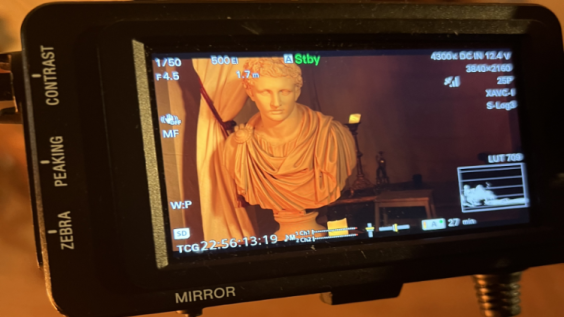
History Hit on location, filming the replica of Locomotion No. 1’s test-run ahead of the 200th anniversary recreation of its inaugural journey.
Image Credit: History Hit
The vision of a new world
Riding aboard this historic replica, Dan is struck by the profound significance of the journey. “This is not just a train,” he explains. “It’s the birth of an entirely new world.”
Locomotion No. 1 ushered in a new vision for society, one in which people could travel reliably over vast distances at unimaginable speeds, democratising travel. It was the invention that opened up the interiors of continents, expanded the volume of world trade, and made people more mobile than ever before. This one machine represents the birth of our connected, modern planet.
This momentous first journey was a global event, even at the time. Engineers from France, Germany, and beyond travelled to witness the spectacle, watching with bated breath as the locomotive embarked on its 26-mile test run. Its success spurred a rapid exchange of ideas among engineers, a pace of development that has only been rivalled by the internet.
In the documentary, Dan speaks to Niccy Halifax who is in charge of the 200th birthday celebrations. She notes how Locomotion No. 1 was the first machine designed to pull both goods and people on a public railway system – a singular achievement that deserves to be remembered, and one which also kickstarted the second half of the Industrial Revolution that soared in Victorian times.
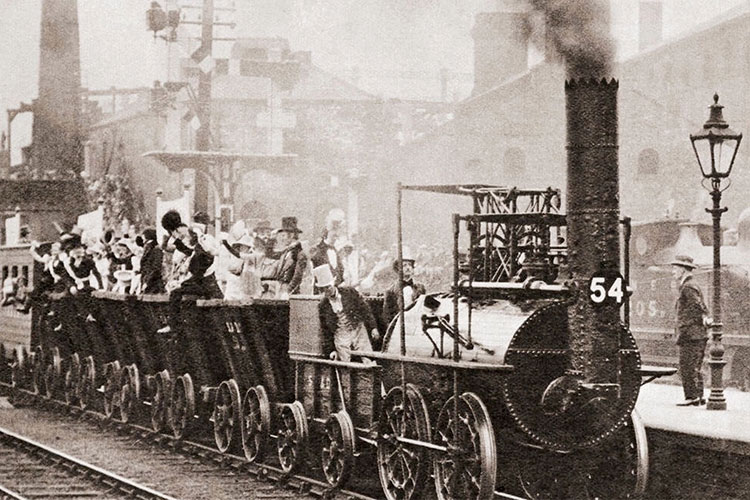
Locomotion No. 1’s inaugural journey on 27 September 1825.
The lasting legacy
The Stockton and Darlington Railway sparked phenomenal growth in northeast Britain, leading to the expansion of towns and cities. But its impact was felt far beyond.
The documentary highlights the remarkable longevity of the Stephensons’ vision. The track gauge of 4 feet 8 ½ inches, designed by Stephenson, is still used on British railways and in most of North America and Europe today. Even China’s high-speed trains adhere to this same standard, a direct link to the tiny locomotive that started it all. Dan visits the Skerne Bridge in Darlington, the oldest working railway bridge in the world, which Locomotion No. 1 crossed on its first trip.
Within just 25 years of that inaugural journey, Europe was crisscrossed with railways. By 1855, over 13,000 miles of track covered Britain, and thousands more were laid across Germany and the United States. Travel time was reduced to a mere fraction of its former self, and people could now travel from the countryside to the city with unprecedented ease. The 19th century became the age of the railway.
Though the original Locomotion No. 1 was soon surpassed by newer, faster, and more powerful engines, it was rightfully preserved as a historic artefact, a trailblazer that heralded a fast-changing world, and the very foundation of our interconnected, mobile society.