



We all know the name of Joan of Arc. For some, she is a simple peasant girl who spoke for the people of France. For others, she is a divinely guided champion of nation and church. But who was the real woman behind the myth, and why did her short, triumphant life end in the tragedy of her being burned at the stake?
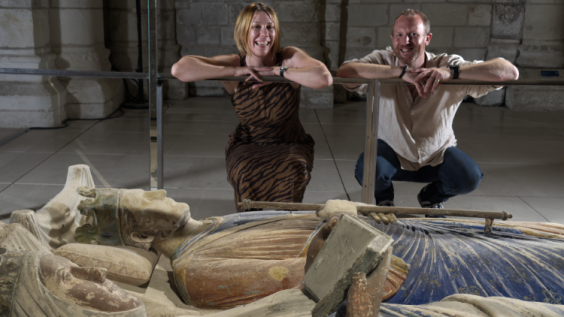
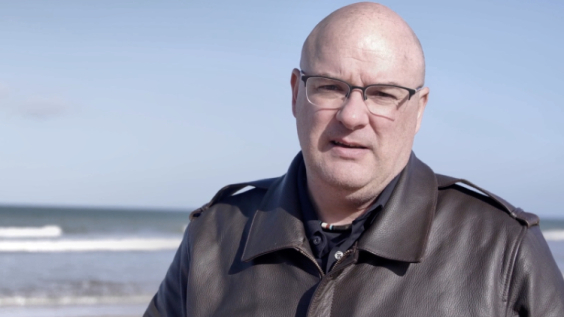
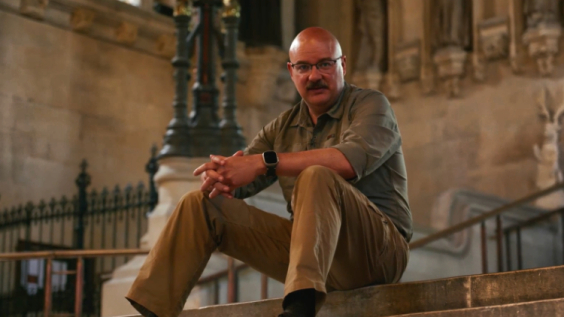
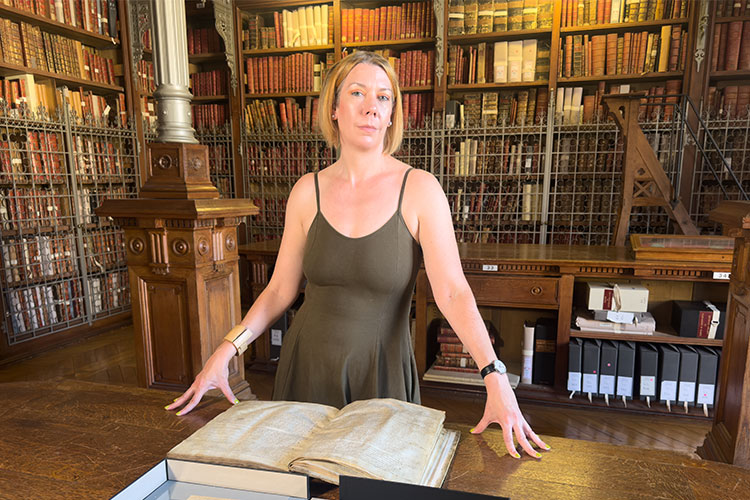
In History Hit’s new documentary, The Trials of Joan of Arc, Dr Eleanor Janega investigates the evidence from the extraordinary trials that framed Joan’s short yet impactful life. Eleanor follows in Joan’s footsteps, from the royal court at Chinon to her military triumph in Orléans, tracing a journey of faith, warfare, and profound betrayal.
Join Eleanor as she unravels one of history’s most powerful “what ifs” and ask why a teenage girl remains the ultimate symbol of French national pride.
 Watch Now
The Dauphin’s desperation
In 1429, with France fractured by the Hundred Years’ War (now in its 91st year), the monarchy faced collapse. After the crushing defeat at Agincourt in 1415, and deep divisions caused by the civil war between the Armagnacs and the powerful Burgundians, the French were dispossessed. The claimant to the French throne, Charles the Dauphin, was trapped in his castle at Chinon, desperate for a miracle as the English laid siege to Orléans, the last loyal stronghold.
Into this crisis stepped Joan, a young woman born in 1412, who claimed to receive holy visions telling her of a divine mission: she was sent by God to break the siege at Orléans and deliver the Dauphin to be crowned King of France.
Joan’s first trial was convincing the desperate Dauphin to listen to a poor peasant girl. Dressed in men’s clothing for credibility, she proved her mandate by immediately identifying Charles in the crowd at court despite his attempts to conceal himself.
The Dauphin was facing a political nightmare – following his father’s death, the French had been forced to disinherit their own royal line in favour of the English infant, Henry VI. Joan promised to fix everything, but the stakes were impossibly high. As Eleanor explains, in the Middle Ages, her visions could just as easily be attributed to the devil as to God.
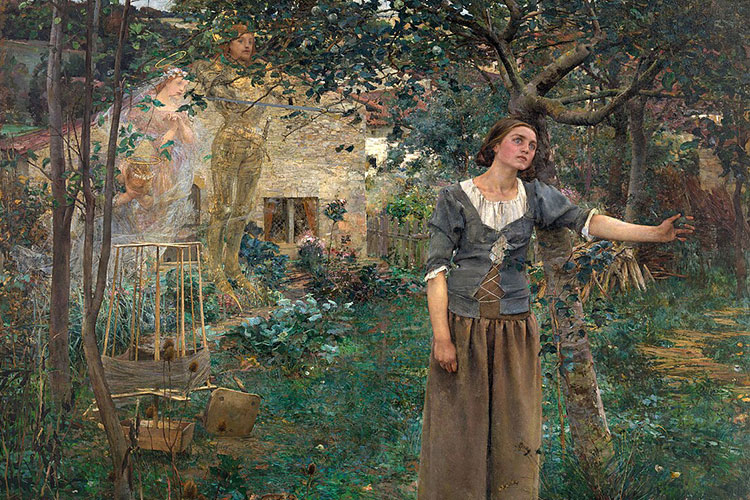
Joan of Arc’s visions – by Jules Bastien-Lepage (1848–1884)
Image Credit: Jules Bastien-Lepage (1848–1884) / Public Domain
Trials of plausibility and piety
Having gained the nickname ‘La Pucelle’ (the maiden) Joan faced intense theological and physical scrutiny to confirm she was not a heretic. Joan was rigorously questioned by clergy – a test few uneducated young women could have passed – to ensure her faith was sound. She also underwent a physical examination to ensure she was still a virgin (as the devil could not claim a virgin). Her extraordinary conviction and quick wit – once telling a cleric her heavenly voices spoke in a better dialect than his own – made her plausible.
Joan passed every test. Convinced of her divine mission, the desperate Dauphin equipped her for war with special armour, a sword, and a white banner.
The battle came at Orléans, where six months of French efforts to break the siege had failed. Arriving in April 1429, Joan was not merely a figurehead; her presence and vision – that victory would come if her banner touched the English fortress of Tourelles – reinvigorated the demoralised French troops.
Joan and her forces pressed forward successfully. As historian Matt Lewis asserts to Eleanor, “it’s hard to believe this would have happened if Joan was not here.” Joan had injected belief into the people – the crucial conviction that “not just that they could win, but that God wanted them to win”.
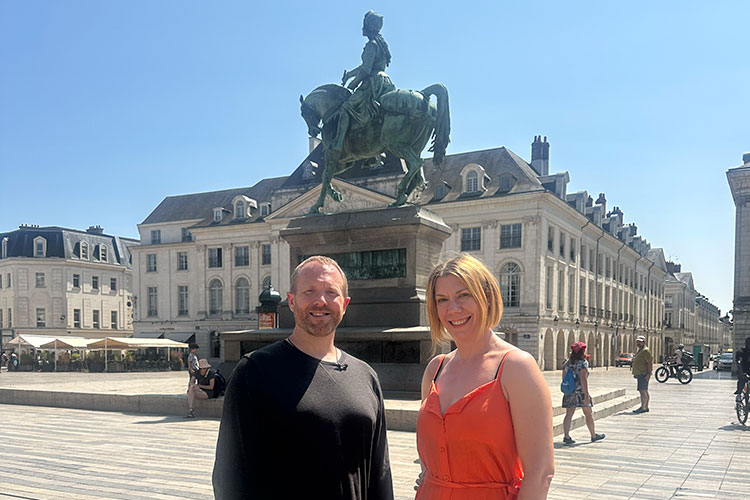
Historians Matt Lewis and Dr Eleanor Janega in Orléans, France
Image Credit: History Hit
Triumph and the turning point
With Orléans relieved, Joan’s mission was half complete. She smashed through English territory to reach Reims, the highly symbolic, traditional site for the coronation of French kings. Along the way, Joan had letters sent to French towns urging support and war supplies. Eleanor points out that while Joan likely couldn’t write, her ability to dictate and mark official documents with her signature was remarkable for a young girl of her time.
These letters also show a contrast in her character: one letter pleads with the Duke of Burgundy to call off his forces due to the sadness and pain the war was causing, demonstrating her conscience, while another urges the sending of gunpowder, revealing her fierce warrior spirit.
On 17 July 1429, the Dauphin Charles was crowned King Charles VII with Joan by his side. Despite having achieved everything she had promised, Joan wanted more. Her zeal to drive the English entirely from France quickly caused divisions with King Charles, who preferred diplomacy and treaties over the total warfare Joan felt was God’s command. The cracks widened when Charles called off the fighting at Paris, an action that enraged Joan, while the King grew weary of being commanded by a teenage girl.
The campaign against Joan
By September 1429, Charles had disbanded the army, leaving Joan to set out on her own with a large volunteer force. Joan became the target of a campaign by English-aligned scholars to discredit her as a fraud: if she had divine favour, how could she lose a battle? The end came on 23 May 1430, when she was captured by the Burgundians and swiftly sold to the English. Shockingly, King Charles VII, whom she had saved, made no attempt to rescue her.
The English immediately initiated a political show trial for heresy in January 1431, led by Bishop Cauchon (a loyal Burgundian), intending to invalidate Charles’s kingship by proving Joan was sent by the devil.
In the documentary, Eleanor meets Professor Anne Curry, who details how although treated formally, Joan’s independent religious conviction and insistence on wearing men’s clothes violated Canon Law and became pivotal evidence against her.
After initially confessing her heresy to avoid death, 4 days later, knowing the likely outcome and perhaps intending on martyrdom, Joan relapsed, choosing to wear men’s clothing again and claiming she had heard her voices. This was deemed final proof of heresy, leading to her being burned at the stake on 30 May 1431, in Rouen. Her remains were destroyed to prevent the creation of martyr relics.
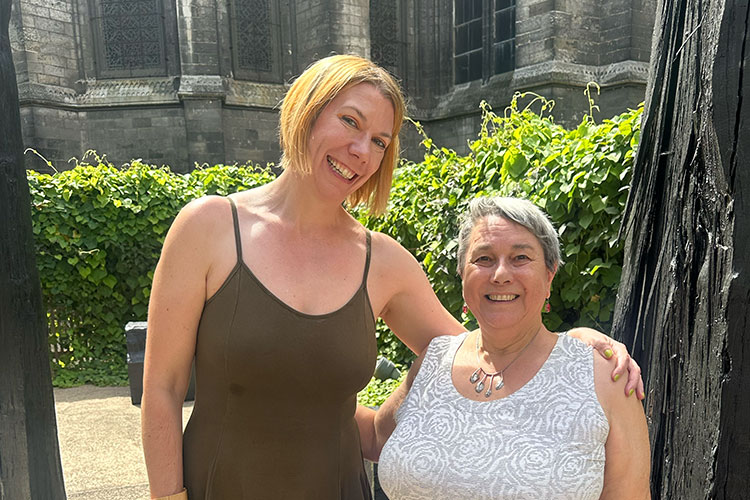
Dr Eleanor Janega with Professor Anne Curry
Enduring icon
Though Joan was dead her cause endured. 22 years later, after the English had been expelled from almost all of France, Joan’s family successfully initiated a second trial to annul the conviction. Eyewitnesses were called, the archives were opened, and on 7 July 1456, Joan was officially pardoned, transforming her into a martyr. Eleanor notes that in death Joan became more important as a rallying point for an idea of Frenchness – “a symbol of a cause who hadn’t been worth enough alive to be protected by the people she died in service to”.
As Eleanor concludes, Joan’s immense legacy endures in art and popular culture, with Corentin Dury, Curator at the Musée des Beaux-Arts d’Orléans, explaining how Joan has “inspired so many people in so many different ways.” Her story reveals the surprising knowledge ordinary medieval women possessed regarding complex legal and church doctrine, military tactics, and politics.
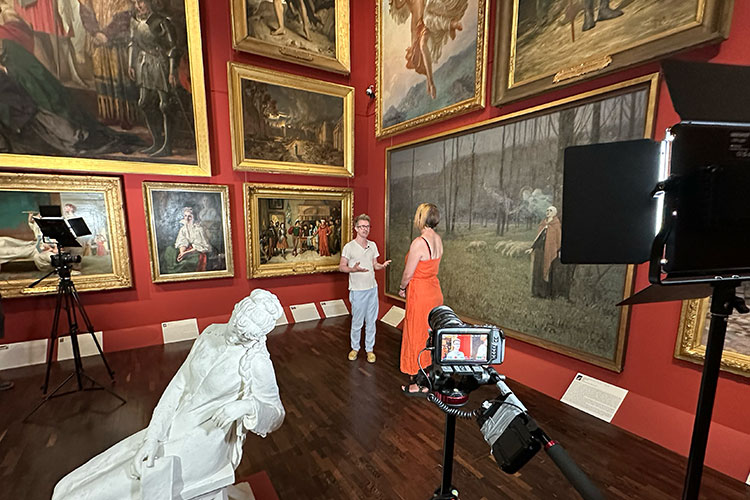
Dr Eleanor Janega with Corentin Dury, Curator at the Musée des Beaux-Arts d’Orléans
Joan was made a saint in 1920, serving as an icon of resilience for post-World War One France. Interestingly, Eleanor notes that modern admiration for Joan often focuses on the traditionally “masculine” traits for which she was killed: her courage, leadership, and her willingness to fight, suggesting we still prefer to see female power expressed through warrior tropes.
Nonetheless, despite her youth, Joan single-handedly changed the course of French and European history, offering thousands of reasons for her story to be reconsidered today.