



250 years ago, as Britain struggled to maintain its grip on its American colonies, another revolution was taking hold at home. The Industrial Revolution was shaking the nation to its core, transforming sleepy towns into bustling centres of innovation. New industries were springing up everywhere, from iron foundries and textile mills to workshops and potteries. But they faced a monumental challenge: how to move the vast amounts of coal and raw materials needed to fuel these new machines, and how to get their finished goods to consumers across Britain and the world?
The answer lay not on the roads, which were little more than rutted tracks, but on the water.
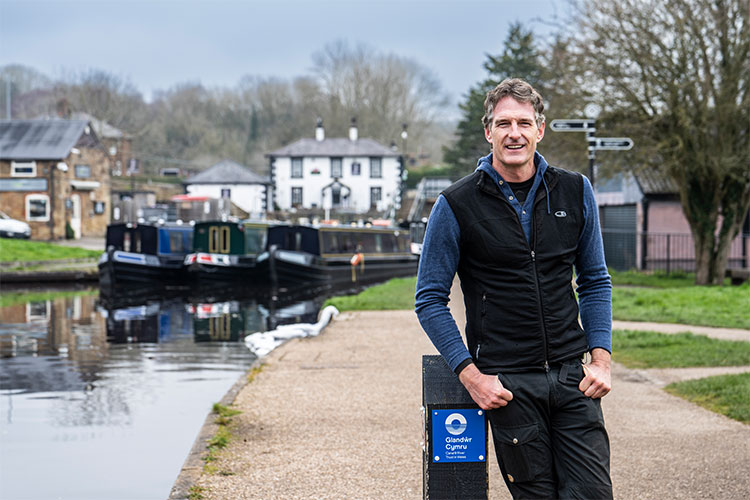
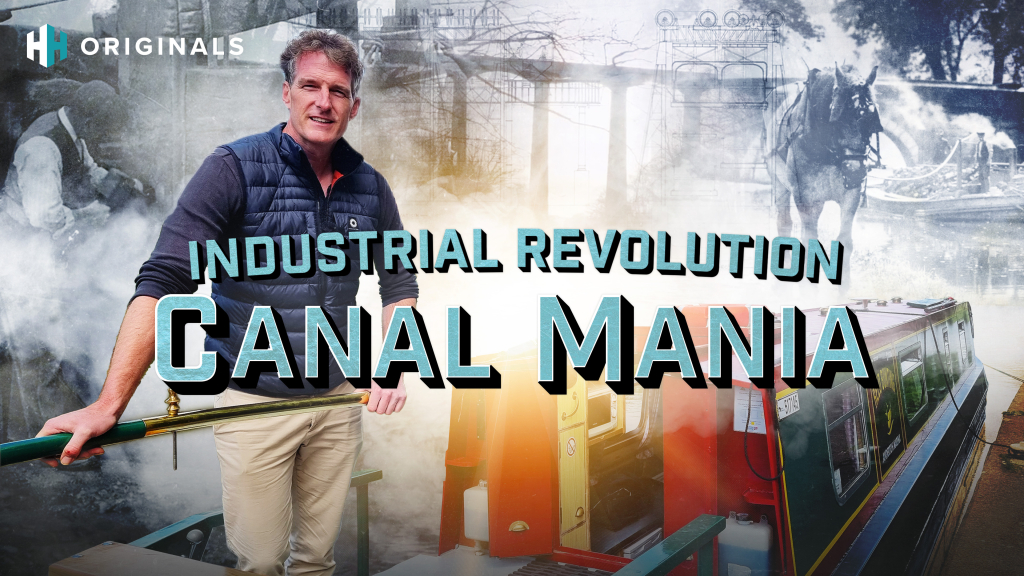
In Industrial Revolution: Canal Mania, Dan Snow embarks on a journey across England and Wales to explore the extraordinary story of Britain’s canals, revealing how a small fleet of barges and a network of man-made rivers changed the world. He’ll stop at several of the incredible engineering projects managed by the Canal & River Trust, the organisation keeping these historic routes alive today. From staircases of locks to waterways in the sky, and even a marvel of Victorian engineering that lifted boats from one river to another, this is the big history of how little boats put a nation on the move.
 Watch Now
The problem of The Potteries
In the 1760s, British industry was thriving. No one exemplified this better than Josiah Wedgwood, the entrepreneurial pioneer who revolutionised the ceramics industry in the West Midlands, a region known as ‘The Potteries’. Wedgwood wasn’t just a brilliant potter; he was a marketing genius, embracing new chemistry to create beautiful glazes and colours while pioneering innovative sales techniques like catalogues and money-back guarantees. He grew enormously wealthy, but his success exposed a critical weakness in his operations: transport.
Wedgwood’s factories needed a steady supply of heavy raw materials like clay and coal. More importantly, he needed a reliable way to get his finished pottery to market without it being smashed to pieces on the backs of slow, jolting pack-horses. When he heard that the Duke of Bridgewater had just built a canal that slashed the price of coal in Manchester by 50%, he knew he had to act. He was not about to lose the capitalist arms race.
Wedgwood envisioned a canal that would connect his Stoke-on-Trent factories to the world, linking the River Trent to the River Mersey and the bustling Port of Liverpool. He knew he could reach the local market, but a canal would allow him to reach consumers across Britain and even export his goods to the world. On 26 July 1766, his vision began to take shape outside his famous Etruria factory, igniting a national obsession that would become known as ‘Canal-Mania.’
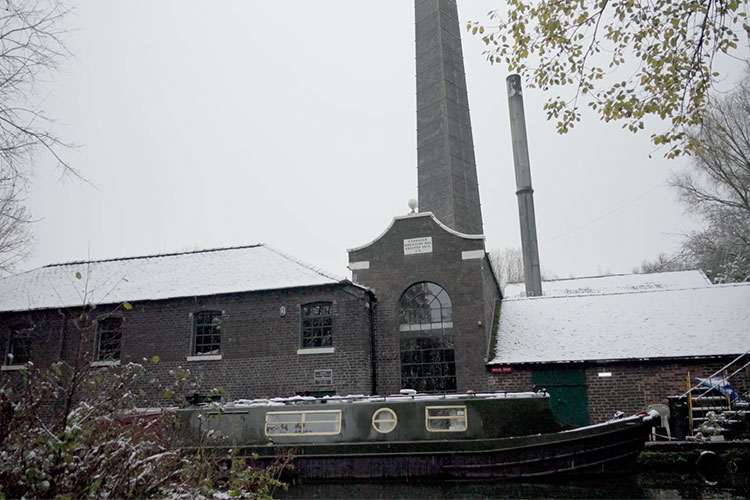
Canal boat near the site of Josiah Wedgwood’s Etruria factory.
Image Credit: History Hit
The human cost of a revolution
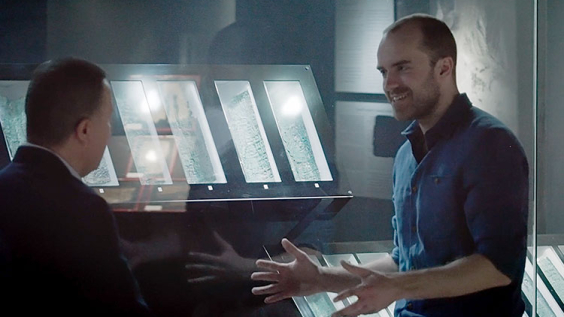
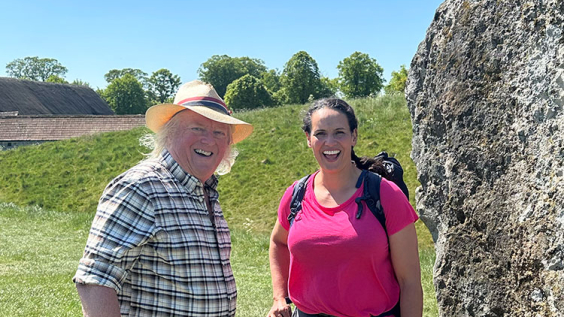
The construction of these waterways (known as ‘navigations’) was a monumental feat, requiring armies of labourers (‘navvies’) who moved across the country, living in temporary tented cities as they dug out thousands of miles of canal by hand. Dan learns from Canal & River Trust Heritage Adviser Mark Somerfield how the towpath itself was simply a pile of all the earth and rock that had been manually excavated from the waterway. The work was brutal and backbreaking, and many navvies died in their thirties and forties, worn out by their tireless efforts.
Yet, nothing could stand in their way. Not even a massive hill. Instead of going around, they dug right through it, creating vast tunnels with gunpowder. Dan ventures through one of these 19th-century tunnels, a testament to the sheer determination of the men who built them.
From land to water: a living legacy
With the canals, industry was no longer confined to the cities where it was born. Clay from the south coast of England, a vital ingredient for the popular white pottery, could now be shipped around the country by sea and then up the canal network to Stoke-on-Trent. The industry grew exponentially, exporting goods all over the globe, with companies like Burley Pottery sending their wares to America.
The programme highlights the incredible engineering that made this possible, from the Stoke Bruerne locks in Northamptonshire, which acted like a flight of stairs for boats, to the Pontcysyllte Aqueduct in Wales, an iron-clad river in the sky and a UNESCO World Heritage Site. Completed in 1805, this graceful aqueduct was a dramatic solution to getting a canal across a deep river valley, and it’s still in use today.
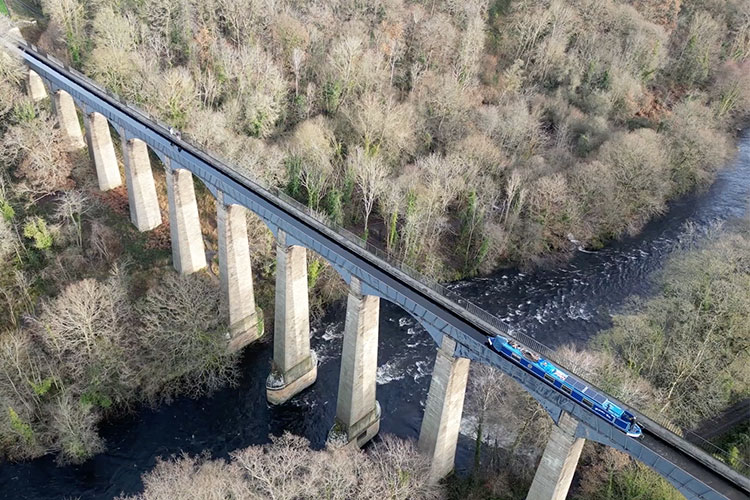
The Pontcysyllte Aqueduct, an iron-clad stream in the sky over the River Dee in Wales, and a UNESCO World Heritage Site.
Image Credit: History Hit
Dan explores the aqueduct’s ancient iron trough, built by master engineers like Thomas Telford and William Jessop, and learns how the Canal & River Trust is working to preserve these unique waterways for future generations. As Mark Abraham, one of the Trust’s heritage advisers, poignantly states, “Don’t let them crumble, because once they’re gone, they’re gone.”
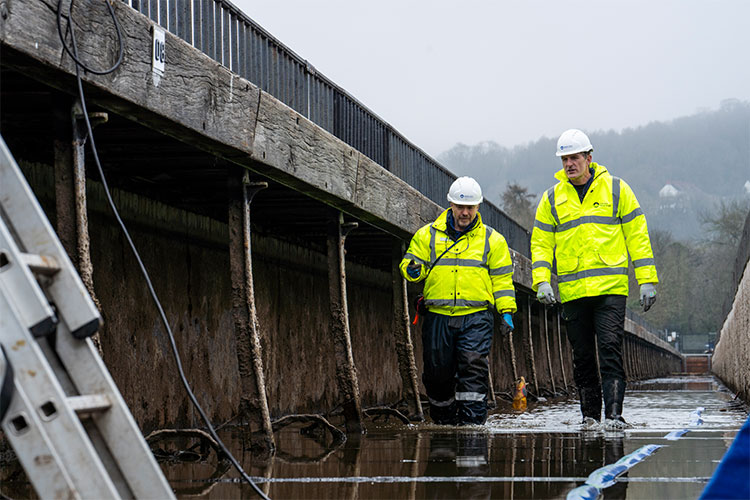
Mark Abraham, one of the Canal & River Trust’s Heritage Advisers and Dan Snow explore the temporarily de-watered Pontcysyllte Aqueduct to check for any problems for a future renovation.
Image Credit: Canal & River Trust / History Hit
The final challenge
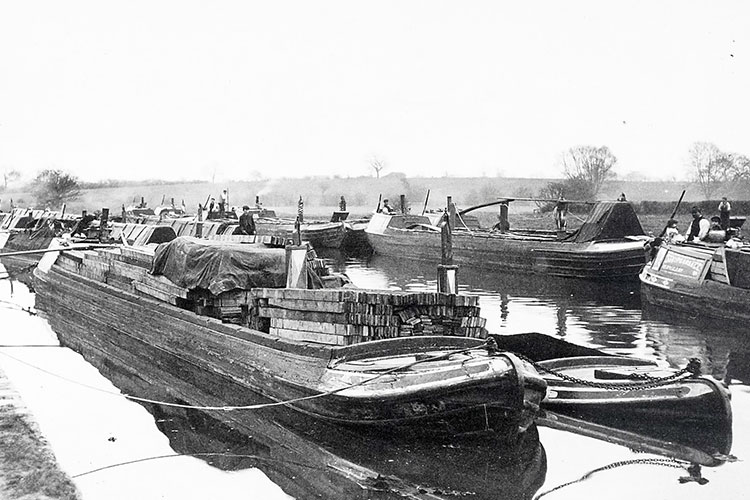
By 1830, Britain’s canal system had expanded to over 4,000 miles, creating a network of ‘super-highways’ that shortened journey times and fuelled the nation’s economic engine. But in the mid-19th century, a new technology arrived that would change everything: the steam locomotive. Railways began to criss-cross Britain, offering a faster alternative to water transport.
However, while trains were quicker, they couldn’t carry anything close to the weights of a canal barge. Waterways remained the most efficient route for heavy freight, putting pressure on them to find even shorter routes.
Dan ends his journey at the northern end of the Trent & Mersey, where the canals met their final great challenge. The solution was a monumental feat of Victorian engineering: the Anderton Boat Lift. Nicknamed the ‘cathedral of the canals’, this vast piece of iron architecture was designed to raise and lower barges 50 feet, saving a full day of travel time. Dan gets a first-hand experience of the lift in action, a magnificent sight that proves the ingenuity of the people who made these waterways.
As Dan observes, these waterways are a “working slice of history,” a tangible reminder of the people who made them. They were the very arteries of a new world, igniting change that would spread across the globe.
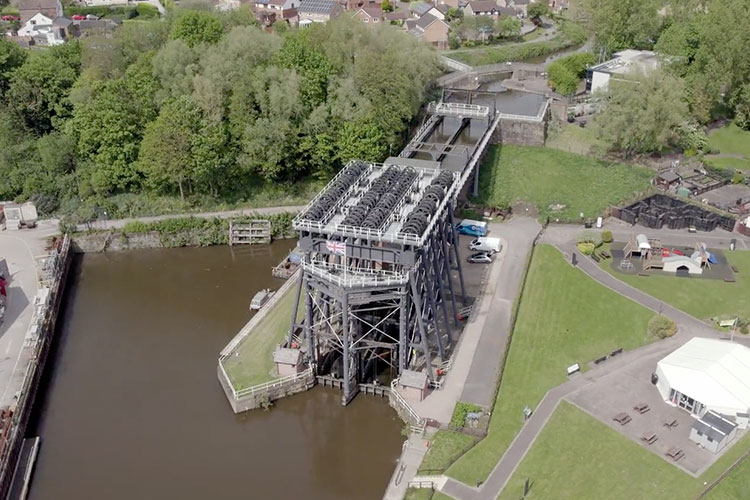
The Anderton Boat Lift, known as the ‘cathedral of the canals’.
Image Credit: History Hit