




Here are 10 facts that give some idea of the weaponry used during World War One. Initially antiquated battlefield tactics failed to comprehend the reality of industrialised warfare, and by 1915 the machine gun and artillery fire dictated the way that war was dictated.
It is also the single greatest contributor to the staggering casualty figures. Many men walked to their deaths, unaware of the devastation that industrial weapons could inflict.
1. At the start of the war, soldiers on all sides were issued with soft hats

Soldier’s uniforms and equipment in 1914 did not match the demands of modern warfare. Later in the war, soldiers were issued with steel helmets to protect against artillery fire.
2. A single machine gun could fire up to 600 rounds a minute
At ‘known range’ the rate of fire of a single machine gun was estimated much as 150-200 rifles. Their awesome defensive capability was a major cause of trench warfare.
3. Germany was the first to use flamethrowers – at Malancourt on February 26, 1915

Flamethrowers could fire jets of flame as far as 130 feet (40 m).
4. In 1914-15 German statistics estimated that 49 casualties were caused by artillery to every 22 by infantry, by 1916-18 this was at 85 by artillery for every 6 by infantry

Artillery proved the number one threat to infantry and tanks alike. Also, the post-war psychological impact of artillery fire was massive.
5. Tanks first appeared on the battlefield at The Somme on 15 September 1916
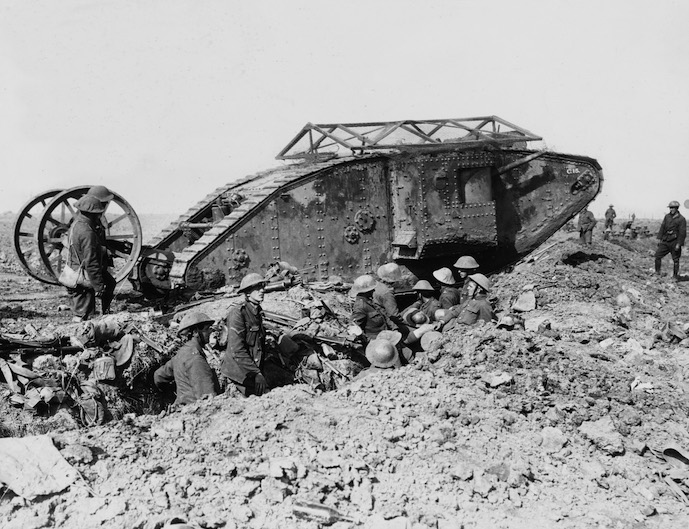
A Mark I tank which had broken down as it crossed a British trench on the way to attack Thiepval. Date: 25 September 1916.
Tanks were originally called ‘landships.’ The name tank was used to disguise the production process from enemy suspicion.
6. In 1917, explosives blowing up beneath the German lines on Messines Ridge at Ypres could be heard in London 140 miles away
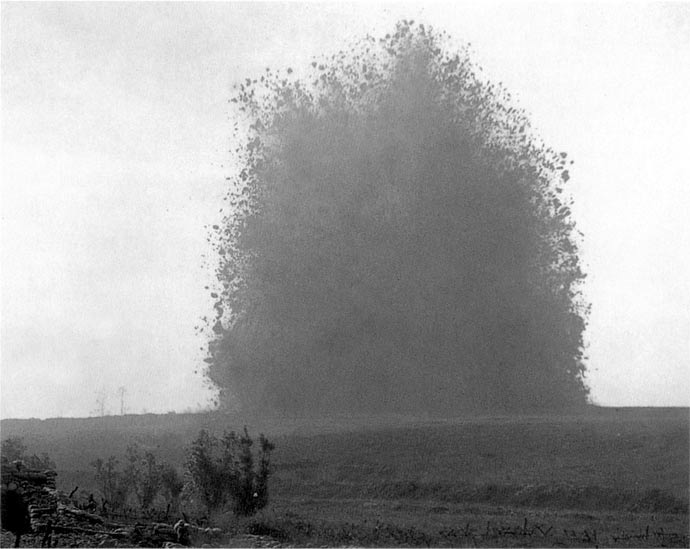
Building mines through No Man’s Land to plant explosives under enemy lines was a tactic used before a number of major assaults.
7. An estimated 1,200,000 soldiers on both sides were victims of gas attacks
 Watch Now
Throughout the war the Germans used 68,000 tons of gas, the British and French 51,000. Only around 3% of victims died, but gas had the horrific ability to maim victims.
8. Around 70 types of plane were used in by all sides

Their roles were largely in reconnaissance to begin with, progressing to fighters and bombers as the war progressed.
9. On 8 August 1918 at Amiens 72 Whippet tanks helped make an advance of 7 miles in one day
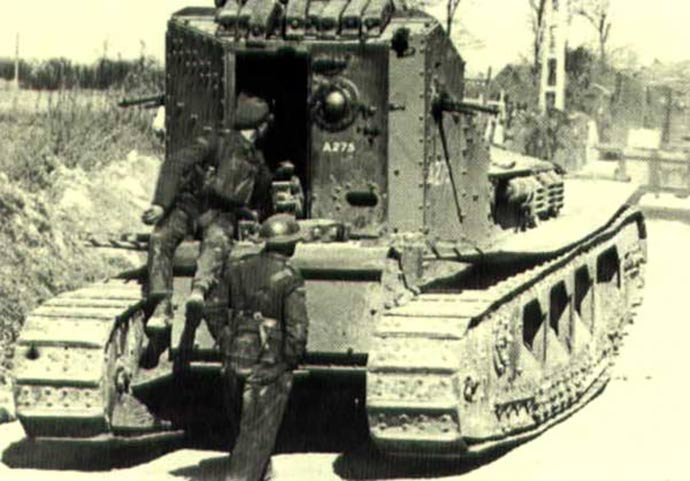
General Ludendorff called it “the black day of the German Army.”
10. The term “dogfight” originated during WWI
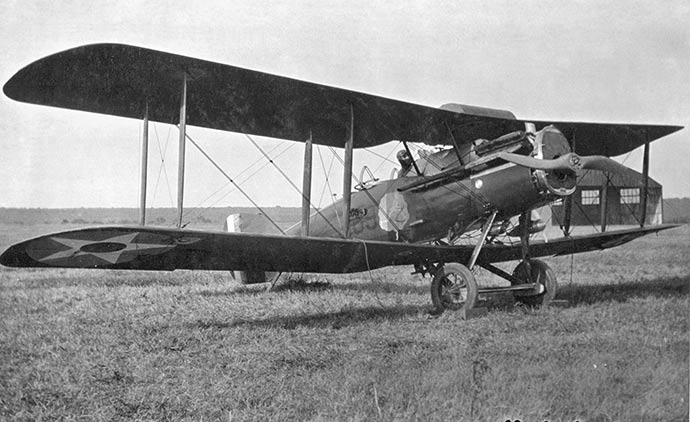
The pilot had to turn off the plane’s engine occasionally so it would not stall when the plane turned sharply in the air. When a pilot restarted his engine midair, it sounded like dogs barking.