



Katherine Howard has long been the most polarised of Henry VIII’s six wives. For centuries, her story has oscillated between two reductive extremes: was she a reckless ‘good-time girl’ who brought about her own destruction through foolish promiscuity, or a helpless child-victim, a mere pawn caught in the gears of a predatory court and a tyrannical king?
In the first episode of History Hit’s new documentary series Katherine Howard: Vixen or Victim?, Professor Suzannah Lipscomb sets out to dismantle these caricatures. By visiting the spaces Katherine inhabited – from the drafty corridors of her youth to the glittering galleries of Hampton Court – Suzannah searches for the real woman hidden beneath five centuries of Tudor scandal and myth.
 Watch Now
The ghost in the gallery
The tragedy of Katherine Howard is often synonymous with the “Haunted Gallery” at Hampton Court Palace. Popular lore describes a desperate Queen running toward the Chapel Royal in November 1541, her screams echoing through the corridors as she begged for mercy while guards dragged her away from a husband who had just discovered her past.
While Suzannah reveals that this specific, dramatic dash is likely an apocryphal Victorian invention, she acknowledges why the story persists: it perfectly captures the sheer, visceral horror felt by a young woman whose meteoric rise was met with an equally violent fall. Katherine ascended from a Maid of Honour to a Queen in mere months; just over a year later, she was headed for the block.
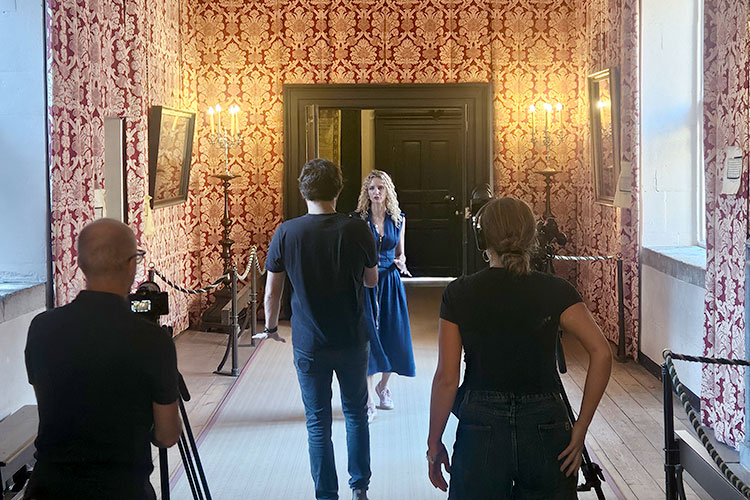
Filming in the “Haunted Gallery” at Hampton Court Palace
Image Credit: History Hit
Redefining the ‘child bride’
Episode One reveals a forensic re-examination of Katherine’s age. Traditional narratives often place her birth as late as 1526, making her a mere 14-year-old at the time of her marriage – a ‘child bride’ with little understanding of her situation.
However, Suzannah points to evidence from the French Ambassador, Charles de Marillac, which suggests she was likely born around 1522.
“This revised understanding significantly changes the way we see her,” explains Suzannah. “She was not the child bride that we have in our mind’s eye, in fact she was probably around 18 years old when she married Henry in July 1540” – a young woman with more agency than we often credit her.
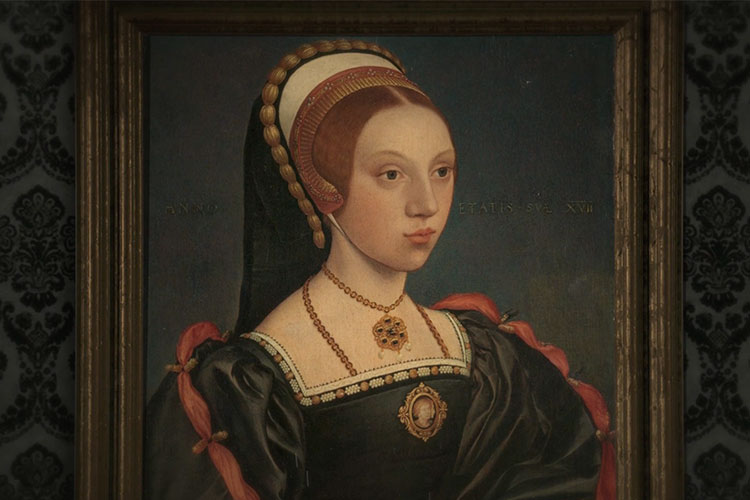
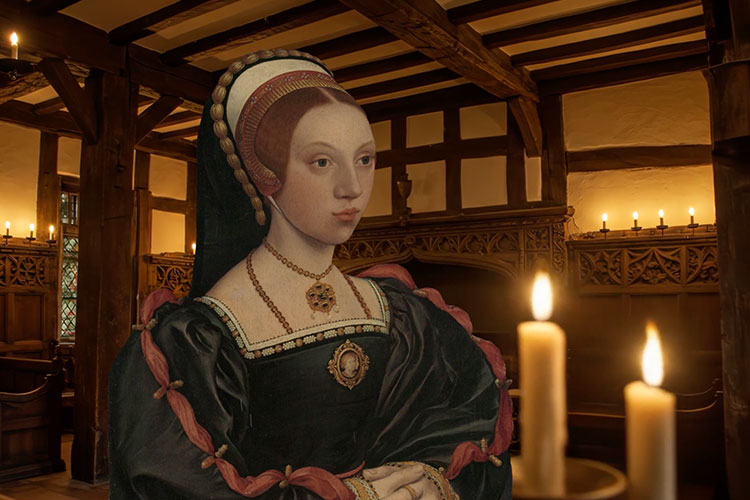
Portrait of a Young Woman, c. 1540–45, Workshop of Hans Holbein the Younger
Image Credit: Public Domain / History Hit
Chesworth House: A world of “in-between” spaces
To understand the Queen, we must first understand the girl. In Episode One, Suzannah travels to Chesworth House in Sussex, where, following her mother’s death, Katherine was raised under the guardianship of her step-grandmother, the Dowager Duchess of Norfolk.
In the Tudor era, society believed that parental indulgence was a moral failing, consequently, noble children were often sent to be raised in another aristocratic household to ensure they received the rigorous discipline and social polishing deemed necessary for court life.
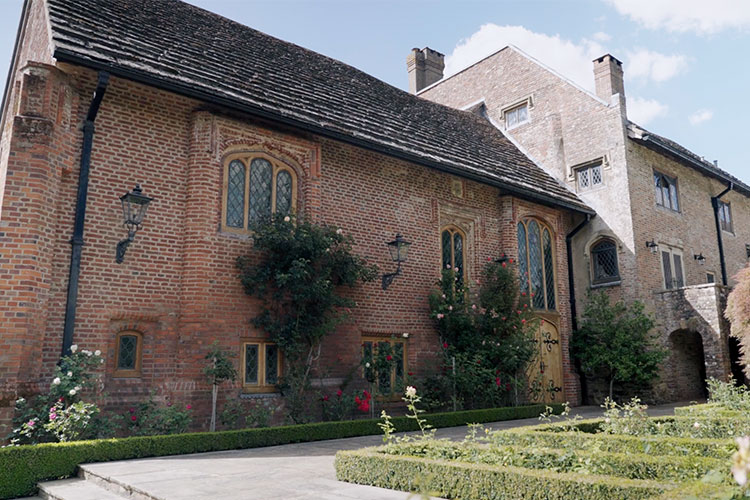
Chesworth House
Image Credit: History Hit
The documentary dismantles Victorian myths of a “lax” or “immoral” household, revealing instead the complex reality of Tudor wardship. Suzannah meets historian Dr Nicola Clark who explains how in the Tudor era, social classes mixed with surprising freedom. “The Victorians probably thought that these women and men of lower status are dragging Katherine down to their level, where in fact the evidence does not really suggest that at all” says Nicky.
At the heart of this was the “Maiden’s Chamber” – a communal space where aristocratic young women shared beds, gossip, and secrets with those of lower social standing. It was in these “in-between” spaces that Katherine entered into relationships with two men: her music teacher, Henry Mannox, and the Duchess’s secretary, Francis Dereham.
- The Mannox Affair (c1536): Often framed as an abuse of power, research suggests her music teacher, Henry Mannox was only five years Katherine’s senior. Crucially, Katherine demonstrated a “head screwed on,” refusing to lose her virginity to a man of his low status despite his pressure.
- The Dereham Contract (1538): Her relationship with the Duchess’s secretary, Francis Dereham, was far more serious, and more widely known within Chesworth House. They referred to each other as husband and wife and engaged in full intercourse – a “pre-contract” that, under Canon Law, could be viewed as a legally binding marriage.
Rather than seeing Katherine as a passive pawn, the evidence reveals a young woman navigating these illicit encounters with a surprising level of command.
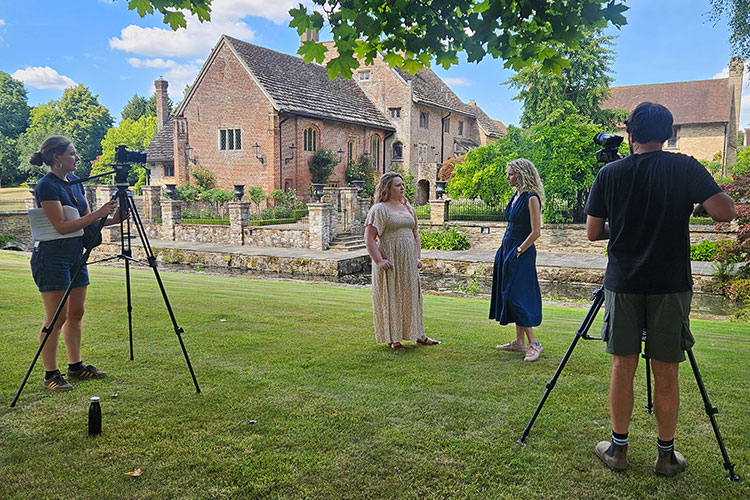
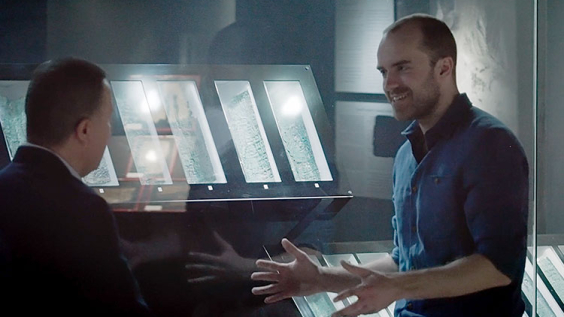
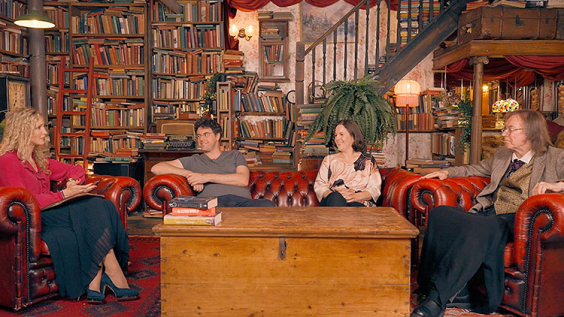
Prof Suzannah Lipscomb discusses Katherine Howard’s time at Chesworth House with historian Dr Nicola Clark
Image Credit: History Hit
The “Party Queen” of Hampton Court
By 1539, Katherine’s status as a Howard brought her to court as a Maid of Honour. She quickly broke things off with Dereham, who fled to Ireland heartbroken. At court, Katherine engaged in a flirtatious power play with the charismatic Thomas Culpeper, but the plan backfired; when she held him at arm’s length, he abruptly moved on, leaving her devastated and arguably more infatuated than ever.
However, her arrival was a breath of fresh air for Henry VIII, who found his current wife, Anne of Cleves, physically repulsive. Henry was visibly infatuated, showering Katherine with jewels and public displays of affection.
Their courtship moved at a breakneck pace, and they married on 28 July 1540 – less than 3 weeks after his previous marriage was annulled. Katherine was probably just 18 years old, Henry was almost 50. As Suzannah points out, “the speed and intensity of Henry’s pursuit of Katherine raises the question of her agency. In what world could a young, noble woman reject the king’s advances, particularly one as strong-willed and powerful as Henry”.
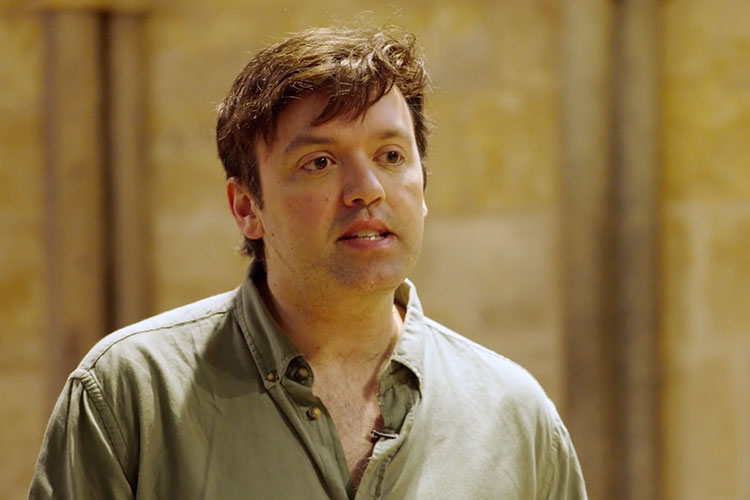
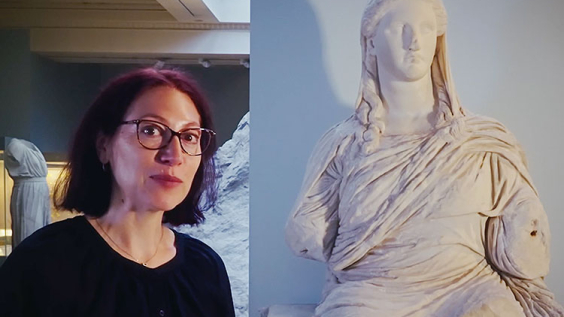
Historian Gareth Russell
Image Credit: History Hit
Historian Gareth Russell joins Suzannah to discuss Katherine’s early successes. Far from a political failure, Katherine was the star attraction of the court. She navigated Tudor politics with careful neutrality, choosing to remain apolitical to avoid the fate of her cousin, Anne Boleyn.
“Doing nothing is a choice,” Russell notes. “Everything she did was a deliberate attempt to be the perfect, apolitical queen consort.”
She even handled the potentially explosive meeting with the divorced Anne of Cleves with extraordinary grace, gifting her puppies and jewellery to signal to foreign ambassadors that the English court was a place of harmony.
The turning point: The Progress North
Episode One culminates with the Great Royal Progress of 1541 – a monumental political and military operation involving 5,000 horses and a mobile court of 200 tents. Designed to project power over the rebellious North, this strategic display of regal authority sought to suppress religious dissent and stabilise the realm ahead of a potential invasion of France. Katherine’s job was to shine at her husband’s side.
At Lincoln Cathedral, Katherine reached the zenith of her power, embodying the perfect image of a pious, loyal Queen. Yet while she played her role flawlessly in the public eye, the ghosts of Chesworth House were beginning to stir.
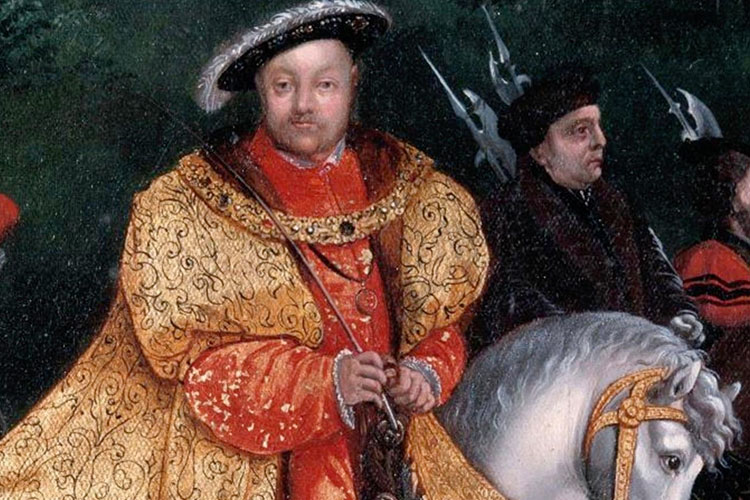
Depiction of King Henry VIII on the Royal Progress in 1541.
Image Credit: History Hit
Vixen or victim?
As Episode One concludes, Suzannah leaves us with a woman who was neither a fool nor a mere victim. Katherine Howard was a confident, commanded, and musically talented young woman who understood the social graces of her age. She made choices – for fun and for survival – in a world where the margin for error was zero.
In the next episode, Suzannah explores how Katherine’s past finally collided with her present – and the “Rose Without a Thorn” found herself facing the executioner.