



About Exeter Cathedral
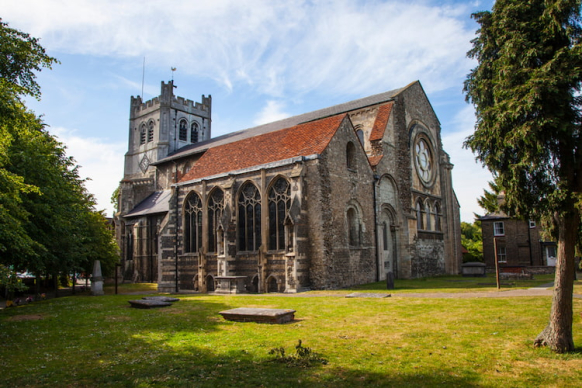
Exeter Cathedral is a large, Gothic-style cathedral constructed between the 12th and 14th centuries. Today it provides a fascinating look into medieval Britain, with stunning architectural features and stories spanning from the Romans to the Second World War!
Exeter Cathedral history
Several earlier incarnations have occupied the site of the current Exeter Cathedral over the years, including a 10th century Anglo-Saxon construction and a subsequent Norman cathedral, which was completed in 1180. The Cathedral’s vast towers date from this time.
The main body of the current Exeter Cathedral was completed by around 1400, with improvements and renovations continuing throughout the middle ages and through to the 19th and 20th centuries.
In times of conflict, Exeter Cathedral has often been subject to damage, occurring during the Dissolution of the Monasteries, the English Civil War and World War Two when it was damaged in a 1942 German bombing raid. This raid was known as the ‘Baedeker Blitz’ after a series of German tourist guidebooks from which they found their targets, and was intended to cause destruction on Britain’s cultural and historic cities.
In the 1970s it was revealed that the site of Exeter Cathedral has a heritage stretching back into Roman times, when archaeologists uncovered the remains of one of the best-preserved Roman bath-houses in Britain! The Exeter Roman Baths site was re-covered to ensure preservation until such a time when it can be safely opened to the public however.
Exeter Cathedral today
Visitors to Exeter Cathedral can explore its stunning architecture, sculptures, and stained-glass windows. The West Front Image Screen on the Cathedral’s exterior was one of medieval England’s greatest architectural feats, and sees a host of ornately carved carved statues mostly representing the Kings of Judah.
Inside, the Cathedral’s stonework is breathtaking, with the world’s longest continuous stone vaulted ceiling seen overhead. Other fascinating features include the Minstrels’ Gallery, Astronomical Clock, and Bishop’s Throne, all dating from the 13th and 14th centuries, while the Cathedral Green is also a popular place for relaxing in the sunshine.
Free tours may be joined around the site, and are a great way to discover its many hidden mysteries.
Getting to Exeter Cathedral
Exeter Cathedral is located in the centre of Exeter, that can be accessed via the M5, A30, and A38, with a Park and Ride service available into the city. Exeter Central train station is a 5-minute walk to the Cathedral, while a number of bus services run to the Marks and Spencer stop on the High Street, a 3-minute walk away.
Featured In

Devon's Historic Sites
In addition to its sandy beaches, ancient coastline and scenic national parks, Devon is home to a number of famed historic sites which attest to its colourful history. Here's our pick of 10 of the best.