



The Oslo Accord of 1993 was a historic moment of great significance in the Israeli-Palestinian conflict, an agreement that at once inspired great anger, hope and finally, regret.
Hope
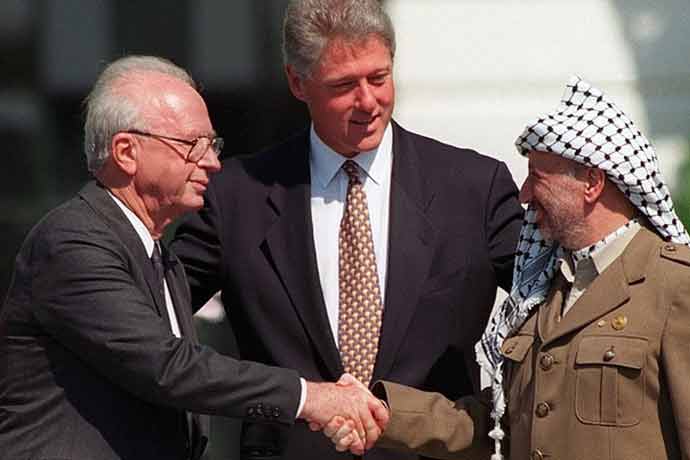
It was the first face-to-face agreement between Israel and the PLO and provided the Palestinians with recognised self-government under the Palestinian National Authority. Arafat and Israeli PM Yitzhak Rabin were the chief signatories to the monumental and controversial agreement, coordinated by Bill Clinton.
The accords were supposed to provide a road map for peace via the rejection of violence whilst negotiations proceeded over the land for two peoples. The agreement called for an Israeli withdrawal from parts of West Bank and the Gaza Strip.
Controversy
In both the Israeli and the Palestinian public spheres the accords provoked fierce disagreement. In Israel the left-wing supported the accord while the right opposed them.
Fatah, the more moderate Palestinian faction leading the negotiations, supported it while Islamist groups, chiefly Hamas, rejected the settlement.
The murder of Rabin by a right-wing Jewish extremist opposed to the Oslo Accords aided the unravelling of the negotiations.

Rabin’s successor Benjamin Netanyahu took a more aggressive stance toward Palestine and opposing the Oslo Accords.
Regret
The return of familiar security concerns following a spate of Hamas suicide bombings saw Benjamin Netanyahu triumph at the next elections, on a platform of far more hawkish and non-conciliatory relations with the Palestinians.
By 2000 the negotiations were officially dead. The timeline of events and the untimely end of Rabin’s premiership has seen the Oslo process become a symbol of regret, as a missed opportunity, in the eyes of Israel’s left.