



This article is an edited transcript of Battle of the Somme with Paul Reed on Dan Snow’s History Hit, first broadcast 29 June 2016. You can listen to the full episode below or to the full podcast for free on Acast.
The Battle of the Somme, which began on 1 July 1916, was Britain’s big push to break German lines. There had never been a battle of such scale before, both in terms of the sheer manpower involved and, more importantly, the level of artillery that was prepared for the battle.
Britain’s then secretary of state for war, David Lloyd George, had sorted out the munitions factories and there was an unprecedented amount of artillery firepower to drop on the Germans. It really did look like the Somme would be the battle that would end the war. “Bapaume and then Berlin” was the much-used phrase before the battle.
Confidence was high, not least because of the huge volumes of men who were brought into the Somme with years of training behind them.
After all, some of those men enlisted right at the beginning of the war and had been preparing for that day ever since.
 Watch Now
The promise of an unprecedented bombardment
The British believed in the power of their artillery to do the job for them. There was a widespread feeling that they could pound the German positions into oblivion with such an unparalleled concentration of artillery.
In the end, the British subjected the enemy to a seven-day bombardment – 1.75 million shells along an 18-mile front.
It was widely assumed that nothing would survive, “not even a rat”.
All that the infantry would be required to do after the artillery did the real damage would be to walk across No Man’s Land and occupy the German positions beyond Bapaume by nightfall. Then, presumably, Berlin by Christmas.
But the battle didn’t pan out quite like that.
 Listen Now
Inadequate artillery
The bulk of the artillery shells dropped on German positions were standard field artillery. These were 18-pound shells that could smash up German trenches. They could also be used effectively with shrapnel – little lead balls that could, if used correctly, cut through wire and clear an easier path for the infantry.
But they couldn’t take out German dugouts. Which is why things started to go wrong for the British.
The Somme is chalk downland and very easy to dig into. Having been there since September 1914 the Germans had dug deep. Indeed, some of their dugouts were up to 80 feet beneath the surface. The British shells were never going to impact at that sort of depth.
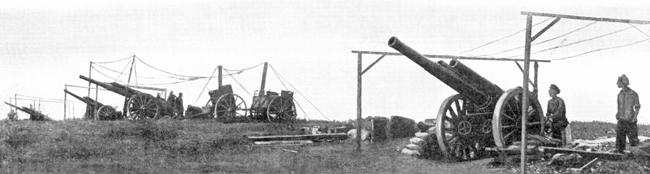
A 60-Pounder heavy field gun at the Somme.
A sunlit picture of Hell
Zero hour was 7.30 in the morning. Of course, in July, it had been sun up for well over two hours by that time, so it was perfect daylight. Absolutely perfect conditions.
Leading up to the battle there had been heavy rain and muddy fields. But then it changed and 1 July turned out to be the perfect summer’s day. Siegfried Sassoon called it a “sunlit picture of Hell”.
The 7.30am attack nonetheless went ahead in broad daylight, largely because the war was a Franco-British offensive and the French were not trained to attack in the darkness.
Of course, there was also a feeling that it didn’t matter if it was broad daylight, because nobody could have survived the bombardment.
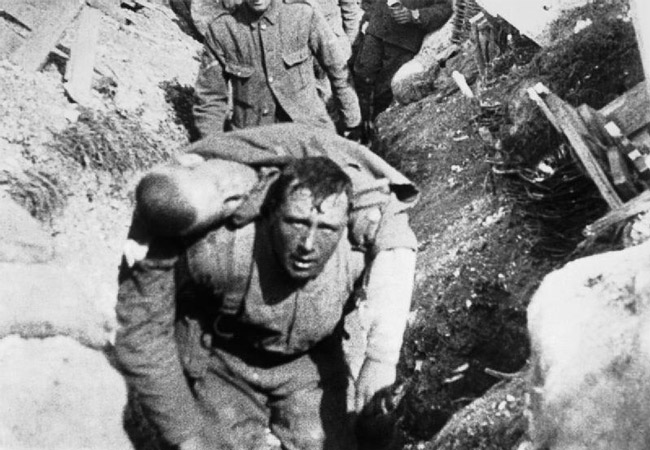
When the British soldiers exited their trenches and the whistles were blown, many of them walked straight into what can only be described as a machine gun oblivion.