



Drugs have been used in war throughout history, often in order to enhance soldiers’ ability to perform their duties, especially in stressful combat situations.
While performance-enhancing drug use by combatants still takes place — notably fighters on both sides of the Syrian Civil War reportedly use an amphetamine called Captagon — most sanctioned drug taking in the modern military is prescription-based and with the purpose of treating ailments rather than enabling soldiers to fight better — though the two could sometimes be considered the same thing.
Here are 5 historical examples of how drugs have been used for military purposes.
 Listen Now
1. Vikings on mushrooms
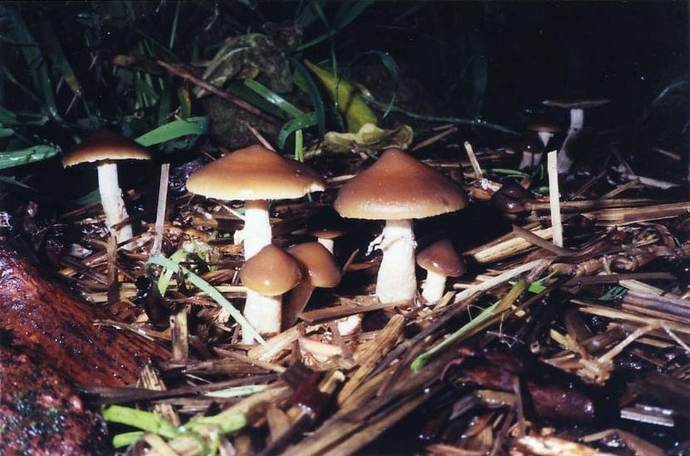
Psychedelic mushrooms. Credit: Curecat (Wikimedia Commons)
Some have postulated that Norse Viking warriors took hallucinogenic mushrooms in order to increase their battle rage and become the legendarily fierce ‘Berserkers’. It is unlikely that this is true, however, as there is little evidence that Berserkers actually existed.
2. Zulus and THC?
It has been suggested that during the Anglo-Zulu war of 1879, the 20,000-strong force of Zulu warriors were aided by a marijuana-based snuff that was — depending on the source —high in THC or containing small amounts of cannabis. How this helped them fight is anyone’s guess.
3. Crystal meth in Nazi Germany

Panzerchokolade, a Nazi precursor to crystal meth, was given to soldiers on the front. The addictive substance caused sweating, dizziness, depression and hallucinations.
German company Temmler Werke commercially launched a meth amphetamine in 1938, which was quickly capitalised on by the country’s military. The drug was marketed as Pervatin and was eventually taken by hundreds of thousands of troops. Dubbed Panzerschokolade or ‘tank chocolate’, it was considered a miracle pill for its short-term effects of increased alertness and productivity, even when soldiers suffered from extreme sleep deprivation.
 Listen Now
Prolonged use and addiction, however, inevitably led to many soldiers suffering from depression, hallucinations, dizziness and sweating. Some even had heart attacks or shot themselves out of desperation. It is also likely that Hitler became addicted to the amphetamines.
Benzedrine, another amphetamine, was given to German paratroopers before the Nazi invasion of Crete in 1941.
4. Booze and opium: British drugs of the Great War
British soldiers during World War One were rationed rum at 2.5 fl. ounces a week and often given an extra amount before an advance.
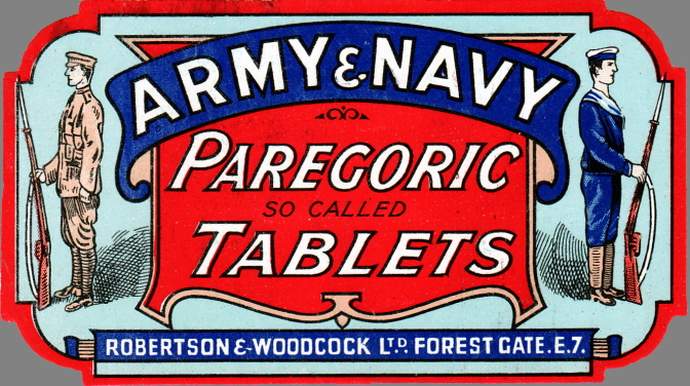
More shocking to modern sensibilities are the opium pills and heroin and cocaine kits that were sold at high-class department stores in order to be sent to a loved one at the front during the early stages of the war.
Tablets based on the opium pills given to British soldiers during World War One. Credit: Museum of London
5. Air Force ‘Go-Pills’
Dextroamphetamine, a drug commonly used to treat ADHD and narcolepsy, has long been used by the militaries of several countries. In the Second World War it was used as treatment against fatigue and United States Air Force pilots still receive the drug in order to maintain concentration and alertness during long missions. Pilots are given ‘no-go’ pills when they return to counteract the effects of the dextroamphetamine ‘go-pills’.
Dextroamphetamine is an ingredient in the common medication Adderall and is also a used as a recreational drug as well