



About Temple of Jupiter – Damascus
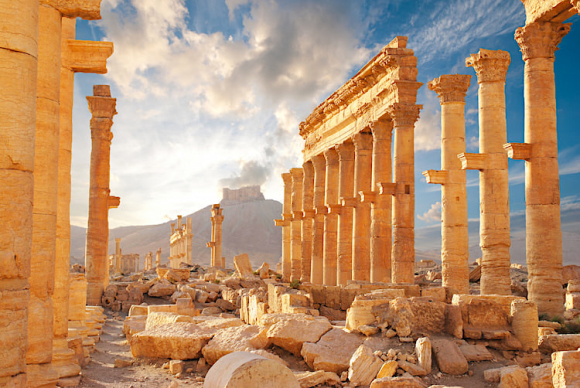
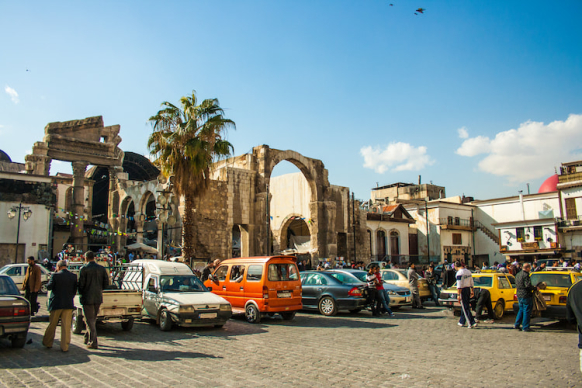
Begun during the reign of Emperor Augustus, the Temple of Jupiter in Damascus is a pretty impressive ruin that reminds Syria of its ancient past. By the 4th century AD the temple was famous for its size and beauty.
Completed under Constantius II – around 300 years later – this landmark now stands at the entrance to the grandiose Ottoman bazar, the Al Hamidiyah Souq.
Temple of Jupiter – Damascus history
Before the Romans ever arrived in Damascus, the Aramaeans worshipped the cult of Hadad Ramman – god of thunderstorms and rain. The Aramaeans erected a temple to Hadad-Ramman and when the Romans conquered the city in 64 BC, they absorbed both the original temple and the deity into their own religion.
Damascus-born architect Apollodorus designed the Roman temple, now dedicated to Jupiter. With the exception of the much increased scale of the building, most of its original Semitic design was preserved, and the temple impressed the local population.
The incredible size of the Temple of Jupiter suggests its importance in daily life in ancient Damascus, and it was maintained by the generous donations of rich patrons in the city.
With the persecution of pagans in the late Roman Empire, Theodosius I converted the temple into a church dedicated to St John the Baptist.
Temple of Jupiter – Damascus today
Today, what remains of the grand Temple of Jupiter are several decorated arches and columns, guiding shoppers to the equally impressive Al Hamidiyah Souq.
Getting to the Temple of Jupiter – Damascus
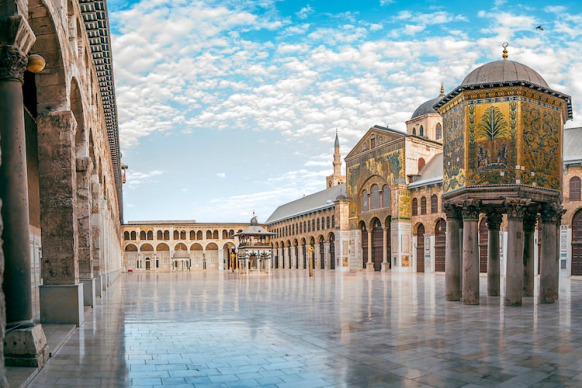
Located at the edge of the Umayyad Mosque square, the temple is easily found when exploring central Damascus on foot.
Featured In

Syria Historic Sites
Discover the 10 best historic sites in Syria, from Crusader castles like Krak des Chevaliers to the Ancient ruins of Bosra, in our guide to the ultimate Syrian cultural landmarks and monuments.