



On 26 November 1703, a ferocious storm tore through the English Channel, claiming the lives of over 1,000 sailors and sending some of the Royal Navy’s most valuable ships to the seabed in one of history’s deadliest maritime disasters. For over 300 years, these wrecks lay hidden, lost to treacherous currents. Until now.
A groundbreaking discovery is helping to shed light on that infamous event: shifting sands have revealed the broken remains of HMS Northumberland, once the pride of the fleet. This lost 17th century warship is a near-pristine time capsule, but is now exposed to the elements and rapidly deteriorating. Archaeologists are racing against time to salvage its secrets before they vanish forever.
Join Dan Snow in Shipwreck: HMS Northumberland as he investigates the ship’s construction, its pivotal role in the Royal Navy’s pursuit of the “perfect warship”, and the dramatic circumstances surrounding its ultimate loss. This is the compelling story of a natural disaster that shocked a nation and devastated the burgeoning Royal Navy.
 Watch Now
The rise of a naval power
The 17th century was a pivotal period for England’s naval ambitions. Once a marginal player, the nation was determined to challenge the maritime dominance of the Dutch and Spanish. This ambition fuelled a massive shipbuilding spree, investing heavily in a navy designed for power and global reach. Among these new vessels was HMS Northumberland, originally launched in 1679. A state-of-the-art, 70-gun warship, she represented a technological marvel – the pride of the Royal Navy.
However, the sea can be unpredictable and unforgiving, and even the strongest ships faced severe weather, navigational hazards, enemy action, and human error. HMS Northumberland’s story encapsulates the immense risks inherent in naval power projection during this era.
A night of catastrophe
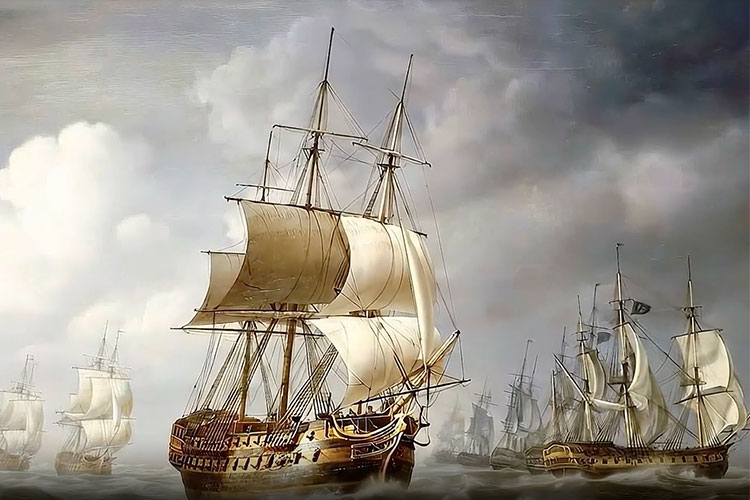
On the fateful night of 26 November 1703, HMS Northumberland and other victorious Royal Navy warships were returning to British waters after the Battle of Vigo Bay, the first engagement in the Spanish Wars of Succession. Laden with the spoils of war, HMS Northumberland sailed up the English Channel, intending to pick up a specialist pilot to navigate the treacherous Thames Estuary.
With the weather rapidly deteriorating, the squadron anchored off the East Coast of Kent. As night fell, a building gale escalated into a fearsome storm. Despite desperate efforts, ships were battered, torn from their moorings, smashed against the treacherous Goodwin Sands, and swallowed by the waves. In just one terrible night, 14 ships were lost, a significant portion of the Royal Navy’s losses over an entire decade of war. For centuries, these wrecks lay hidden, until recent shifting currents began to reveal their secrets.
Forged in Chatham
Dan traces the story of HMS Northumberland back to its origins: Chatham Dockyard in Kent, the birthplace of the modern Royal Navy. Here, he meets maritime historian Nick Ball, who explains the monumental undertaking of building these warships – the most complex single objects constructed globally at that time.
Nick also highlights the fierce arms race between England and the Dutch for trade dominance. England’s government recognised that national prosperity hinged on naval strength, prompting massive investment. This drive was further fuelled by a desire to redeem itself from one of the most humiliating defeats in its history: the Dutch Raid up the River Medway.
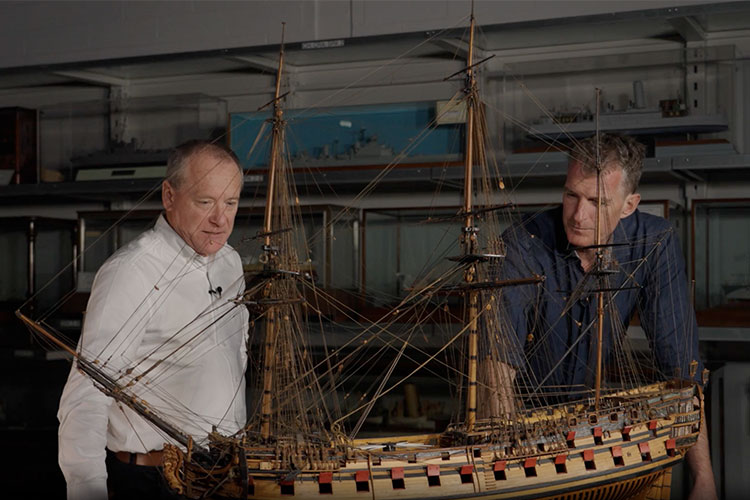
Dan Snow and Curator Simon Stephens from the National Maritime Museum inspect a 300 year old model of a similar class of ship to HMS Northumberland
Image Credit: National Maritime Museum / History Hit
A glimpse into the Stuart navy
Originally built in 1679, HMS Northumberland underwent a major refit, relaunching in 1702. The attack in the Battle of Vigo Bay was her first action since the refit.
With no contemporary plans of HMS Northumberland surviving, Dan gains unique access to a 300-year-old model at the National Maritime Museum. He speaks with Curator Simon Stephens, who reveals how this remarkably detailed model provides an unprecedented representation of this class of ship.
Today, Britain boasts two iconic historic naval vessels – Henry VIII’s ‘Mary Rose‘ (1510) and Nelson’s ‘Victory‘ (1765) – but a crucial 250-year gap exists between them. HMS Northumberland, built halfway between these giants, acts as the missing link, offering a rare chance to complete our understanding of the Royal Navy’s evolution and the formidable Stuart navy.
Diving the wreck
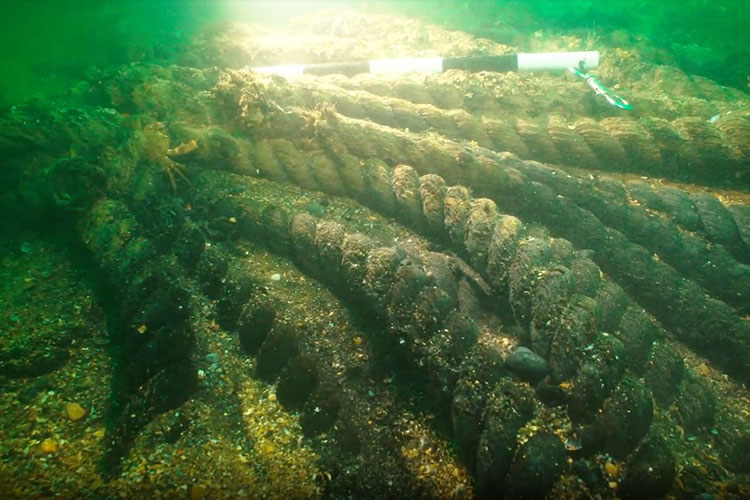
What traces of the real HMS Northumberland remain after three centuries on the seabed? Dan receives a special invitation to join maritime archaeologist Dan Pascoe and his team as they dive the wreck on the Goodwin Sands. An oxygen-free environment has preserved the vessel and its contents for centuries, but shifting currents now pose an urgent threat. Exposed areas are rapidly degrading, prompting a race against time.
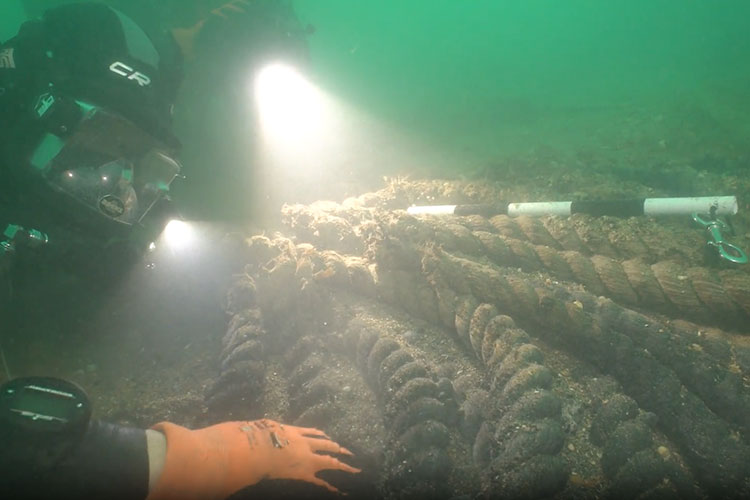
Ropes visible when diving the wreck of HMS Northumberland
Image Credit: History Hit
Pascoe explains the team’s critical mission: to “excavate this site so they can expose parts of the site that haven’t been uncovered that will have pristine surfaces, and those surfaces will provide the details that will tell us so much more about the ship and the people that lived and worked on board”.
HMS Northumberland was a ship forged in an age of expanding empires, shaped by war and innovation, only to be brought down not by battle, but by the relentless power of the sea. Its discovery offers an unparalleled opportunity to unlock the secrets of the Stuart navy and the lives of those who sailed her.
Don’t miss Shipwreck: HMS Northumberland and witness the start of this extraordinary archaeological race against time to uncover the lost history of a ship that is the missing link in the story of the Royal Navy. What will its timbers reveal?