




From 20 November 1945 until 1 October 1946 a series of military tribunals, called the Trial of the Major War Criminals, was held by the Allied forces in the German city of Nuremberg.
There were 12 additional Nazi war crimes trials at Nuremberg from 1946 to 1949. These lesser-known Nuremberg trials were also concerned with various war crimes and crimes against humanity and focused on the prosecution of industrial figures (slave labour), doctors (human experimentation), those involved with ‘racial cleansing’ as well as military figures (executions, hostage taking, imprisonment, torture, deployment of mobile death squads) and government ministers.
The indictment accuses these men of major responsibility for visiting upon mankind the most searing and catastrophic war in human history. It accuses them of wholesale enslavement, plunder, and murder.
—Telford Taylor, Counsel for the Prosecution at the Nuremberg Trials, From the opening remarks of the IG Farben Trial in 1947
Other war crime trials included the Dachau Trials, held within the former concentration camp, for war crimes against American citizens and military personnel.
 Listen Now
In all trials, Nazi war criminals were convicted of monstrous acts against humanity, yet some served only a few years before their sentences were commuted or they received pardons for economic or political reasons to do with the Cold War.
Here are 8 who received relatively lenient punishments or had their sentences commuted.
1. Friedrich Flick

Friedrich Flick being sentenced at Nuremberg.
Head of Flick KG, Friedrich Flick was sentenced to 7 years (including time served) for war crimes and crimes against humanity, including enslavement of civilians in occupied territories and concentration camps, and the plundering and seizure of industrial plants.
After his release Flick became the richest person in West Germany during the Cold War and largest shareholder of Daimler-Benz.
2. Fritz ter Meer
In 1948, board member of chemical conglomerate IG Farben Fritz ter Meer was sentenced to 7 years imprisonment for looting and enslavement at Auschwitz. He was released in 1950 and became chairman of Bayer AG (formerly part of IG Farben) in 1956.
 Listen Now
3. Alfried Krupp
The head of Krupp Industries, Alfried was sentenced to 12 years and the forfeiture of all property for crimes against humanity, such as slave labour and child slavery. After 3 years, John J. McCloy, American High Commissioner for Germany, arranged for his pardon and the return of his property.
4. Karl Dönitz
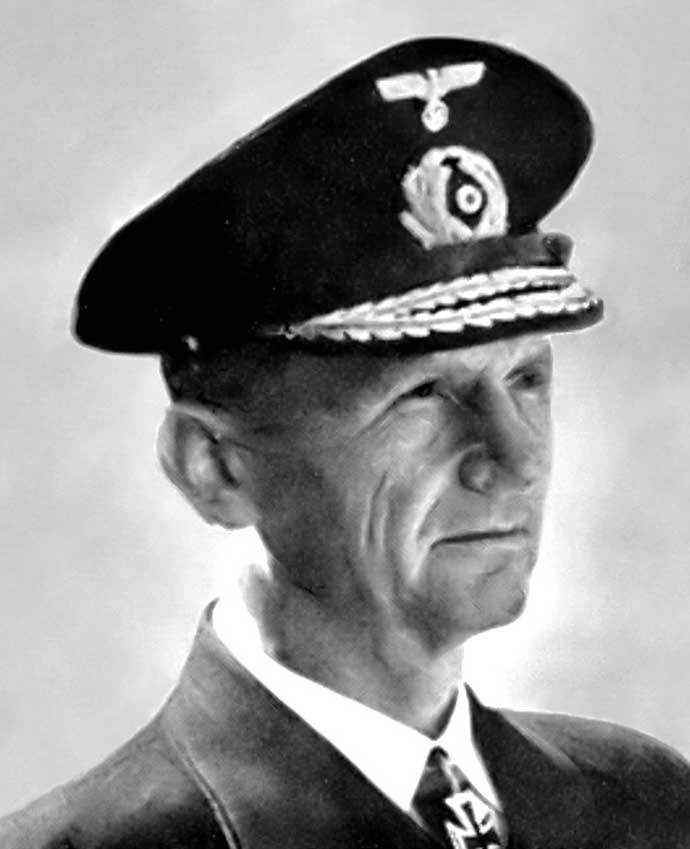
Commander of the Nazi Navy and briefly President of Germany, Dönitz was found guilty of engaging in wars of aggression and war crimes, including unrestricted submarine warfare. He was sentenced to 10 years.
Unrepentant for his crimes, he became a successful author after serving his sentence, received a captain’s pension and lived to the age of 89.
5. Martin Sandberger
SS division commander, SD commander in Estonia and head of Gestapo in Verona, Sandberger was responsible for the detainment and murder of thousands of Jews, communists, Roma and mentally ill. He was sent to Estonia to carry out mass murder in full knowledge of Hitler’s Führer Order to kill Jews.
He received the death sentence, but was reprieved and then pardoned by John J. McCloy and released in 1958. Sandberger died in 2010 at the age of 98.
6. Ernst von Weizsäcker
SS-Brigadeführer, Secretary of State, Ambassador to the Holy See, Weizsäcker professed that he was an anti-Nazi and supporter of the resistance.
He was sentenced to 7 years for co-operating with the deportation of French Jews to Auschwitz, though he was released after only 3 years and three months with the help of John J. McCloy.
The Malmedy Massacre trial
In 1944 near Malmedy, Belgium, 84 American POWs were murdered by their German captors. Several subsequent massacres were carried out over the next few days by the same division, totalling in the deaths of 363 POWs and 111 civilians.
 Watch Now
7. Joachim Peiper
Field officer in the Waffen-SS and personal adjutant to Heinrich Himmler, Peiper was sentenced to death for his role in the Malmedy Massacre, but this was commuted to a life sentence shortly afterwards.
He was released in 1956 after serving just 11.5 years, got a job at Porsche and continued to associate with SS friends and organisations, later becoming an automotive journalist and translator. He retired to France in 1972 where his charred remains were discovered in 1976 after an attack on his home.
8. Josef Dietrich
Waffen-SS General and participant in the Night of the Long Knives, Dietrich was sentenced to life in prison, then shortened 25 years, of which he only served 10. He later served 19 months for his role in the Night of the Long Knives.
Though he received no government pension, his former soldiers provided him with the means to a comfortable life until his death in 1966.