



At 2.08am on Saturday 22 September 1934 a devastating underground explosion occurred in the Gresford Colliery in North Wales, UK.
‘They had heard no sound whatever, neither of a voice nor of a knock’
The exact cause of the explosion remains unclear to this day but a build-up of flammable gases resulting from inadequate ventilation may have been to blame. Upwards of 500 men were working underground on the night shift at the time.
 Listen Now
Over half of them were working in the Dennis ‘district’ of the mine where the explosion took place. Only six succeeded in getting clear of the fires and fumes that engulfed the Dennis area in the aftermath of the initial explosion. The rest were either killed instantly or trapped.
Last night the officials told us with distress that they had heard no sound whatever, neither of a voice nor of a knock. Yet the feeble chance has inspirited rescuers to go on without word of despair.
Guardian, 24 September 1934
 Listen Now
A difficult decision
Rescue efforts were hampered by conditions inside the workings where fires continued to burn. Three members of a rescue team from the nearby Llay Main colliery died of asphyxiation in the wrecked tunnels. After further fruitless efforts to penetrate the Dennis district it was decided that the risk of losing more lives was too great. Rescue attempts were abandoned and the mine’s shafts temporarily sealed.
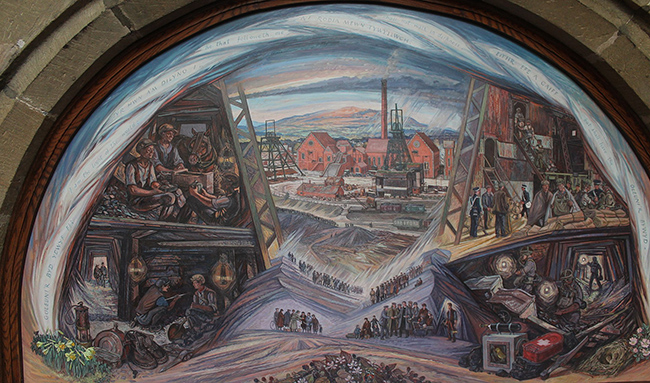
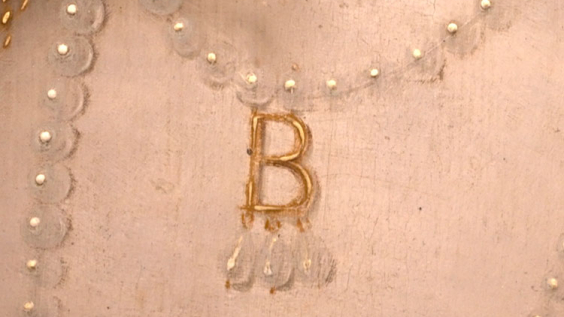
A painting in All Saints’ Church, Gresford commemorates the disaster with a book including the names of those who died. Credit: Llywelyn2000 / Commons.
The shafts were reopened after six months. Search and repair teams entered the workings again. Only 11 bodies (seven miners and the three rescue men) could be recovered. Air samples taken from deeper inside the Dennis district showed high levels of toxicity so inspectors refused to allow any further attempts to enter that area. It was permanently sealed off.
The bodies of 254 further victims remain entombed there to this day.