


About Gelati Monastery
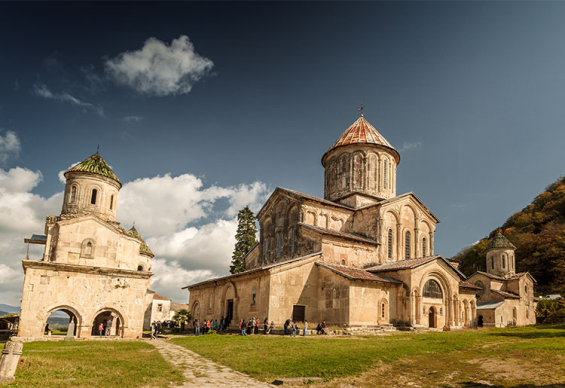
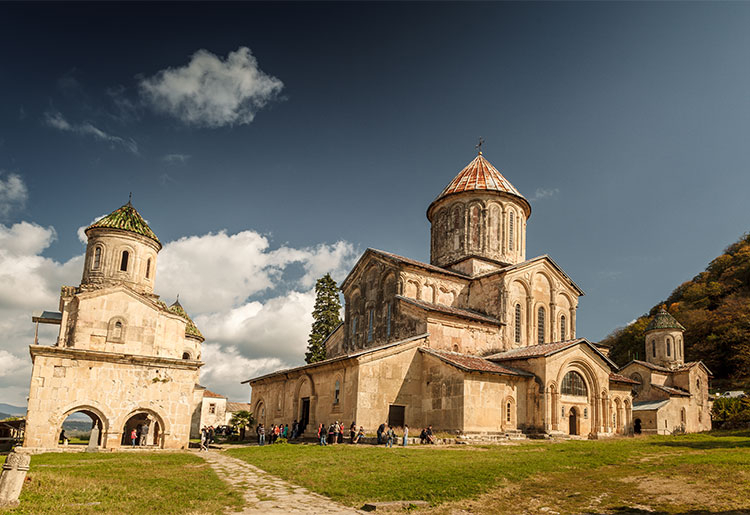
This medieval monastery was one of the very first buildings of its kind in Georgia, impressing onlookers with its beauty for almost a thousand years. It was designated a UNESCO World Heritage Site in 1994.
History of Gelati Monastery
Founded in 1106 by King David IV of Georgia, Gelati is one of the oldest monasteries in the mountainous country, serving not only as a monastic, but also as an educational centre, employing many scientists, theologians, and philosophers. The complex is widely considered to be an architectural masterpiece from the Georgian Golden Age and is one of the largest medieval Orthodox monasteries in the world.
Gelati monastery was constructed near the then capital city of Kutaisi and received great amounts of wealth from the Royal household. At its peak it was a splendid beacon of Eastern Christian grandeur, with richly painted walls and icons adorning the interiors of the monastery.
Gelati Monastery today
The monastic complex is one of Georgia’s greatest cultural sites, visited by tourists from across the world. The monastery is still an active site of worship, with its churches regularly used for religious service. Extensive restoration works have been performed to return the interiors and exteriors to their former glory. The many murals of the Gelati Monastery are a visual feast, showing a mixture of religious motifs and past Georgian rulers.
Getting to Gelati Monastery
There are three main ways of getting to the medieval monastery – by taking either a bus, train or plane from Tbilisi, Mestia or Ambrolauri to Kutaisi. The UNESCO World Heritage site is around 5.5 miles (9 kilometres) from the city, which means a taxi is required to cover the remaining distance. Unfortunately there is no public transport to the monastic site.