



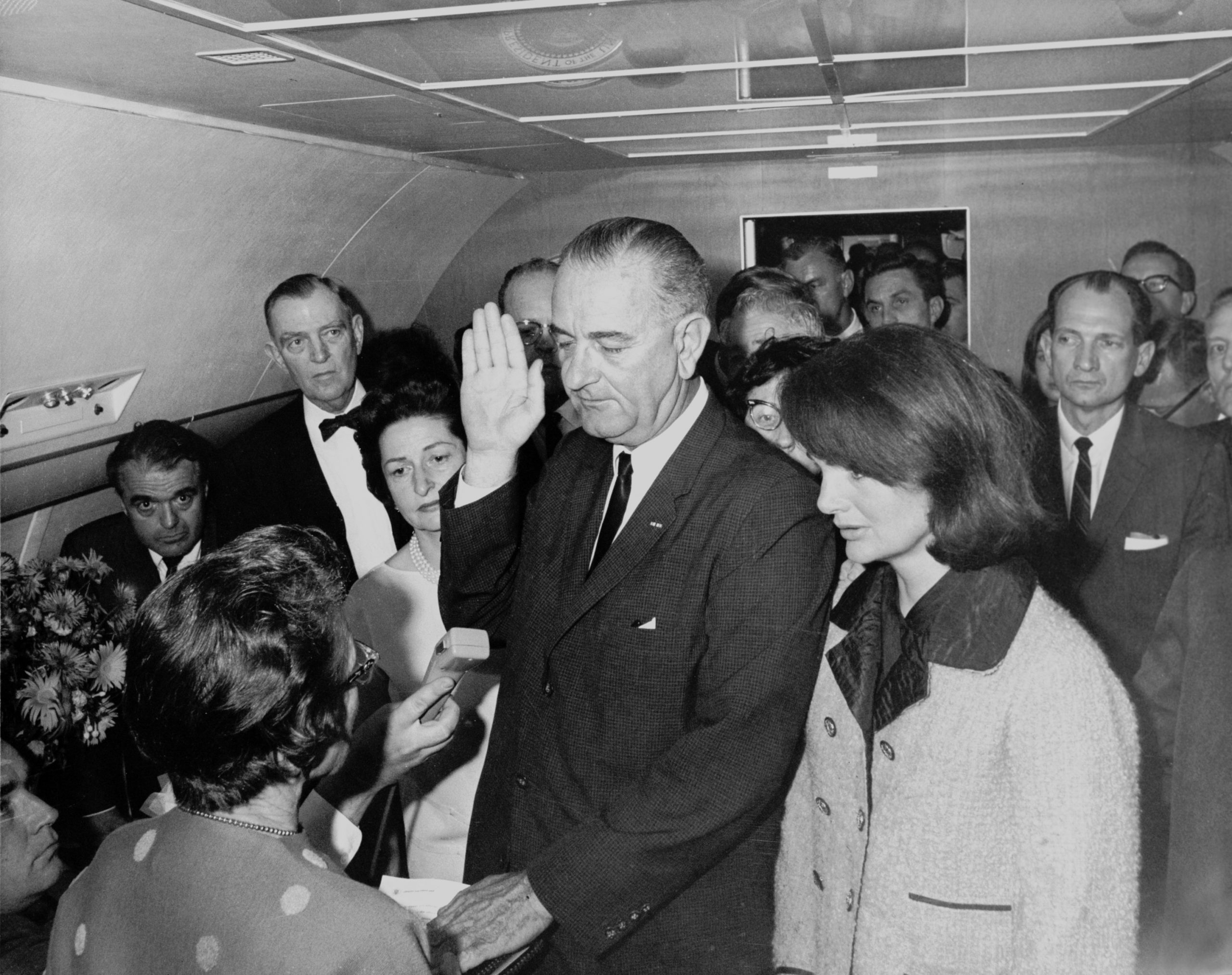
Lyndon B Johnson’s political ascent was an unparalleled masterclass in manipulation and determination. Growing up in Johnson City – a tiny, isolated town in rural Texas – from an early age Johnson harboured an insatiable lust for power that would drive him to the highest office in US politics, overcoming seemingly insurmountable obstacles and challenges.
Presidential ambition from an early age
There are innumerable tales of Johnson’s exploits, all of which illustrate his central, burning desire to climb the ladder of power. While studying at Southwest Texas Teacher’s College in San Marcos, Johnson openly stated that he was only interested in co-eds with rich daddies.
At college he also developed a propensity to latch onto any senior authority, playing off their insecurities, in order to advance his position. No amount of toadying was beneath him.
Johnson kept up this particular strategy in the Senate itself, cosying up to lonely but powerful individuals. He also developed a unique method of persuasion – the ‘Johnson Treatment.’
The ‘Treatment’ in a nutshell
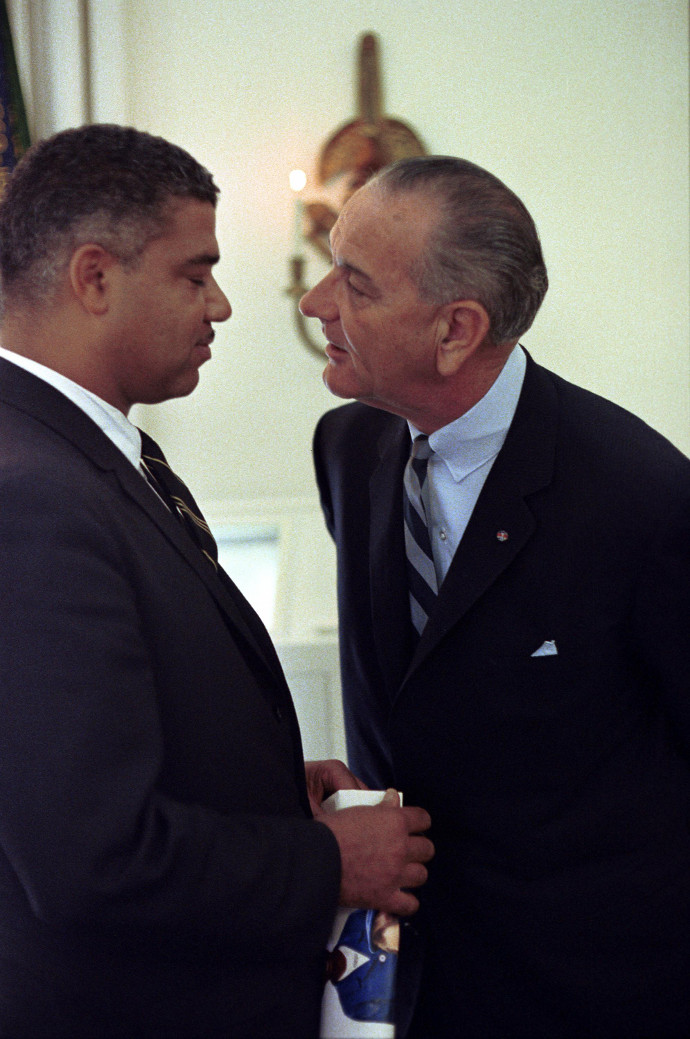
The Johnson treatment is not easily defined, but it typically involved invading the personal space of the target – Johnson taking advantage of his substantial bulk – and issuing a disorientating stream of flattery, threats and persuasion that would leave the target unable to counter.
If he did counter, Johnson would press on relentlessly. It was evocatively described as like having, ‘a large St. Bernard licking your face and pawing you all over.’
 Listen Now
An effective tactic
Johnson’s tenure as Senate majority leader coincided with a high level of legislative fluidity, and Johnson was central to it. He was a bully of high authority and not above base threats and tactics.
The treatment helped bring the USA a number of astounding legislative achievements – the 1964 Civil Rights Act and the 1965 Voting Rights Act prime among them.
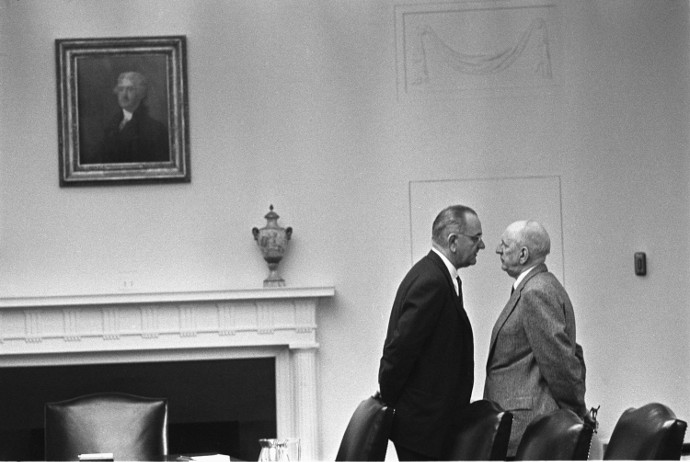
In pursuit of the former, LBJ leaned heavily on Richard Russell, the leader of the Southern caucus and key impediment to Civil Rights legislation. Johnson allegedly said, ‘Dick, you’ve got to get out of my way.’
However, he deployed the treatment with both sides. Here he delivers the treatment to Whitney Young, the Executive Director of the National Urban League.
The political chameleon
Johnson would stop at nothing to get his point across. Although on the face of it he had a visceral instinct to advance Civil Rights and rejected racism, he recognised that he had a shift faces when working different audiences.
When socialising with his close friends in the Southern caucus, Lyndon would throw around the word ‘nigger’ as though it were everyday parlance, and always couched his support for civil rights bills in reluctant political terms – the ‘Nigger Bill’ would have to be passed to prevent social upheaval.
In front of Civil Rights leaders, however, Johnson would speak earnestly about the absolute moral need to push legislation through. Even though it was not politically expedient, he vowed to tie his flag to their cause.
It was this ability to slip seamlessly between positions, and so enamour himself with opposition parties, which alongside the ‘treatment’ was a major factor in his political success.