



Chivalry today might mean opening a door for someone or picking up the bill in a restaurant but in the medieval period it mean something a little different…
Developed between the late 11th century and early 12th century, chivalry was an informal code of conduct associated with knights. Although some historians have since tried to define the chivalric code more strictly, in the Middle Ages it was a somewhat ambiguous concept and never written down in any kind of universally-recognised document.
At its heart, however, the code held an idealised image of the knight as a noble warrior who was not only fair in his dealings on the battlefield but also with women and God.
 Watch Now
Where did the concept of chivalry come from?
Chivalry had its roots in the idealisation of cavalrymen in the Holy Roman Empire. Indeed, the term itself derives from the Old French term “chevalerie”, roughly meaning “ horse soldiery”.
But as a code of conduct for knights, chivalry was strongly influenced by the Crusades, a series of military expeditions beginning in the late 11th century that were organised by western European Christians in an effort to counter the spread of Islam.
As a result, the chivalric code encompassed both piety and other virtues promoted by religion at that time, as well as military skill. It also placed great emphasis on courtesy and governed the dealings between knights and women.
Fact vs fiction

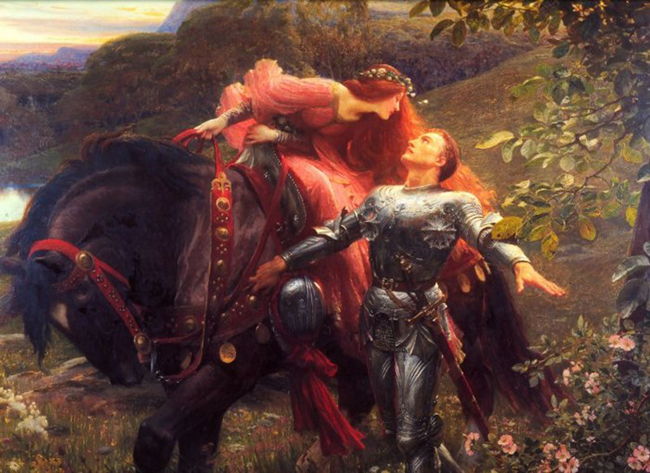
The idea of courtly love has been a popular topic for artists.
This latter aspect of chivalry included “courtly love”, a tradition that actually started out as a literary invention but developed into a set of real-life practices. It referred to a love between knights and married gentlewomen that was seen as ennobling.
The concept of chivalry was not necessarily one that reflected the true goings on of the time or any period that came before it, however. As today, the word summoned up images of a golden bygone era that in reality did not truly exist.
It is telling that the best examples of chivalry are perhaps seen in the tales of King Arthur – largely the product of myth and fiction.
 Shop Now