



The First Reference to Smoking Tobacco | History Hit

The First Reference to Smoking Tobacco

History Hit

06 Nov 2015

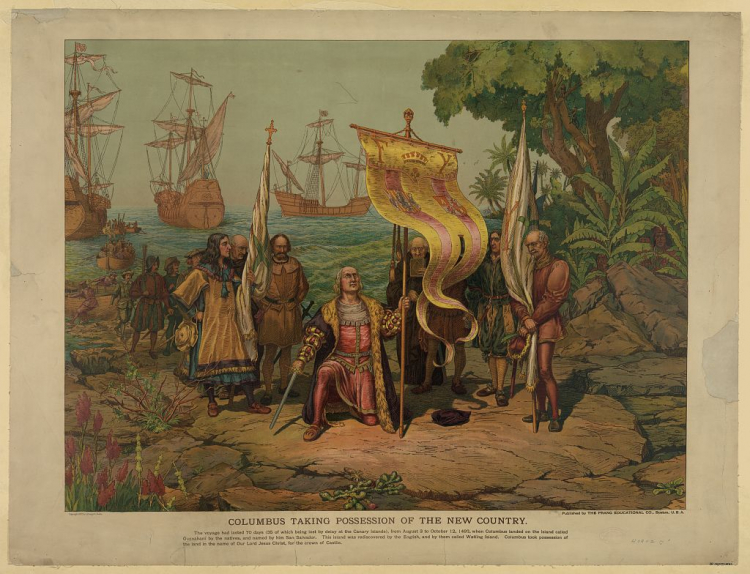
In an entry in his journal dated 6 November, 1492 Christopher Columbus made the first written reference to smoking tobacco during his exploration of the New World.

…men and women with a half-burnt weed in their hands, being the herbs they are accustomed to smoke

Cambridge University Press edition 2010

The native people rolled the herbs, which they called tabacos, inside dried leaves and lit one end. Inhaling the smoke made them feel sleepy or intoxicated.

Matt Lewis investigates the real people behind the revolutionary peasants revolt of 1381.
Watch Now

Columbus first came in to contact with tobacco in October when he was presented with a bunch of dried herbs on his arrival. Neither he nor his crew had any idea what to do with them until they observed the natives chewing them and inhaling the smoke. Sailors who decided to try smoking the tobacco soon found it became a habit.

Among the sailors who took up smoking tobacco was Rodrigo de Jerez. But Jerez ran in to trouble when he took his smoking habit back to Spain. People were alarmed and afraid at the vision of a man blowing smoke out of his mouth and nose, believing it to be the work of Satan. Consequently, Jerez was arrested and spent several years in prison.

In many ways, Empress Matilda can be seen as a pawn of the men in her world. Sent away aged eight to match with the Holy Roman Emperor, she represented status for her father and money for her intended. However, Matilda was independent, intelligent, educated and authoritative. Join Dr Catherine Hanley as she takes Matt through the early life of Matilda, her ascension to Empress and her changing position in the succession to the English throne. Catherine is a medieval historian, author and writer of Matilda: Empress, Queen, Warrior.
Listen Now

Tags: OTD

History Hit

Privacy Overview
History Hit

This website uses cookies so that we can provide you with the best user experience possible. Cookie information is stored in your browser and performs functions such as recognising you when you return to our website and helping our team to understand which sections of the website you find most interesting and useful.

Strictly Necessary Cookies

Strictly Necessary Cookie should be enabled at all times so that we can save your preferences for cookie settings.

If you disable this cookie, we will not be able to save your preferences. This means that every time you visit this website you will need to enable or disable cookies again.

Advertising

Tracks conversions from Microsoft Advertising and supports ad attribution and remarketing features. Enabled only if you consent to advertising cookies.