



Here are 10 facts that tell the story of the various home fronts of World War One. As the first total war, World War One had a profound impact on domestic societies. Armies were given priority over food supplies, and the demands on industry were massive.
Civilians also became legitimate targets. As the war dragged on the aim of both sides became to cripple the other’s society, to demoralise and starve the enemy into submission. The war therefore touched millions beyond the battlefield, and shaped social development in unprecedented ways.
1. In December 1914 the German Navy bombarded Scarborough, Hartlepool and Whitby

18 Civilians were killed. As this poster suggests, the incident created outrage in Britain and was used for later propaganda.
2. Over the course of the war, 700,000 women took up posts in the munitions industry

With many men going to the front, there was a labour shortage – many women filled vacant positions.
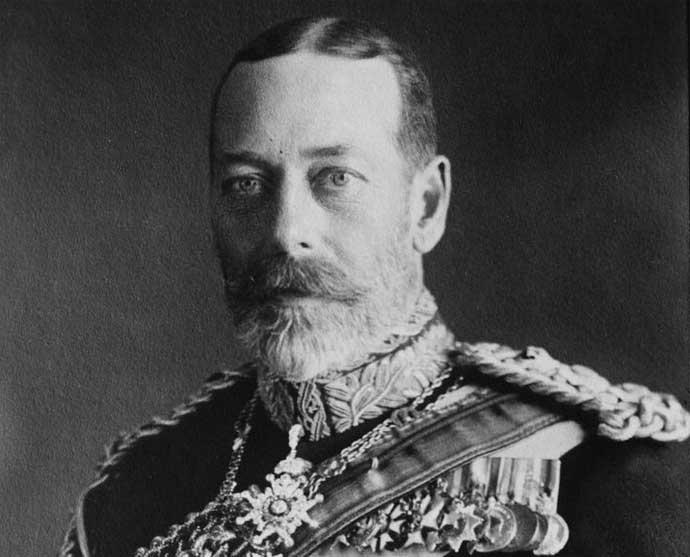
3. In 1917 anti-German sentiment forced George V to change the Royal Family’s name from Saxe-Coburg and Gotha to Windsor

Many road names in Britain were changed too.
4. There were 16,000 British conscientious objectors who refused to fight
Some were given non-combatant roles, others were imprisoned.
 Watch Now
5. In Britain there were toy tanks available just six months after their first deployment

6. The female mortality rate rose in Germany from 14.3 in 1,000 in 1913 to 21.6 in 1,000, a bigger rise than England, due to hunger
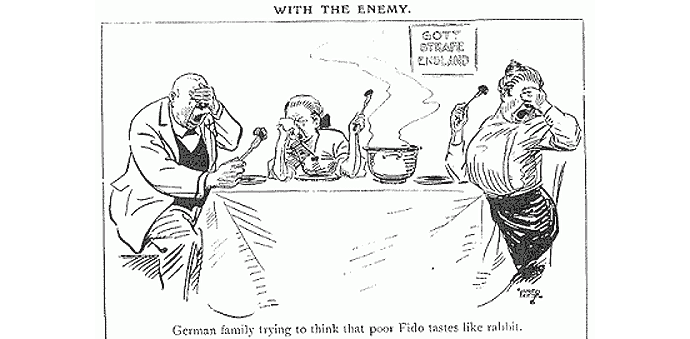
It is likely that hundreds of thousands of civilians died from malnutrition — usually from typhus or a disease their weakened body could not resist. (Starvation itself rarely caused death).
7. In both Britain and France women accounted for around 36/7% of the industrial workforce by the end of the war
 Listen Now
8. The winter of 1916-1917 was known as the “Turnip Winter” in Germany

Because that vegetable, usually fed to livestock, was used by people as a substitute for potatoes and meat, which were increasingly scarce
9. By late 1916 the German meat ration was only 31% of peacetime, and it fell to 12% in late 1918
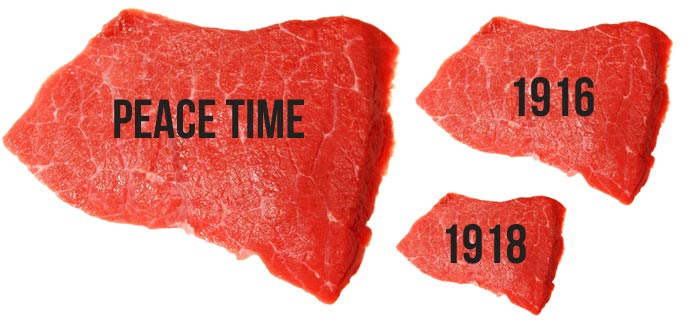
The food supply increasingly focused on potatoes and bread – it became harder and harder to buy meat.
10. When soldiers returned there was a baby boom in Britain. Births increased by 45% between 1918 and 1920
 Listen Now