


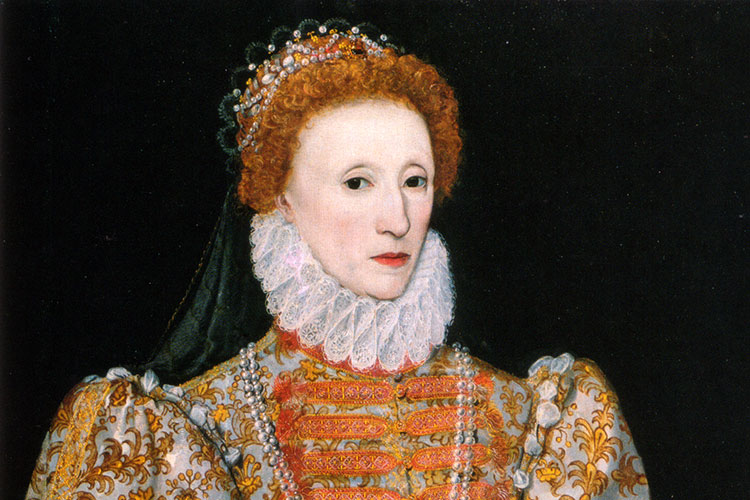

The Tudors continue to captivate us, their personal lives inextricably linked to political power and succession. Queen Elizabeth I, the last and longest reigning Tudor monarch, remains one of Britain’s most famous rulers. But beyond the well-known narratives, what does her intimate life truly reveal?
In the latest podcast episode of Betwixt The Sheets’ Royal Sex mini-series, Dr Kate Lister is joined by Professor Anna Whitelock, a renowned historian of monarchy, to delve into the fascinating complexities of Elizabeth’s reign, exploring how her personal choices became defining political statements. The series explores queens often remembered for their sex lives, making it essential to turn our attention to the woman so frequently defined by her lack of one. Renowned as the ‘Virgin Queen’, the enduring question remains: was Elizabeth I truly a virgin?
 Listen Now
Subscribe to Betwixt The Sheets
Sex, succession, and celebrity
Our enduring fascination with the Tudors, as Professor Whitelock and Kate discuss, partly stems from the wealth of historical sources that reveal them not just as political figures, but as relatable individuals, whose personal lives – especially their sex lives – were inextricably linked to their political power and burgeoning celebrity. From Henry VIII’s prominent codpiece in his Holbein portrait, to Elizabeth’s strategically placed bow in the Armada portrait (a deliberate statement about her virginity as a source of political strength), the personal and the political converged as never before.
At its core, monarchy is about succession, and succession, ultimately, is about sex. In the Tudor period, this became the very “stuff of politics”: the dynasty’s survival literally hinged on the monarch’s ability to produce offspring, as vividly demonstrated by Henry VIII’s desperate quest for a male heir, Edward VI’s brief reign, and Mary I’s phantom pregnancies.
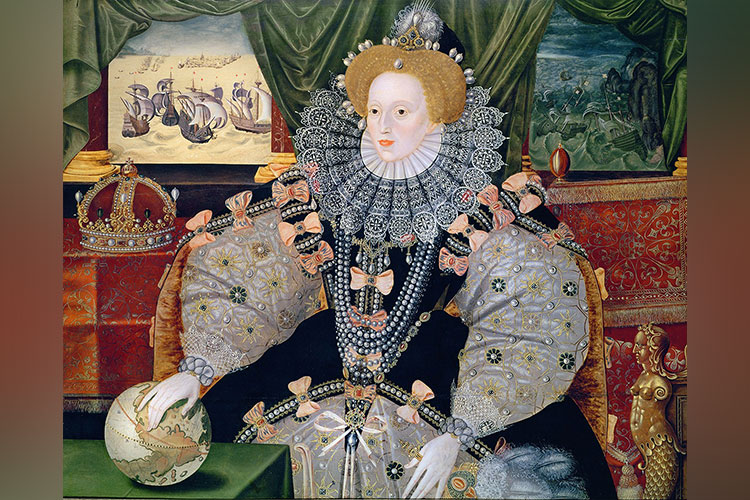
Portrait of Elizabeth I of England, the Armada Portrait
Image Credit: Formerly attributed to George Gower (1540–1596) / Public Domain
Elizabeth’s early struggles and rise to power
Some of Elizabeth’s early experiences may potentially have played a role in her later choice to remain single. Her mother, Anne Boleyn, had been executed on charges of adultery, and whilst she still revered her father, Henry VIII, they had a complex relationship.
Professor Whitelock also discusses The Seymour Scandal, a formative event in teenage Elizabeth I’s life. Thomas Seymour, her stepmother Catherine Parr’s husband, engaged in inappropriate early-morning visits to Elizabeth’s bedroom. After Catherine’s death, Seymour plotted to marry Elizabeth for political gain, but his arrest led to Elizabeth’s interrogation regarding their relationship. Though exonerated, this perilous experience taught her the dangers of flirtation and the paramount importance of an untarnished public image, potentially shaping her future relationships with men.
Elizabeth’s perilous path to the throne was also marked by periods of immense stress and even imprisonment in the Tower of London under the tumultuous reign of her half-sister Mary I. Navigating a dangerous political landscape where she became a figurehead for opposition, Elizabeth emerged onto the throne in 1558 as a truly formidable woman: attractive, accomplished, and exceptionally intelligent.
Professor Whitelock highlights the unique scrutiny faced by a female monarch. Unlike kings, her own body was directly implicated in producing an heir, subjecting Elizabeth’s health and fertility to intense political observation.
The ‘Virgin Queen’: a political masterstroke?
Ascending the throne in 1558, Elizabeth I, the first unmarried queen, faced immense pressure to wed and secure the succession. Her marital prospects immediately became the subject of intense international scrutiny. Diplomats across Europe eagerly sought information about her menstrual cycle, as her fertility was paramount to her value as a potential spouse.
Furthermore, her enemies, particularly Catholics, relentlessly attacked her sexual reputation, spreading rumours of promiscuity, especially with her alleged favourite, Robert Dudley.
Professor Whitelock reveals that for years, Europe debated whether Elizabeth was a virgin. This question became critical as Elizabeth aged and approached menopause, diminishing her value as a marriage prospect. It was at this crucial juncture that the iconic ‘Virgin Queen’ image was meticulously crafted – a brilliant political manoeuvre that transformed her inability to produce an heir into a powerful virtue.
The podcast delves into whether Elizabeth truly intended to marry, exploring the lingering shadow of Mary I’s unpopular marriage to Philip of Spain, and her own apparent affection for Robert Dudley. The enduring mystery of her relationship with Dudley, and its non-consummation, fuelled both slander and strategically explained her prolonged celibacy. This ‘Virgin Queen’ persona ultimately converted profound vulnerability into unparalleled political strength and mystique.
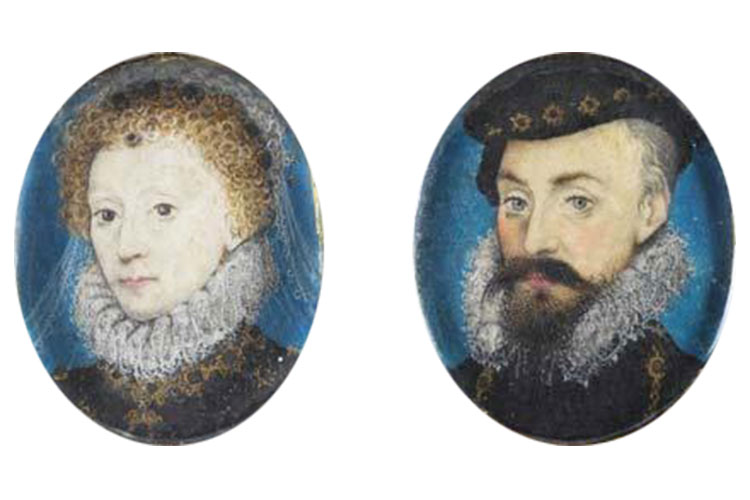
Pair of miniatures of Elizabeth I and Robert Dudley, c. 1575, by Nicholas Hilliard.
Image Credit: Nicholas Hilliard / Public Domain
Robert Dudley: the controversial favourite
Elizabeth I’s bond with Robert Dudley, her Master of the Horse, sparked intense speculation. Their flirtatious relationship became deeply complicated by the suspicious death of Dudley’s wife, Amy Robsart, just two years into Elizabeth’s reign, fuelling rumours of foul play and making marriage between them nearly impossible. The podcast delves into this intricate web of court intrigue, foreign alliances, and personal affections.
Professor Whitelock also sheds light on the intriguing role of the Queen’s trusted female ‘bedfellows’. Could these close companions have facilitated secret dalliances? Kate and Anna explore this fascinating role of female intimacy as political intimacy in Elizabeth’s court, where loyal women could have provided critical access and protection for the Queen’s private life.
A queue of suitors
Despite her enduring bond with Robert Dudley, Elizabeth I faced a constant stream of marriage proposals from European suitors, including Philip II of Spain and François, Duke of Anjou. Elizabeth masterfully ‘dallied’ with these contenders, strategically prolonging negotiations to keep her council and Parliament at bay. This skilled procrastination ultimately led to the powerful creation of her ‘Virgin Queen’ image as she passed her childbearing years. The podcast reveals how this iconic persona, famously depicted in the Armada Portrait, transformed her dynastic weakness into a symbol of ultimate strength and unity with her ‘impenetrable’ realm.
The legacy of the unmarried queen
Elizabeth I’s decision to remain unmarried allowed her to wield unprecedented personal power, yet also left a dynastic void. The podcast explores how her successor, James I, even tried to reshape her legacy after her death.
A persistent question remains: was Elizabeth truly a virgin when she died? Professor Whitelock discusses the historical speculation, including theories of hidden physical impediments or concealed non-virginity. While ultimately unknowable, the stakes for her reputation and England’s succession were incredibly high.
Listen to Royal Sex: Elizabeth I to uncover the complex interplay of power, politics, and personal choices that defined England’s most celebrated monarch.
Listen Now