



In the spring of 1258, the clatter of plate armour replaced the hushed tones of diplomacy as a group of defiant barons stormed Westminster Hall. Led by Simon de Montfort, they confronted King Henry III with an unmistakable message: the era of absolute royal power was coming to an end. This act of rebellion would echo through seven centuries of British history, marking a pivotal shift toward representative government.
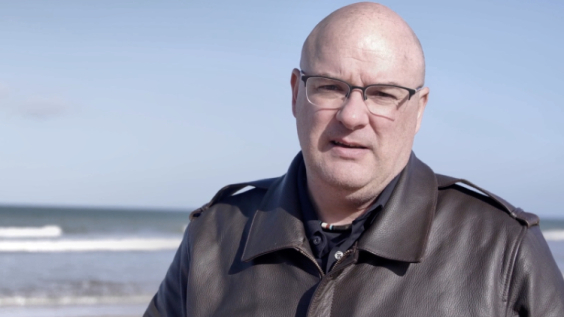
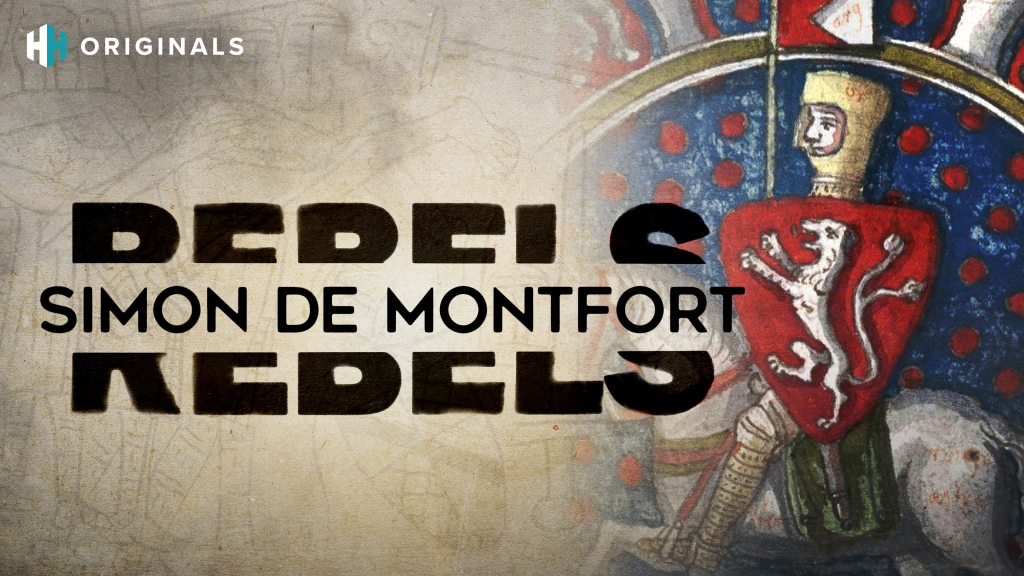
In the latest episode of History Hit’s Rebels series, conflict analyst Professor Michael Livingston investigates the enigma of Simon de Montfort. Was he a noble visionary or a power-hungry aristocrat who plunged the realm into a merciless civil war? By exploring towering fortresses like Kenilworth Castle and analysing rare medieval manuscripts, Rebels: Simon de Montfort reveals a complex narrative. It is a story driven by personal charisma and bitter grudges, ultimately exposing the violent, high-stakes origins of England’s political reform.
 Watch Now
The rise of an unlikely favourite
The story of Simon de Montfort is an improbable one. A French noble with a tenuous claim to the Earldom of Leicester, he arrived in England in 1229 as a political nobody. Yet, through sheer “silver-tongued” charm and a pious nature that mirrored the King’s own religious devotion, he became an immediate royal favourite.
Henry III was so taken with this charismatic newcomer that he allowed Simon to marry his sister, Eleanor, in a secret ceremony. It was a match that scandalised the established English barons, who watched with mounting resentment as this foreign “upstart” was welcomed into the very heart of the royal family.
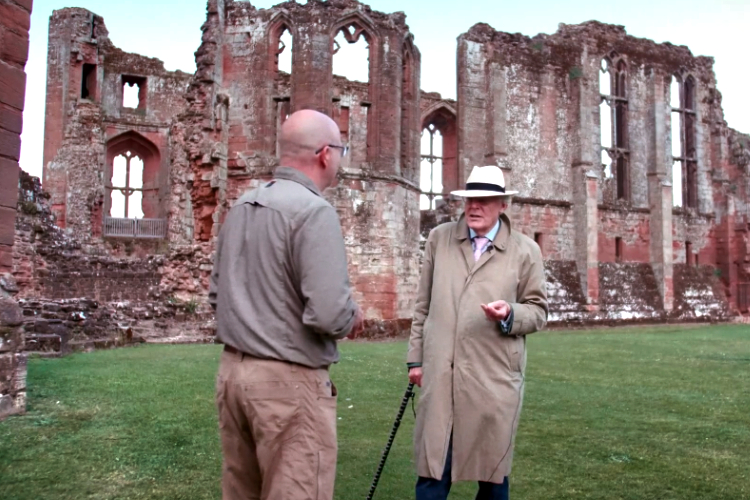
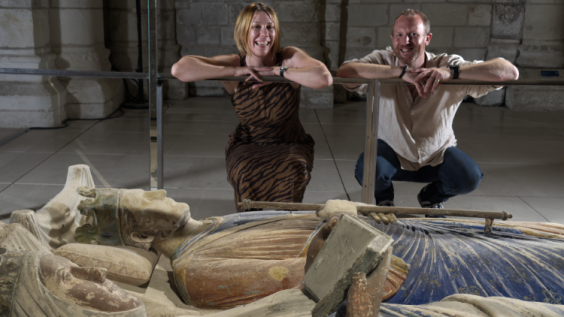
Prof Livingston talks to Professor David Carpenter at Kenilworth Castle
Image Credit: History Hit
Friction and financial feuds
The “bosom of the royal family”, however, proved to be a nest of thorns. The relationship between the two men eventually soured, fuelled by de Montfort’s growing contempt for Henry’s perceived “simplicity.” While Simon was an intelligent and calculating strategist, he viewed the King as naive and emotional. This personal friction was exacerbated by massive financial grievances; Simon believed the King owed him and Eleanor a staggering sum – equivalent to the revenue of the entire kingdom. By the 1250s, the underlying tension was ready to ignite.
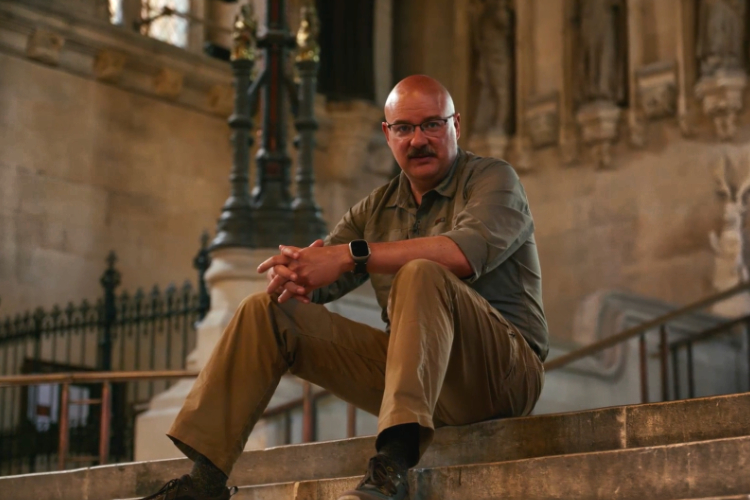
The spark was Henry’s disastrous and “imbecilic” rule. From a failed attempt to place his son on the throne of Sicily to the favouritism shown to his foreign relatives, the King had alienated his nobility. When the barons burst into Westminster in 1258, they forced Henry to agree to the ‘Provisions of Oxford’. This revolutionary document created a council of barons to oversee the King’s decisions, effectively attempting to install the machinery required to ensure a monarch obeyed the law. It was a direct challenge to the status quo, and it set England on a collision course with destiny.
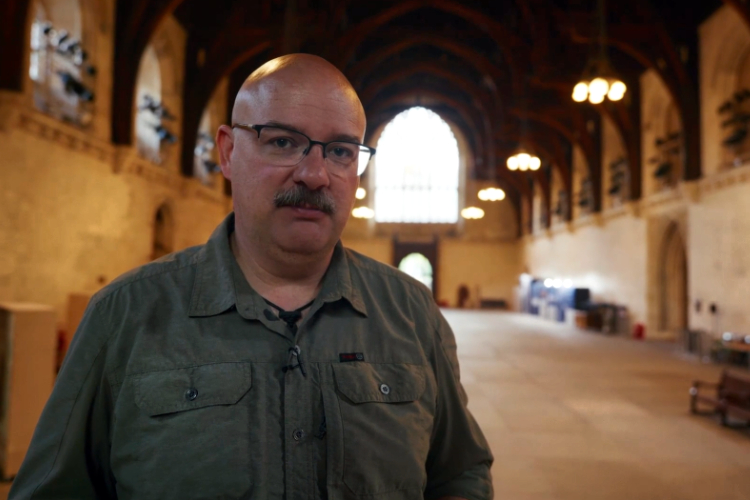
Prof Livingston at Westminster Hall
Image Credit: History Hit
The machinery of war
The documentary vividly recreates the atmosphere of a kingdom sliding into all-out conflict. Professor Livingston explores the material culture of the era, from the heavy maille hauberks worn by 13th-century knights to the lethal daggers that served as the “ultimate killing weapon” in the close-quarters brutality of the Second Barons’ War. We see how Simon used both religious fervour and cold political strategy to bolster his cause, including the dark and mercenary targeting of England’s Jewish population – “effectively sort of economic resources for the king” explains historian Rory MacLellan – to drain the King’s resources and win over indebted nobles.
The birth of representative government
The climax of de Montfort’s rebellion came in 1264 at the Battle of Lewes, where he defeated the royalist forces and took both King Henry and Prince Edward prisoner. For a brief, extraordinary moment, Simon was the de facto ruler of England. During this time, de Montfort summoned the famous Parliament of 1265.
Professor Livingston visits the National Archives and talks to Dr Jessica Nelson, Head of Collections at the National Archives, who shows him the original record of the writs of summons, which had been sent out summoning people to the parliament which took place in January and February 1265.
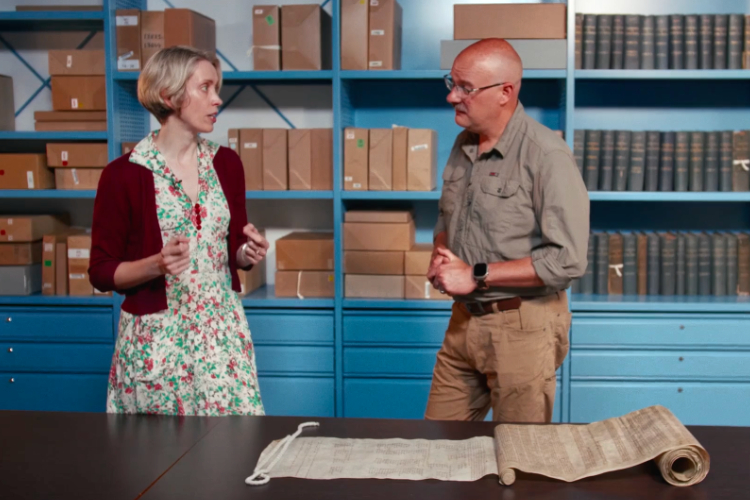
Dr Jessica Nelson, Head of Collections at the National Archives in Kew, shows Prof Michael Livingston the record of the writs of summons sent out for the parliament of January and February 1265.
Image Credit: History Hit
While the document is framed as an official summons from King Henry III, we know Henry was a captive of Simon de Montfort, making his, in effect, a summons to de Montfort’s own parliament with the King serving as a mere puppet. The list of noble elites invited reveals the extent of this control: at the top sits the Earl of Leicester. “Of course, that’s Simon himself”, notes Dr Nelson, “so he’s top of the guest list for his own parliament.”
While parliaments were common for raising taxes, Simon’s version was revolutionary. For the first time in history, writs were sent out not just to the elites, but to “ordinary” representatives – two knights from each county and two citizens from each town. As Professor Livingston notes, while this was far from modern democracy, it was the embryonic beginning of what we now recognise as the House of Commons.
The escape of the Prince
Yet, holding power proved far more difficult than seizing it. The documentary explores the “cancer at the heart of the regime” – the captive royal family. De Montfort could not bring himself to depose or execute a King as pious as Henry, but his grip began to slip as powerful allies like the Earl of Gloucester deserted him.
The turning point was the dramatic escape of Prince Edward, who outwitted his guards during a horse race and gathered a royalist army that outnumbered the rebels three to one.
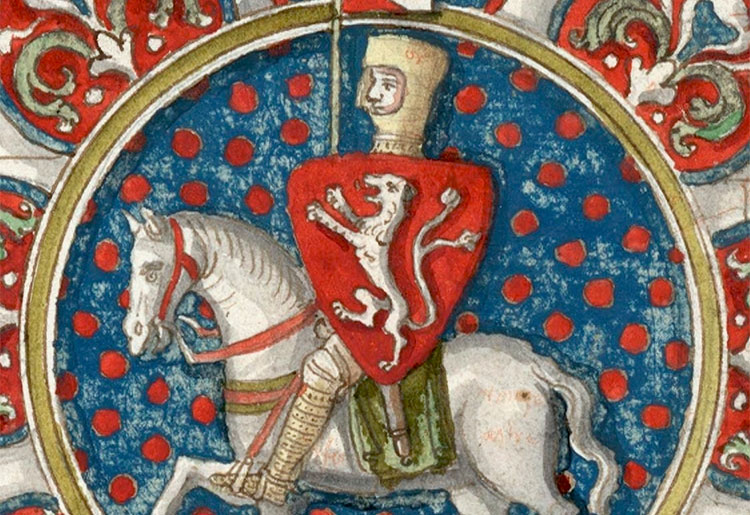
Drawing of a stained glass window of Chartres Cathedral, depicting Simon de Montfort, 6th Earl of Leicester
Image Credit: Public domain, via Wikimedia Commons
The murder of Evesham
The final act played out in the loop of the River Avon at Evesham. Trapped by the geography of the landscape and bottled up by Edward’s forces, Simon de Montfort faced a choice: flee or fight. He chose the battlefield, famously remarking that a “knight’s place is on the battlefield, the chaplain’s in the church.” The resulting slaughter was so one-sided and vicious that chroniclers refused to call it a battle, labelling it instead “the murder of Evesham.”
In a chilling look at the end of a rebel, the episode examines the gruesome fate of de Montfort. The royalist death squad did not merely want him dead; they stripped him of his dignity and dismembered his body on the field. It was a brutal end for a man who had sought to bind the crown to the will of the people.
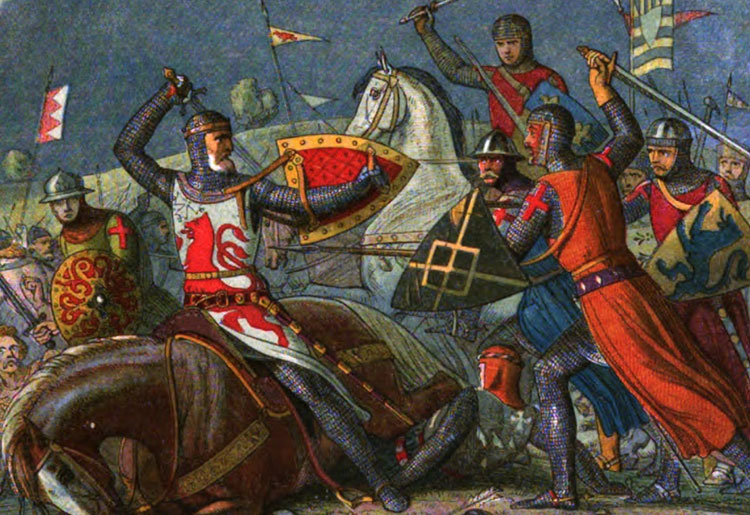
Simon de Montfort, 6th Earl of Leicester, in rebellion against Henry III, dies at the Battle of Evesham
Image Credit: James William Edmund Doyle, Public domain, via Wikimedia Commons
A lasting constitutional legacy
Though Simon fell at Evesham, his ghost continued to haunt the halls of power. Just two years later, the ‘Statute of Marlborough’ echoed many of the reforms he had championed, serving as a permanent reminder that the King’s power was not limitless.
Professor Livingston concludes that while de Montfort’s revolution brought suffering and ultimately failed in its time, it represented the essential first steps toward the representative democracy we enjoy today. As Livingston notes, to understand the roots of our modern world, one must understand the man who dared to tell a King, “Enough.”