



On the vast Great Plains of North America, where the endless flatlands finally buckle into the rugged silhouettes of the Rocky Mountains, there once stood a lone sentinel of the frontier. To the weary migrant trailing 700 miles from Missouri, it was a heaven-sent oasis. To the Cheyenne, Arapaho, and Sioux, it was a familiar gathering place that gradually turned into a military bastion. To history, it is known as Fort Laramie.
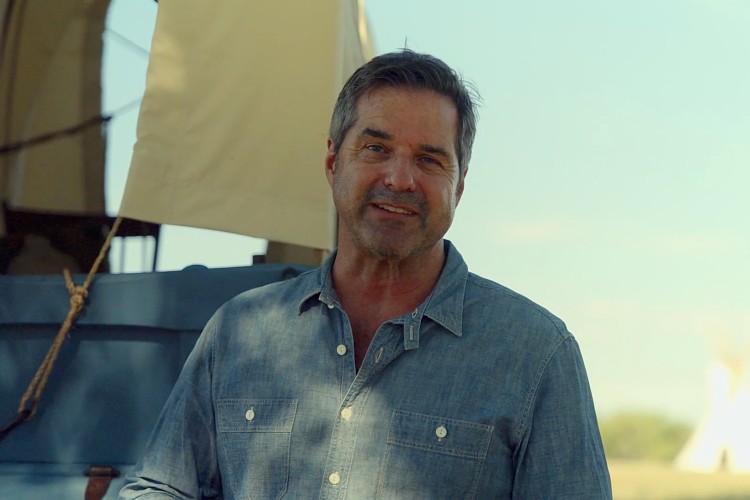
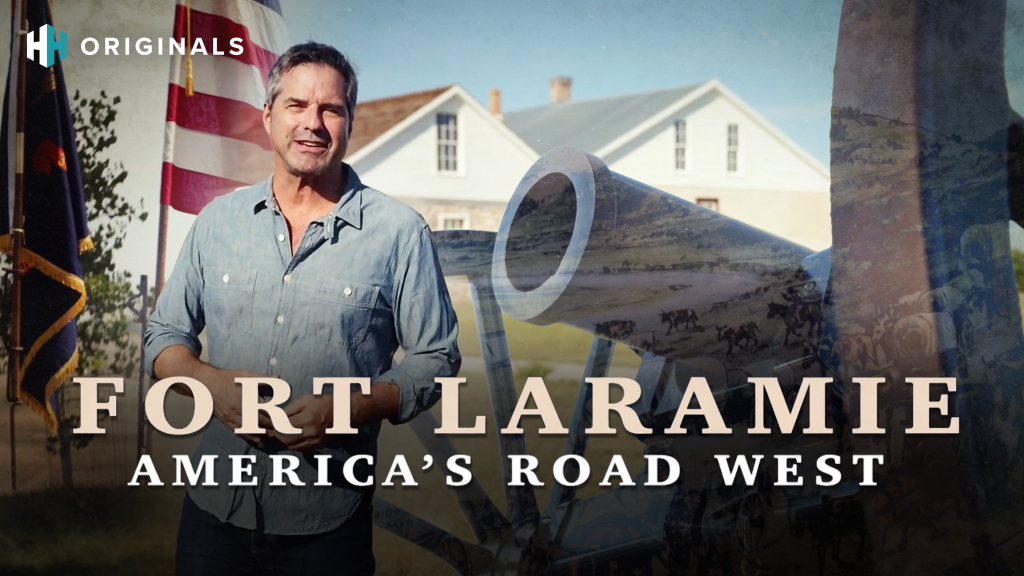
In the compelling new documentary episode, Fort Laramie: America’s Road West, Don Wildman (host of American History Hit) journeys to the heart of Wyoming to peel back the layers of this iconic site. Far more than just a collection of restored buildings, Fort Laramie serves as a profound memorial to the “glittering misery” of frontier life, and the seismic cultural collision that changed the world of the Native American Plains Indians forever – forging the modern United States.
 Listen Now
The nexus of the Wild West
Between 1834 and 1890, almost every major character of the frontier drama passed through Fort Laramie’s gates: mountain men, fur traders, missionaries, Pony Express riders, soldiers, and Native American leaders.
The site lies at a strategic geographical crossroads – the confluence of the North Platte and Laramie Rivers. As Wildman explores, this location made the fort the essential resting point for those travelling the Oregon, Mormon, and California Trails. It is estimated that as many as a quarter of a million people passed through this outpost in search of a new life.
From fur trade to “glittering misery”
The documentary traces the fort’s humble beginnings in 1834, when a group of French-Canadian beaver hunters and American mountain men established a private trading post. For a decade, the relationship between European Americans and Native Americans was primarily commercial and relatively peaceful.
However, the discovery of gold in California in 1848 changed everything. The ‘trickle’ of migrants became a ‘flood’, with 30,000 fortune seekers passing through in 1849 alone. To protect these travellers, the US military purchased the fort. Wildman walks through ‘Old Bedlam’, the oldest standing building in Wyoming, to illustrate the life of the soldiers stationed there.
Park Ranger Clayton Hansen describes the soldiers’ lives as “glittering misery.” While the army maintained the pomp and circumstance of military drill on the parade grounds, the reality was a cramped, isolated existence in a climate that swung from 100°F summers to -40°F winters.
As Don notes, “Very rare are these kinds of places out here where you can actually see an embodiment of Western expansion in these buildings and walk around and feel what it must have felt like to be part of the Wild West.”
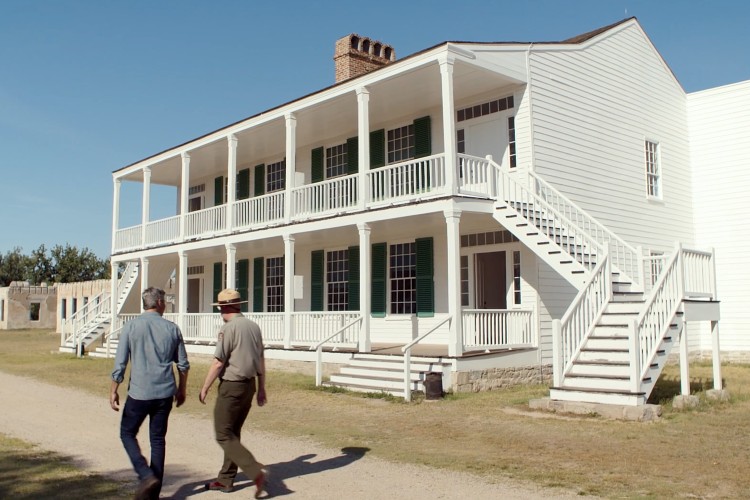
Don Wildman and Park Ranger Clayton Hansen visit ‘Old Bedlam’ at Fort Laramie – the oldest standing building in Wyoming
Image Credit: History Hit
The scar on the landscape
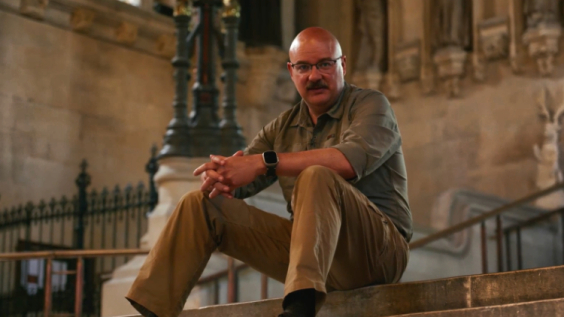
One of the most fascinating insights in the film comes from Dr Jeff Means, a member of the Lakota Sioux Nation and a Professor of History at the University of Wyoming. He explains how the mass migration didn’t just bring people; it physically severed the natural world.
The ‘Oregon Trail’ was not merely a wagon-width path; in some places, it was a half-mile-wide swath of churned mud and dust. Dr Means notes that the buffalo herds – the lifeblood of the Plains Indians – refused to cross this massive scar. This effectively split the great bison population into northern and southern herds, a biological disaster that devastated the nomadic way of life.
The broken Treaties and the ‘Grattan Battle’
The documentary dives deep into the high-stakes diplomacy and tragic misunderstandings that defined the era. Fort Laramie was the site of the great treaties of 1851 and 1868 – agreements intended to ensure ‘undisturbed use’ of land for Native Nations.
However, the film highlights how easily peace could shatter. Wildman recounts the Grattan Massacre (or the Grattan Battle) of 1854, an event sparked by the most trivial of causes: a single lost cow. What began as a dispute over a Mormon immigrant’s livestock ended in the deaths of a US lieutenant, his entire detachment, and the Lakota Chief Conquering Bear. This ‘first domino’ fell into a decades-long war for the plains, fuelled by retribution, broken promises, and the relentless drive of ‘Manifest Destiny.’
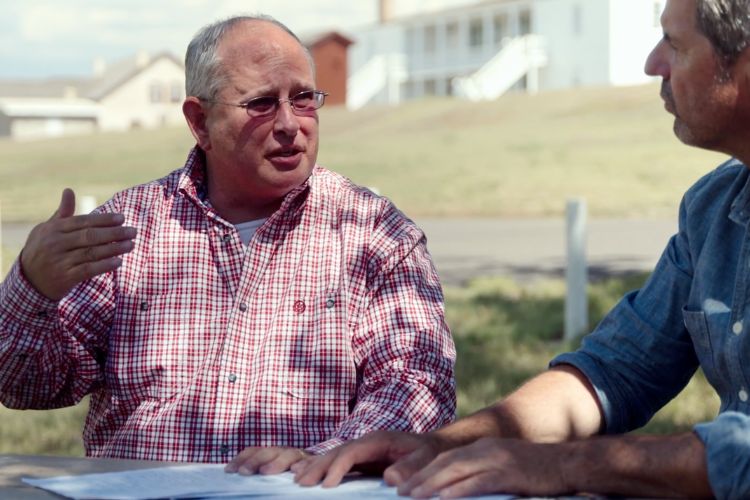
Dr Jeff Means, a member of the Lakota Sioux Nation and a Professor of History at the University of Wyoming
The legacy of the Plains
As the 19th century drew to a close, the strategic importance of Fort Laramie waned. The Native Nations were confined to shrinking reservations, and by 1890, the military marched out for the last time. Interestingly, the fort survived not through government preservation, but thanks to homesteaders who moved into the old military buildings, sustaining the site until its official restoration in the 1930s.
Fort Laramie: America’s Road West is an essential watch for anyone looking to understand the true cost of westward expansion. By interviewing descendants of those who lived through these events, Wildman ensures that the story is told from multiple perspectives – not just as a tale of triumph, but as a narrative of profound loss and survival.
Join Don as he walks through ‘Old Bedlam’ and the meticulously reconstructed post-trader stores to see what life was really like on the western frontier; hear from Indigenous historians who provide a vital counter-narrative to traditional frontier myths; and explore the stunning landscape where the Great Plains meet the Rockies, preserved as a ‘time capsule’ of the 1800s.
Fort Laramie stands today as a haunting reminder of a world changed forever. It is a place where diplomacy failed, where cultures collided, and where the road west was paved with both hope and heartbreak.