



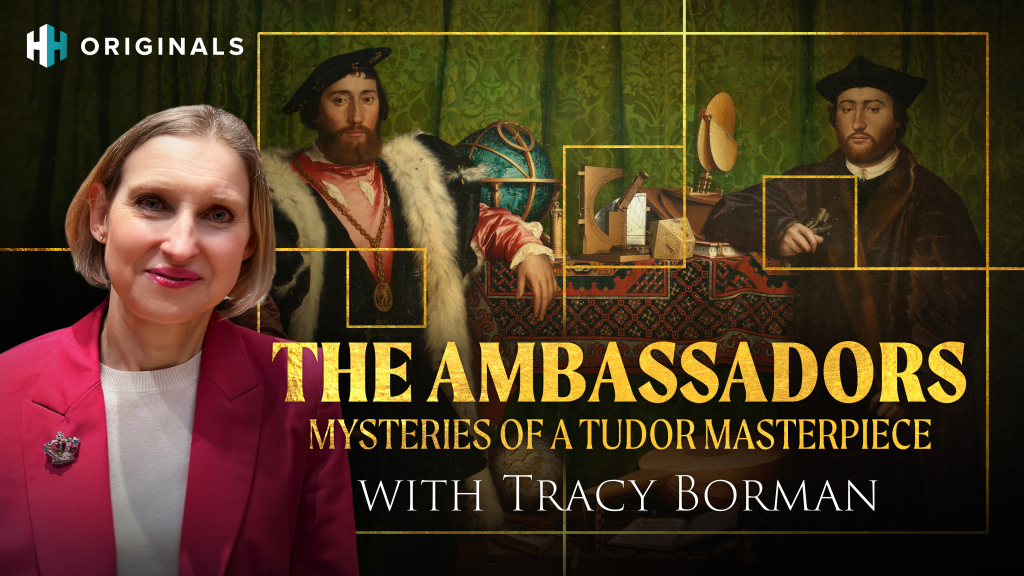
For nearly 500 years, two young men have stood in the National Gallery, staring back at us from a world on the brink of collapse. Hans Holbein’s ‘The Ambassadors’ (1533) is arguably one the most spectacular and mysterious Tudor paintings – a staggering display of wealth, intellect, and hidden symbolism and ‘Easter eggs’ that continue to baffle and delight historians.
In History Hit’s new documentary, The Ambassadors: Mysteries of a Tudor Masterpiece, Dr Tracy Borman takes us on a high-stakes detective trail. From the private galleries of the National Gallery in London to the sacred floor of Westminster Abbey, Tracy unpicks the secrets of a painting that is far more than a simple portrait; it is a coded message from the eye of a political storm.
 Watch Now
A world turned upside down
To understand the painting, one must understand the year it was created. In 1533, England was a tinderbox. Henry VIII had secretly married Anne Boleyn, annulled his marriage to Catherine of Aragon, and effectively declared war on the religious authority of Rome.
It was into this volatile atmosphere that two French emissaries arrived on a mission for King Francis I of France: Jean de Dinteville, a magnificent 28-year-old nobleman, and Georges de Selve, a soberly dressed churchman – who may have been playing a double game as a spy for Charles V, the Holy Roman Emperor.

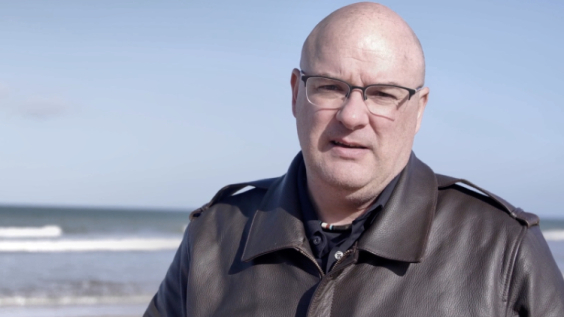
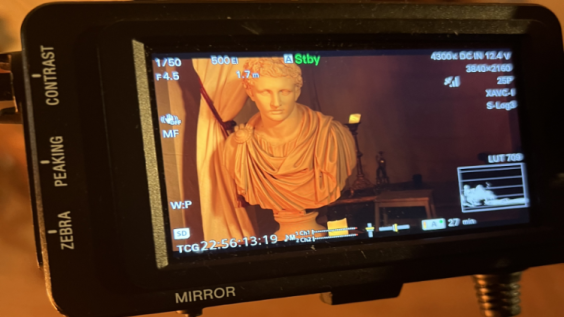
History Hit’s Annie and Bill filming at the National Gallery
Image Credit: History Hit
The detective trail
Tracy Borman, who recently authored the National Gallery’s guide to the painting, explains that The Ambassadors is a “treasure trove of hidden meanings” that reveal the chaos of the Tudor court.
“For a long time, there was a lot of debate about who these two men were,” Tracy notes. Why is a tiny, insignificant French village marked on the globe? And why does the floor beneath the men’s feet bear a forensic resemblance to the exact spot where Anne Boleyn was crowned?
Symbols of discord
The shelves between the two men are cluttered with weird and wonderful objects, but look closer and the ‘harmony’ of the scene begins to unravel:
- The broken string: On the lower shelf, a lute sits with a broken string – a stark symbol of religious and political division in Europe.
- The missing flute: A case of flutes is missing one instrument, further emphasising a world out of tune.
- The upside-down globe: A terrestrial globe depicts Europe upside down, focusing on Rome and Nuremberg – the flashpoints of the Reformation.

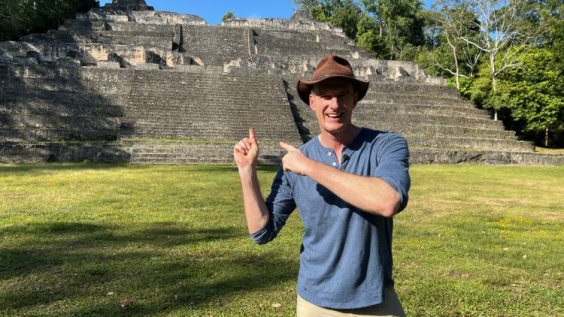
Production shot of Tracy Borman pointing out the broken string of the instrument
Image Credit: History Hit
The spy game
To understand how these men operated, Tracy visits Hampton Court Palace. In the 16th century, diplomacy was a game of whispers and access. Ambassadors didn’t have ministries; they had the Great Watching Chamber.
This was the ultimate ‘waiting room’ where ambassadors and spies would whisper and gather gossip while waiting for an audience with the King – the perfect place to gauge the temper of the court. As Tracy explores the hierarchy of these spaces with Tudor historian, Dr Alden Gregory, from Historic Royal Palaces, they reveal the ‘tightrope’ these men walked, balancing the impatient ego of Henry VIII against the demands of their own royal masters – the most powerful masters in Europe.
Witnessing the coronation
One of the most thrilling revelations in the documentary is the direct link between the painting and the most controversial event of 1533: the coronation of Anne Boleyn.
Tracy is granted rare permission to walk on the Cosmati Pavement in Westminster Abbey – the exact spot where Anne was crowned. Strikingly, the floor beneath the feet of the two men in Holbein’s painting bears a forensic resemblance to this very pavement.
“The message is that even great monarchs are rendered tiny before God,” Tracy explains. By placing the ambassadors on this sacred pattern, Holbein is signalling that they were there – witnessing the very moment Henry’s new Queen was anointed, an event that would change European history forever.

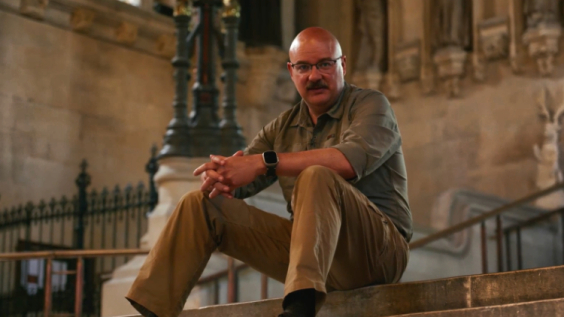
Tracy Borman gets special permission to walk on the Cosmati Pavement in Westminster Abbey
Image Credit: History Hit
Death and salvation
Of course, no discussion of The Ambassadors is complete without its most famous mystery: the ‘weird distorted shape’ hovering at the men’s feet.
When viewed from a specific angle, the smudge snaps into perspective as a human skull – a chilling memento mori that despite their fine silks and scientific instruments, death is the ultimate equaliser.

When viewed from a specific angle, the distorted shape hovering at the men’s feet in ‘The Ambassadors’ painting snaps into perspective as a human skull
Image Credit: History Hit
But Tracy looks further. Hidden at the very edge of the frame, half-concealed by a green curtain, is a tiny silver crucifix. “It is a symbol of hope and salvation,” she says. “The message is that salvation is there for those who seek it”, even in a world that appears to be on the brink of disaster.
Inside the investigation
Follow Tracy Borman as she explores the National Gallery and Westminster Abbey at close quarters, gaining unprecedented access to the very spaces where Tudor history was written.
Tracy dives deep into Holbein’s creative process with Dr Emma Capron, Curator at the National Gallery, to uncover how the artist balanced raw talent with scientific precision. The documentary explores Holbein’s staggering technical mastery, revealing his close collaboration with the King’s astronomer, Nicholas Kratzer, to render intricate scientific instruments with a level of detail that rivals modern photography.
By unpicking these details, the film seeks to uncover the truth of a masterpiece that seems to foretell the dark future of Henry VIII’s reign and the looming tragedy of Anne Boleyn.

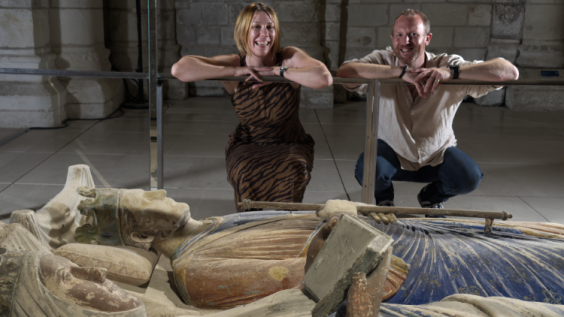
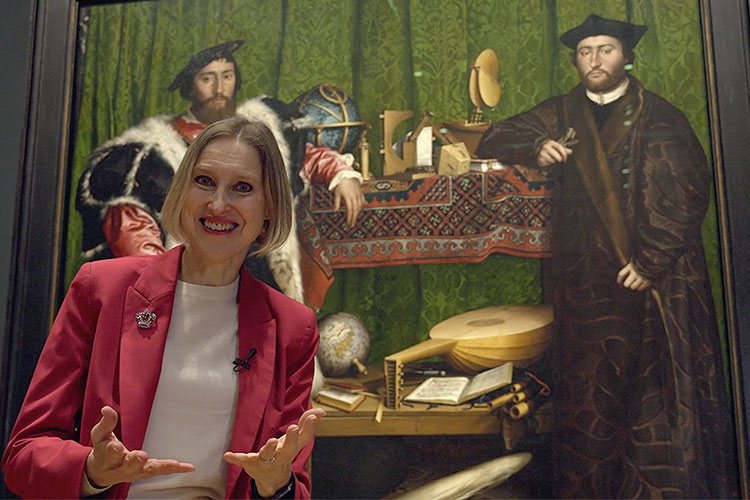
Tracy Borman talks to Dr Emma Capron, Curator of Early Netherlandish and German Painting at the National Gallery about The Ambassadors painting
Image Credit: History Hit
Hans Holbein didn’t just paint two men; he captured a snapshot of a civilisation in the midst of a nervous breakdown. Through Tracy Borman’s expert guidance, we can finally begin to understand what these two wily ambassadors were thinking as they stared out of the canvas 500 years ago.