



History has long whispered the story of Lady Jane Grey as a cautionary tale of a “wet flannel” – a helpless, pale girl in white silk, led like a lamb to the slaughter by the ambitious men of the Tudor court. We know her as the “Nine Days’ Queen”, a tragic footnote sandwiched between the reign of a boy king and the fire of Bloody Mary.
But what if the cliches are wrong?
In the gripping second episode of Queen Jane: The Extraordinary Life of Lady Jane Grey, Professor Suzannah Lipscomb goes in search of the truth about the young Tudor claimant who held the throne for less than two weeks. Peeling back the romanticised layers of myth, Suzannah reveals a woman of formidable intellect, startling agency, and the kind of “chutzpah” that history has spent centuries trying to erase.
 Watch Now
Power bought at the altar
On 25 May 1553, Durham House in London hosted a triple wedding orchestrated by the Duke of Northumberland. The centrepiece was the union of Lady Jane Grey and Lord Guildford Dudley. This was power bought at the altar – a desperate, strategic binding of England’s Protestant elite as the young King Edward VI lay dying.
Accounts suggest Jane was beaten into submission by her parents to accept the match. Yet, even as she was being used as a pawn, the dying King was busy with a pen, subverting centuries of tradition. Edward’s ‘Device for the Succession’ bypassed his Catholic half-sister, Mary, and placed the crown directly on Jane’s head.

Edward VI’s ‘Device for the Succession’
Image Credit: Inner Temple Legal Library / History Hit
The rise of a rebel queen
The moment of transformation occurred on 9 July 1553. Summoned to Syon House, Jane was met by the senior noblemen of the realm, who, kneeling before the teenager, delivered shattering news: King Edward was dead, and she was now Queen of England.
In Episode Two, Suzannah captures the visceral shock of this moment. Jane did not reach for the crown; instead, she collapsed in a torrent of weeping grief. But as she composed herself in London, a second drama was unfolding in East Anglia. As Professor Lipscomb notes, “the vast majority of the population knew who they thought should be next in line to the throne, and it was not Lady Jane Grey”.
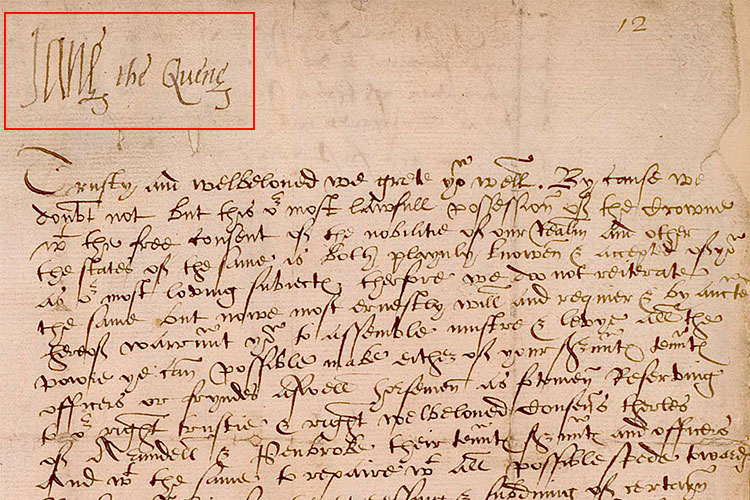
The episode tracks the unexpected rise of Mary Tudor, who transformed almost overnight into a formidable rebel leader. Suzannah visits the Inner Temple Library to examine an extraordinary document dated 9th July 1553 – the very day Jane learned she was Queen. Signed decisively ‘Mary the Queen’ and sent before Jane was even proclaimed Queen in London, the letter is a masterclass in strategic foresight. With blank spaces left for names, it was clearly one of many copies prepared to demand allegiance from the nation’s elite. As Suzannah observes, “What I think is fascinating about this is it shows how quick Mary is to act”.
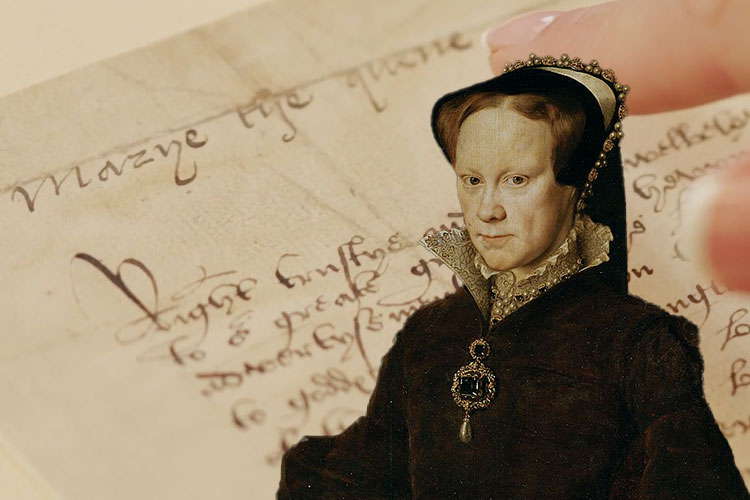
Document showing Mary proclaiming ‘Mary the Queen’, with portrait of Queen Mary I of England (by Antonis Mor, 1554) overlaid.
Image Credit: Document: Inner Temple Library. Portrait: by Antonis Mor / Museo del Prado. Both Public Domain
Suzannah is joined by Professor Anna Whitelock at Framlingham Castle to explore how Mary evolved from a political “outlier” into a commander on a war footing. “If you think about the great lengths that Henry VIII had gone to, to avoid this moment – he needed a male heir… what’s really interesting is over these days in July, gender wasn’t an issue” says Anna.
While the Privy Council dismissed Mary as a “country bumpkin,” she was busy playing her trump card: legitimacy. Thousands flocked to her banner, moved by the long shadow of her father, Henry VIII.
Jane the Queen: A show of authority
By now, Jane had spent three days in the Tower of London, deep in preparations for her coronation. Despite her youth, Jane was far from a puppet. Once she stepped into her role, Jane exercised a remarkable degree of independent authority.
In one of the documentary’s most revealing moments, Suzannah explores how Jane confronted the very men who had placed her on the throne. When the Lord High Treasurer suggested a crown be made for her husband, Guildford, Jane’s response was absolute: she vetoed the move, refusing to make him King and offering only the title of Duke. It was an extraordinary act of power for a 16 year-old girl in a patriarchal age.
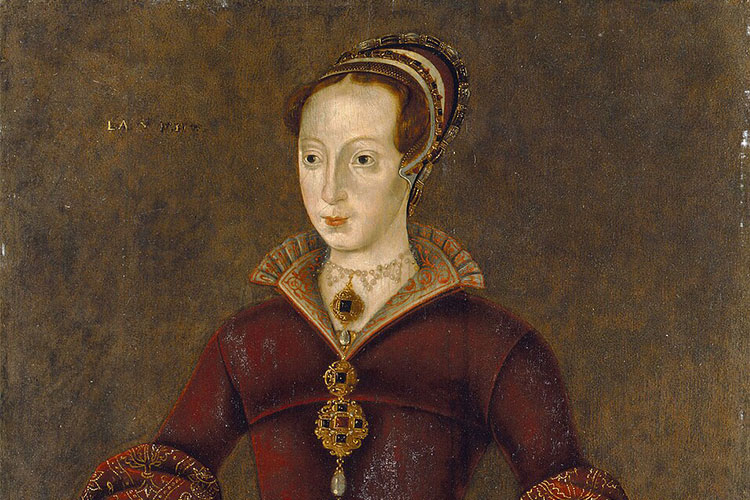
The Streatham Portrait of Lady Jane Grey, believed to be based on a contemporary woodcut
Image Credit: National Portrait Gallery / Public Domain
As Mary arrived at Framlingham, the Privy Council in London resolved to meet Mary’s rebel forces in the field, dispatching the Duke of Northumberland to East Anglia to crush the uprising. Yet as the crisis intensified, Jane – isolated from direct events but sharp enough to recognise the shifting winds – realised she could no longer trust her own Council. Operating with decisive grit, she ordered a heavy guard be mounted around the Tower and effectively locked the Council in with her.
Even as power began to slip from her grasp, Jane continued to wield what influence she could. On 18 July, she dispatched urgent letters to powerful landowners, issuing explicit commands to muster all available forces to repress the ‘tumults and rebellions’ threatening her crown.
Ultimately, however, her fate rested on her popularity with a nation she barely knew. As Suzannah observes, “As Queen, Jane played her cards well, but she could not change the hand that she had been dealt.”
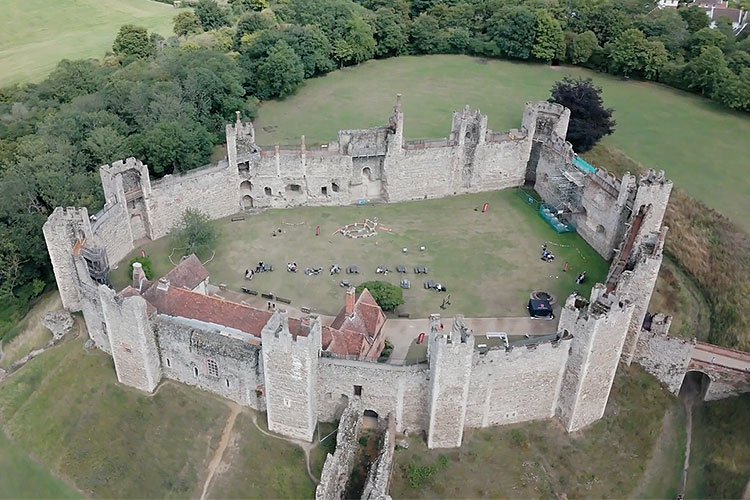
Framlingham Castle
Image Credit: History Hit
The mutiny
The tide turned not on a battlefield, but through a series of mutinies and defections. In Episode Two, Suzannah discovers more about the “audacious play” that broke Jane’s reign.
Northumberland’s six royal warships, sent to block Mary’s path, had been forced into port by a storm. In a local tavern, a member of Mary’s household learned of the stranded ships and seized the moment, persuading the disgruntled, unpaid crews to switch their allegiance. It was a massive coup: the very fleet designed to stop Mary from getting artillery had now supplied it.
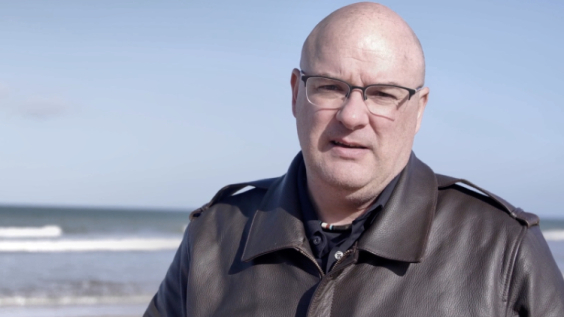
Discussing the mutiny’s impact on Jane’s claim to the throne, Suzannah meets historian Dr Stephan Edwards, who explains how this indicates how “the average man did not seem to support Jane.”
The fall
As the Navy deserted and Northumberland’s army melted away, the “Nine Days” came to a crashing end. By 19 July, Jane’s Privy Council faced a stark truth. Reports confirmed that Mary’s support was rapidly growing. The nobles on the Council found even their own tenants were actively refusing their summons. It was now that that most Councillors abandoned the Tower, switching sides to survive.
When Jane’s own father delivered the news that Mary was Queen, Jane’s reaction was not anger, but relief.
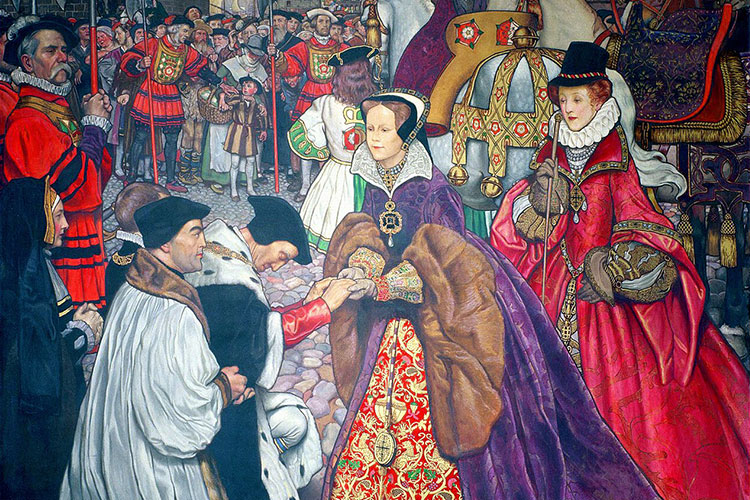
1910 depiction of Mary I entering London triumphantly, 15 days after the Council deposed Jane Grey and proclaimed Mary the new Queen (by John Byam Liston Shaw, 1910)
Image Credit: John Byam Liston Shaw, Palace of Westminster collection / PD-Art / Public Domain
The piety of a rebel
Queen Mary decided to pardon the majority of those who’d attempted to put Jane on the throne, but did not spare John Dudley, the Duke of Northumberland, who was executed on 22 August, 1553. Jane was left in limbo, locked up in the Tower for months.
Following a humiliating trial at the Guildhall in November, where both she and her husband pleaded guilty to high treason, Jane was returned to the Tower of London, this time as a prisoner. Although sentenced to be burned alive or beheaded at the Queen’s pleasure, Jane did not even pale at the news. However, for now, Queen Mary suspended the sentence, still hoping to avoid executing her young cousin.
In January, 1554, Queen Mary’s leniency towards Jane was shattered by the Wyatt’s Rebellion Protestant uprising. Disastrously for Jane, her own father, Henry Grey, Duke of Suffolk had joined the rebellion. Put in an impossible position, Queen Mary signed Jane and her husband Guilford’s death warrant.
Even in the face of death, Jane remained a “brilliantly gifted” rebel. From her prison cell, she channelled her intellectual energy into fierce rhetoric, chiding those who abandoned their faith.
Suzannah and British Library curator Dr Andrea Clark examine the very prayer book Jane carried to the scaffold – a symbol of the Protestant conviction she refused to abandon even when offered a pardon.
After watching her husband’s butchered remains carted past her window, Jane stepped onto Tower Green on 12 February 1554. Her final words were not those of a victim, but of a woman who had mastered her own narrative.
The afterlife of an icon
Finally, Suzannah examines the enduring ‘afterlife’ of Lady Jane Grey. In conversation with Verity Babbs at the National Gallery, she explores how romanticised art – most notably Paul Delaroche’s iconic 1833 masterpiece – has fuelled our obsession with Jane as a passive “damsel in distress”.
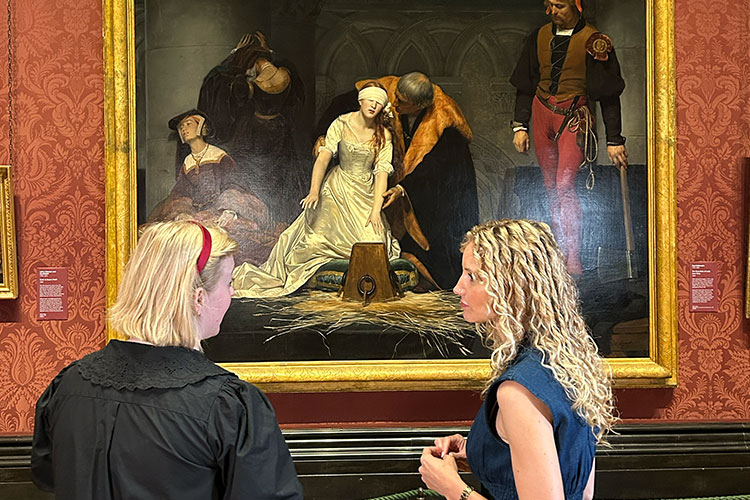
Production shot of Verity Babbs and Prof Suzannah Lipscombe discussing Paul Delaroche’s ‘The Execution of Lady Jane Grey’ painting at the National Gallery.
Image Credit: History Hit
By scraping away these layers of myth, the film reveals a far more compelling, brilliant, and self-aware figure. Jane emerges as a formidable intellect who navigated impossible circumstances with startling strength of character.
Step inside the Tower, walk the halls of Syon House, and discover the true strength of England’s most misunderstood monarch.