




On 24 June 1941, a heavily guarded train slipped secretly into the dense, swampy forests of East Prussia. Two days prior, Adolf Hitler had unleashed Operation Barbarossa – a massive assault involving over three million Axis troops, launching the largest and bloodiest land invasion in human history. To direct this war of annihilation against the Soviet Union, the dictator required a command centre near the front lines. He named it the Wolfsschanze: the Wolf’s Lair.
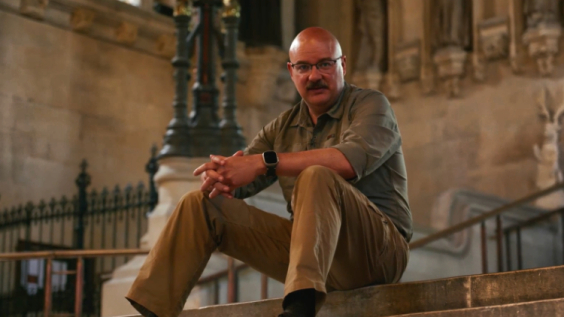
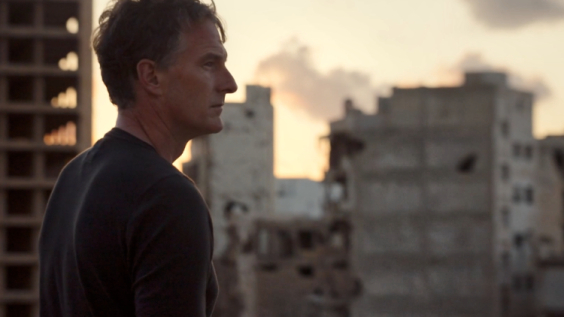
Though initially intended as a temporary outpost, this hidden megalith became Hitler’s primary residence for over 800 days of the war. In History Hit’s gripping new documentary, Inside the Wolf’s Lair, presenter Luke Tomes and Third Reich expert Johnny Whitlam trek into the freezing, snow-covered ruins of modern-day Poland to unearth the concrete ghosts of the Nazi war machine. Together, they chart how this ultra-fortified sanctuary ultimately transformed into an isolation chamber, tracking the rapid deterioration of Hitler’s mind and body as his grand delusions of global conquest unravelled into catastrophic defeat.
 Watch Now
Engineering an impenetrable sanctuary
The documentary takes viewers past crumbling perimeter fences into what was once one of the most secure locations on earth. Designed by Fritz Todt – the regime’s chief engineer famously responsible for the Autobahn and the Atlantic Wall – the Wolf’s Lair was constructed under total secrecy. Nestled within thick woodland to provide natural canopy camouflage against Allied aerial reconnaissance, the fortress (just 20 miles from the Russian border) was further protected by surrounding lakes, treacherous marshes, and three heavily fortified security zones.
To reach the inner core where Hitler and his top deputies resided, a visitor had to navigate a 10-kilometre outer fence, a 200-metre-wide minefield, machine-gun nests, and interlocking anti-aircraft batteries. The paths inside were deliberately curved to obscure lines of sight in the event of a ground invasion. As Whitlam notes, it was engineered as “a concealment within a concealment within a concealment.” It was so well hidden that the Allies never successfully discovered or bombed it during its operation.

Aerial production shot of part of the Wolf’s Lair bunker complex
Image Credit: History Hit
Building this massive city of concrete and timber required a staggering 36 million Reichsmarks – equivalent to hundreds of millions of dollars today. Labouring through the brutal sub-zero winter of 1940 to 1941, thousands of forced laborers poured hundreds of thousands of cubic feet of reinforced concrete to construct the massive bunkers. Today, the sheer thickness of the exposed steel-and-concrete walls stands as a grim monument to the hubris of the regime.
Court of the dictator: isolation and paranoia
Inside the Wolf’s Lair provides an intimate look at the surreal, claustrophobic daily life inside Hitler’s court. Stripping away the postwar myth of a highly efficient military command, the documentary exposes a routine driven by isolation and dynamic instability. Hitler maintained a highly peculiar schedule: waking around 11am, spending hours reading newspapers in bed, and delaying critical midday military briefings so late that lunch was routinely served at 5pm.
Deep within the bunkers, Hitler surrounded himself with absolute sycophants, holding court and talking about his victories in the First World War until 3 or 4am. As Whitlam notes, “people who are closest to Hitler in here had the feeling that he couldn’t bear to be alone.”

Third Reich expert Johnny Whitlam talks to Luke Tomes about the claustrophobic daily life inside Hitler’s court.
Image Credit: History Hit
Generals like Wilhelm Keitel (mocked by his peers as Lackeitel or “Lackey-tel”) and Alfred Jodl were selected not for their independent strategic brilliance, but for their willingness to convert Hitler’s increasingly disastrous directives into official military policy without contradiction.
As the war turned sour, this profound disconnect from reality grew fatal. While German soldiers starved and froze in temperatures hitting -40C on the Eastern Front without winter clothing, the Nazi elite remained insulated within their heated bunkers, managing the war through propaganda newsreels and maps.
Turning points and shattered delusions
The documentary expertly traces how the cracks in the concrete walls mirrored the fractures in the regime’s military fortunes. Viewers are guided to the colossal ruins of Reichsmarschall Hermann Göring’s bunker – a towering 36-foot structure built to withstand direct aerial hits. It stands as a physical manifestation of overpromised and undelivered military might. It was from here that Göring confidently promised to supply the trapped German Sixth Army during the catastrophic Battle of Stalingrad – a logistical failure that ultimately cost hundreds of thousands of lives and permanently broke the back of the Wehrmacht.

Luke Tomes and Johnny Whitlam look at Goering’s bunker at Wolf’s Lair
Image Credit: History Hit
Following the turning points of Stalingrad and Kursk, the mood inside the Wolf’s Lair shifted from jubilant arrogance to profound paranoia. Hitler increasingly isolated himself, his physical condition declining rapidly. Eyewitness accounts from 1943 noted that the dictator appeared to have aged 15 years in a fraction of that time – stooping heavily, his skin turning gray, and his left hand shaking continuously from what modern historians suspect was Parkinson’s disease.
To combat his declining health and keep him in a good mood, his personal physician, Theodor Morell, injected him daily with a volatile cocktail of experimental drugs and unorthodox supplements, reducing the Führer to a dependent, drug-addled recluse.

Hitler’s Bunker at the Wolf’s Lair
Image Credit: History Hit
The July Plot and the Final Reckoning
The climax of the fortress’s history arrived on 20 July 1944, when Colonel Claus von Stauffenberg carried a briefcase packed with plastic explosives into a briefing room, mere feet from the dictator. The documentary walks viewers through the remnants of the blast site, examining the fine margins that allowed Hitler to survive the explosion with minor injuries – namely, a heavy oak table leg that deflected the blast energy and the fact that the meeting had been moved to a less confined wooden briefing hut due to the summer heat.

Adolf Hitler and Benito Mussolini visit Hitler’s damaged headquarters in East Prussia after an attempt on Hitler’s life there in July 1944 by Colonel Claus von Stauffenberg.
Image Credit: History Hit / Hulton Deutsch/Corbis/Getty Images
Hitler viewed his survival as divine validation, unleashing a sweeping witch hunt across Germany that resulted in thousands of executions and brought the military under total Nazi Party control. Yet, no amount of terror could stop the red army advancing from the east. On 17 August 1944, Soviet forces crossed into the borders of the German Reich for the first time.
On 20 November 1944, a broken and defeated Hitler left his East Prussian fortress for the last time, retreating to Berlin. Two months later, in January 1945, departing German demolition squads packed the bunkers with explosives, destroying their own sanctuary so that nothing of value would fall to the enemy.
Inside the Wolf’s Lair is a haunting, profound journey into the literal and psychological heart of the Third Reich. By exploring these colossal, moss-covered ruins, the documentary uncovers the definitive blueprint of how absolute power, absolute isolation, and absolute delusion systematically destroyed an empire.