



This article is an edited transcript of The Silk Roads with Peter Frankopan available on History Hit TV.
 Watch Now
Today, we are constantly reading in the press about Facebook and about globalisation. And so we have this idea that the world is only now connected.
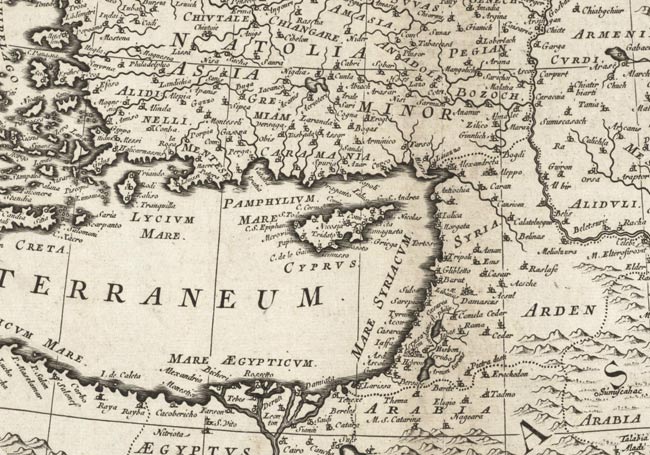
But in Constantinople, as long ago as the Middle Ages, the areas of interest stretched from Iceland to the Pillars of Hercules in Gibraltar and right the way through the Himalayas and into China.
 Watch Now
Ancient connections
This world where ideas, influences, technologies, textiles and spices could all be shared, appears to have always hung together much more closely than we think.
In the distant past – two, three, four millennia ago – you can find exchanges of these things being conducted over very long distances. Indeed, the ability to communicate with each other is what marks humans out as being particularly interesting.
But above all, it’s our curiosity that distinguishes us. We’re intensely interested in finding the most tasty food products, the best places to go skiing or the most accurate timetables for trains in India.
We accumulate information. We love gathering data points. It is what defines us as a species.
And thousands of years ago, our ancestors were no different.
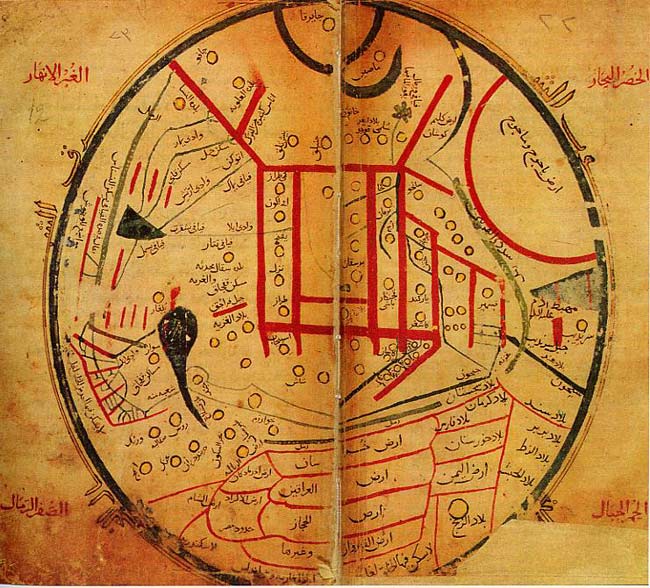
A map by 11th-century scholar Mahmud al-Kashgari centres on the ancient city of Balasagun.
Shifting Centres
The Latin meaning of Mediterranean is “middle of the earth”, in the sense that it is the sea in the centre of the world. It’s a not a particularly important sea but it separates three continents and we’ve prioritised it as being something akin to the cradle of civilization.
Interestingly, the most common Sinitic name for China is “Zhongguo”, which means exactly the same thing – the centre of the world.
But different people have different perceptions about where the centre of the world is.
One of my road to Damascus moments was in Istanbul, many years ago. I saw a map in the library at Topkapı, where the maps tend to be centred on whichever place the cartographer thinks is the centre of the world. This map, a very famous 11th-century document, has a city called Balasagun at its centre.
 Watch Now
I asked everybody I met where Balasagun was. I’d never heard of it before.
It had never crossed my mind that other people’s centre of the world was not the same as mine, that it might not be the same centre of the world that had been taught to me in school. In fact, modern historians didn’t even know where Balasagun was until the 1980s.
Incidentally, it’s in modern-day Kyrgyzstan, although whether we found the right one remains a matter of debate. Despite that, Soviet archaeologists have almost certainly got it right.
One of the things we take as a given is our wonderful education system here in the West.
But of course, 500 or 1,000 years ago, the Oxfords and Cambridges and the Harvards and Yales of the world weren’t in Europe or in the United States, they were in places like Bukhara and Kabul – places that might have quite negative connotations today, places that we often link in the West with violence and terrorism.
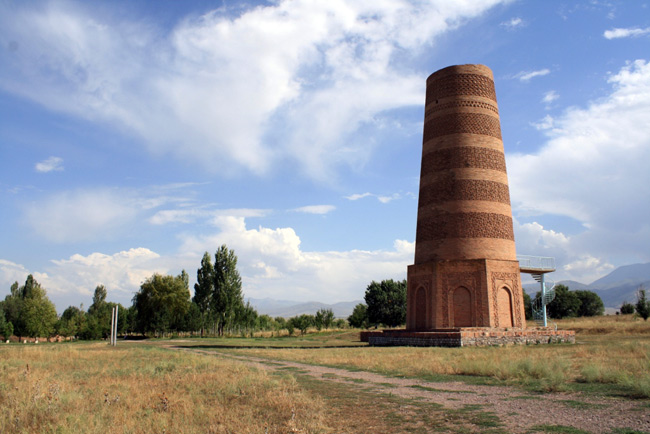
Burana Tower in Kyrgyzstan is all that remains of the lost city of Balasagun.
These parts of the world once attracted the best scholars from all over the world to come and research science, mathematics and philosophy.
It’s an important part of our own educational process to really appreciate that other places have led the world’s intellectual and cultural development. And that perhaps the battle we took on a few hundred years ago will, in due course, be passed on to somebody else.