


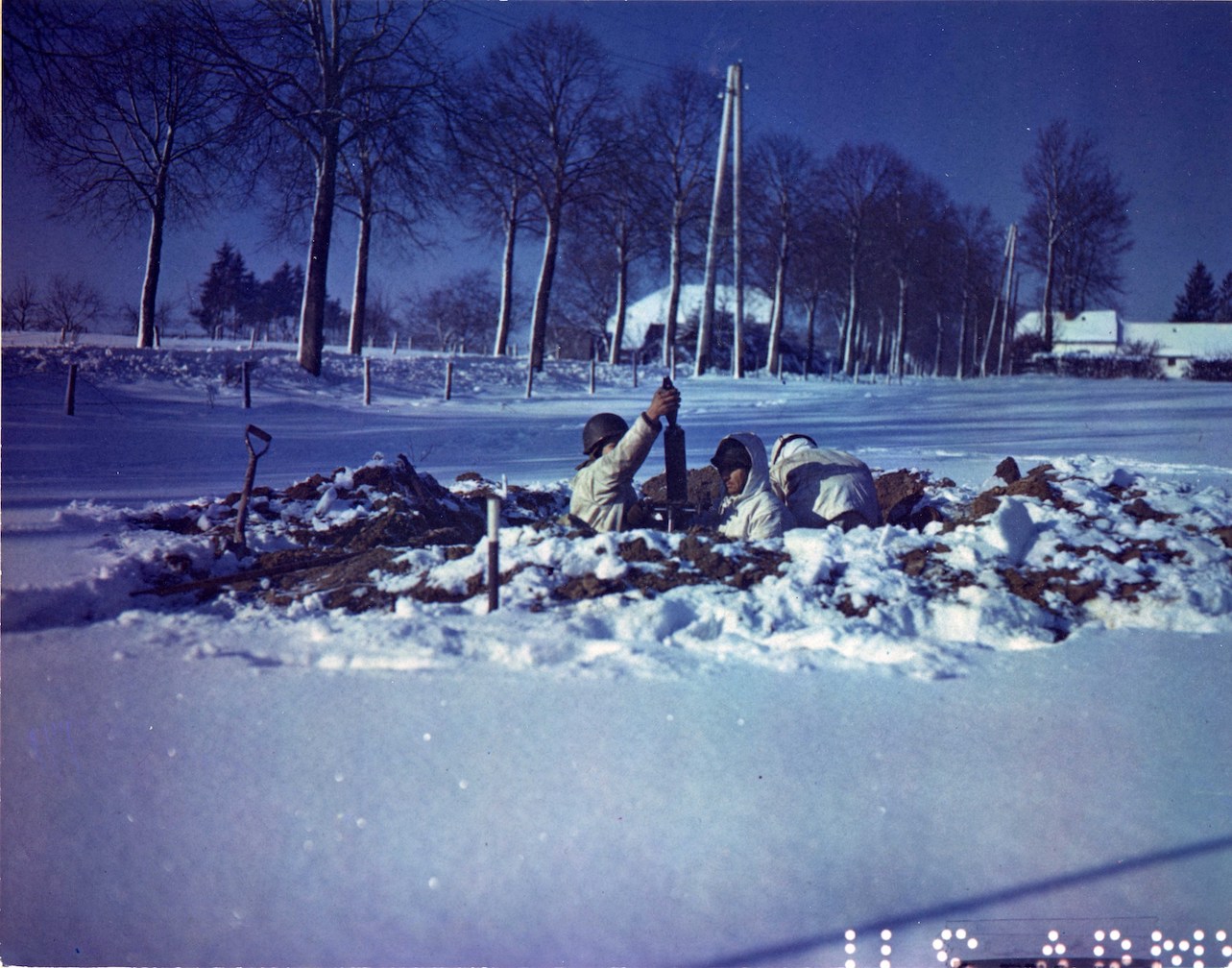

In December 1944, following the successful invasion of Europe on D-Day and the subsequent offensive through Normandy, the Allies might have been forgiven for thinking the war in the West was all but over.
But Germany crushed any such thoughts on 16 December when they launched a massive offensive in the Ardennes region of Belgium. The battle became known as the Battle of the Bulge. Here are 15 facts about the battle.
1. The battle lasted for 4 weeks
The German attack began 16 December and the battle ended when their withdrawal was completed on 25 January.
2. It was the last major German offensive of the war
Adolf Hitler was determined to launch a fresh offensive in an attempt to force the Allies to the negotiating table. His generals opposed the move, knowing Germany’s resources were limited.

German forces advancing during the opening stages of the Battle of the Bulge
3. It was a surprise attack
In late 1944 the Allies were heavily focussed on offensive preparations, they did not anticipate a major attack by Germany. Heavy fog had grounded air reconnaissance, meaning the build up of German forces had not been detected.
4. The target of the attack was the Belgian city of Antwerp
The Germans attacked through the wooded Ardennes region.
 Listen Now
5. German forces numbered a quarter of a million versus just 80,000 Allies
The German attack targeted a thinly defended section of the Allied line, held predominantly by American forces.
6. It is the second deadliest battle in American history
US forces suffered 75,000 casualties including as many as 20,000 dead. It is only surpassed by the Meuse-Argonne Offensive of the First World War, in which more than 25,000 American soldiers were killed.

American anti-tank artillery
7. Its name was coined by an American journalist
The name of the battle refers to the bulge or salient created in the Allied line by the German attack.
8. Germany employed V2 rockets against the city of Antwerp
Antwerp was targeted by V2 rockets from mid-1944 onwards. During the Battle of the Bulge, over 3700 Belgian civilians were killed in rocket attacks. On the first day of the battle, a V2 rocket hit a cinema in the city, killing 567 people.
9. Germany used 50,000 horses during the battle
Germany was critically short of fuel and had to prioritise fuelling its tank formations. They were forced to use horses for transport.
 Watch Now
10. German commandos infiltrated Allied lines wearing US uniforms
22 commandos led by Otto Skorzeny passed into Allied territory driving American jeeps. Their job was to spread confusion and conduct sabotage operations.
11. The battle featured the war’s second largest mass surrender by US troops
A force of 9,000 American soldiers were surrounded and surrendered – the largest mass surrender by US forces after the Bataan Peninsula in the Philippines.

American troops advance through a snowbound St Vith, which stood on a vital road junction
12. 72 captured American soldiers were murdered in Malmedy
An SS unit under Joachim Peiper was responsible for a series of atrocities during the Battle of the Bulge including the Malmedy Massacre on 17 December. “Avenge Malmedy” became a battle cry for American forces and four days later 21 German soldiers attempting to surrender were killed in an act of revenge.
13. The American defence of Bastogne is legendary
On 22 December Major-General Anthony McAuliffe, holding besieged Bastogne was called on to surrender. He replied “Nuts!” and when asked for clarification responded ‘Go to hell”.

US forces advance out of Bastogne following the siege
14. The German offensive was over by Christmas Eve
German forces had achieved an advance of less than 60 miles at its furthest point. They never reached closer than 70 miles from Antwerp.
15. The Allied counterattack threatened to cut off the German attacking forces
The counterattack in January almost isolated the “bulge” but the German forces managed to withdraw in time.