


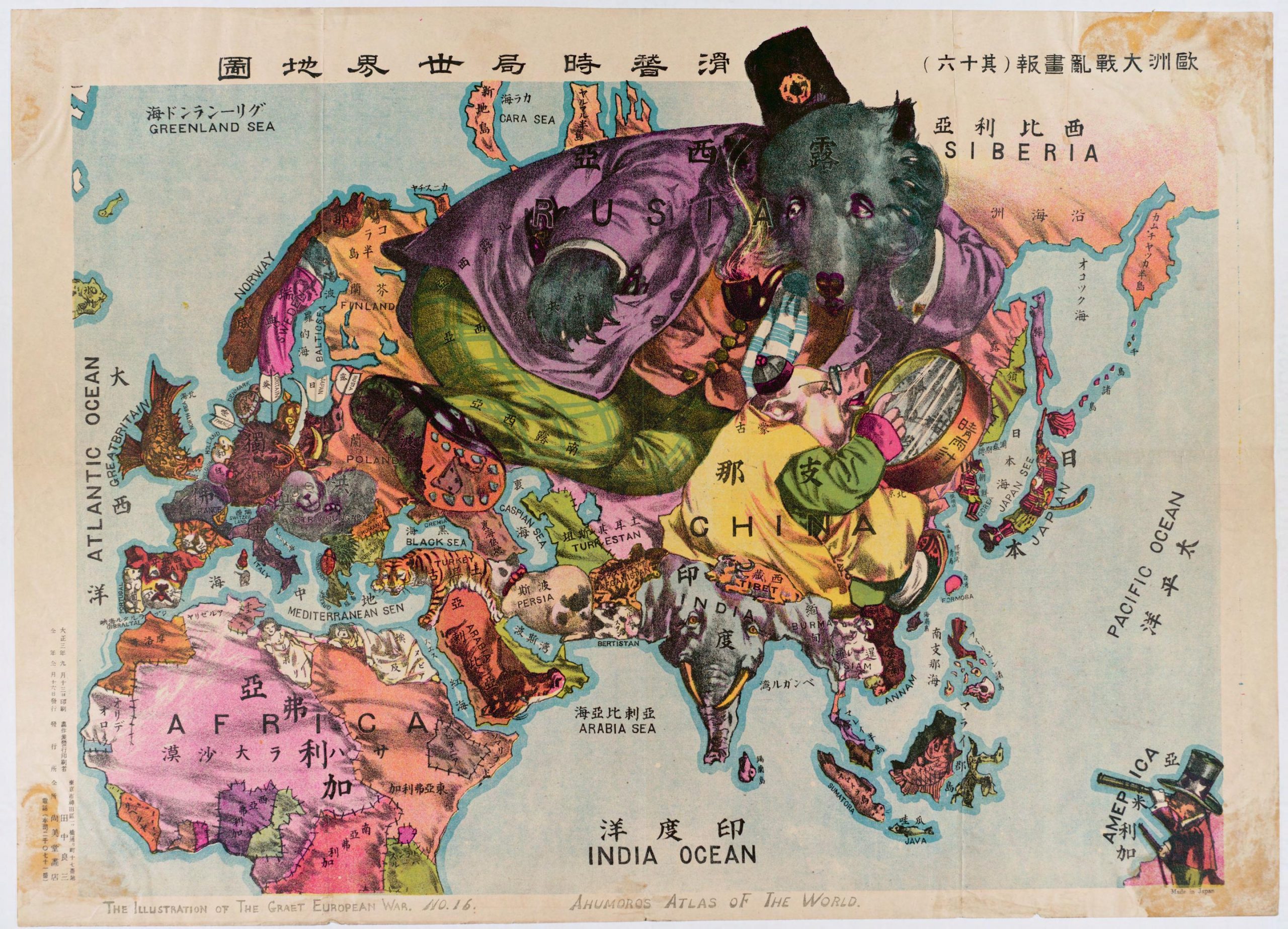

The European alliance systems are often seen as a major cause of World War One. On one side, you had the dual alliance between Germany and Austria-Hungary, and on the other you had the Triple Entente between France, Russia and Great Britain.
But it wasn’t a simple case of one side declaring war on the other; indeed the Triple Entente wasn’t really an ‘alliance’ at all, and the picture was further complicated by countries on the periphery of these two major systems.
The Treaty of London – 1839
Belgium had broken away from the United Kingdom of the Netherlands in 1830. In 1839, the new nation was officially recognised by the Treaty of London. Great Britain, Austria, France, the German Confederation, Russia and the Netherlands all officially recognised the new independent Kingdom, and at Britain’s insistence agreed to its neutrality.
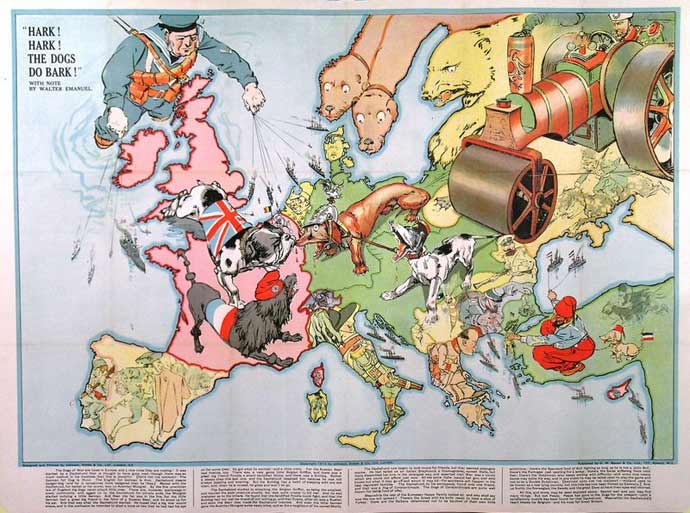
A British cartoon of Europe in 1914.
Dual Alliance – 1879
An alliance was signed by Germany and Austria Hungary on 7th October 1879. The two nations pledged to aid each other in the event of attack by Russia. Also, each state promised neutrality to the other if one of them was attacked by another European power (which was more than likely going to be France).
Italy joined in the Triple Alliance in 1882, but later reneged on their commitment upon the outbreak of the war in 1914.
This cartoon illustrates the Central Powers in defensive positions against the advances of Russia and France.
Reinsurance Treaty – 1887
In June 1887 Germany also signed The Reinsurance Treaty with Russia. With the competition between Russia and Austria Hungary in the Balkans, the German Chancellor Otto von Bismarck felt that this was essential to prevent a Russian agreement with France. After all, this could lead to Germany faced with a possible war on two fronts.
 Watch Now
The secret treaty agreed that the two countries would observe neutrality should one the other be involved in a war with a third country – although this would be wavered should Germany attack France or Russia attack Austria Hungary. It also agreed that Germany would declare herself neutral in the event of a Russian intervention in the Bosphorous and the Dardanelles.
The new German Emperor Kaiser Wilhelm II believed the treaty could enrage both the British and Ottoman Empires, so when it came to renewal in 1890, Germany refused to sign it.
Franco – Russian Alliance – 1894
The Triple Alliance and the failure to renew a treaty with Germany had left Russia vulnerable, while France had been isolated in Europe since its defeat 1870 – 1871 Franco Prussian War. France began to invest in Russian infrastructure from 1888, and the two formed The Franco-Russian Alliance on January 4th 1894.
It was to remain in place for as long as the Triple Alliance existed, and stipulated that if one of the countries of the Triple Alliance attacked France or Russia, its ally would attack the aggressor in question, and that if a Triple Alliance country mobilized its army, France and Russia would mobilize.
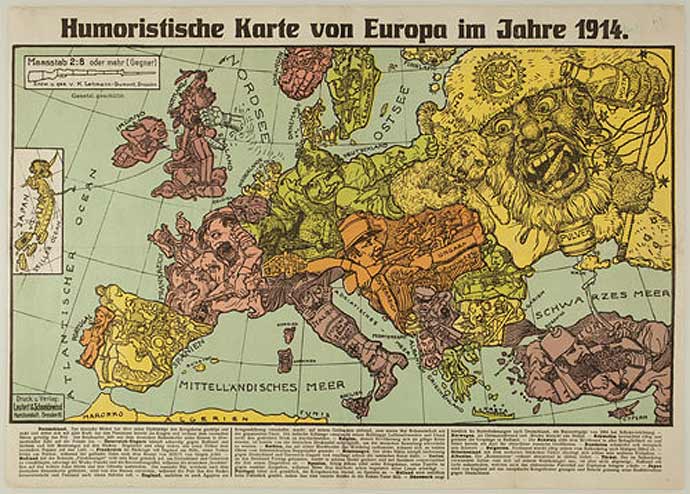
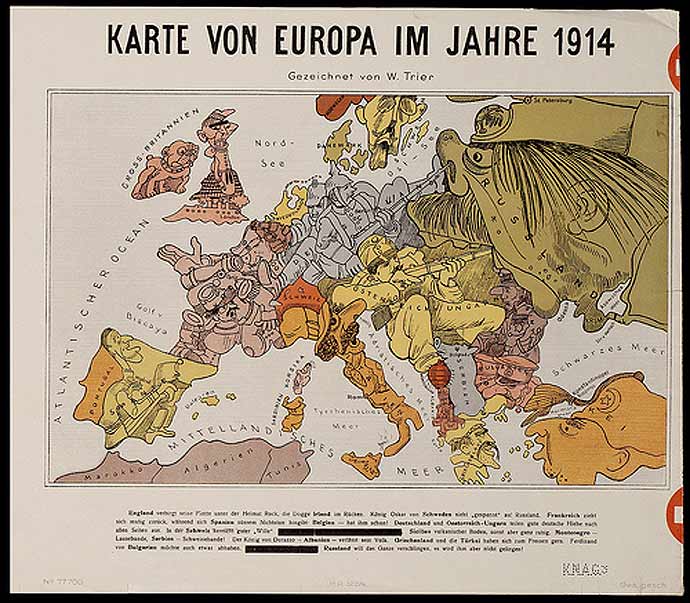
Another German cartoon of European alliances – 1914.
Entente Cordiale – 1904
The next major agreement in Europe came about with the Entente Cordiale in April 1904. Having been involved in three rounds of British German talks between 1898 and 1901, Britain decided not to join the Triple Alliance. When the Russo-Japanese War was about to erupt, France and Britain found themselves being dragged into the conflict on the side of their respective allies.
France was allied with Russia, while Britain had recently signed the Anglo-Japanese Alliance. In order to avoid war, the sides negotiated a treaty that settled many long standing issues – particularly their differences in Africa over British control of Egypt and French control of Morocco.
The agreement marked the end of nearly a thousand years of intermittent conflict between the two countries.
 Listen Now
“The Triple Entente” – 1907
Another agreement was reached in August 1907, this time including Britain and Russia, thereby firming their stance against The Triple Alliance. But in reality, there was no Triple Entente – the 1907 treaty was specifically between Britain and Russia to stop their rivalry in Central Asia, and there was no three way agreement as there was with the Triple Alliance.
Even after the assassination of Franz Ferdinand and the July crisis, neither of Britain’s agreement’s with France or Russia guaranteed that she would ally with the countries in the event of a European war. However, when Germany executed the Schlieffen Plan on August 3rd 1914 and crossed the Belgian border, Britain decided to act upon the violation of Belgium’s neutrality.
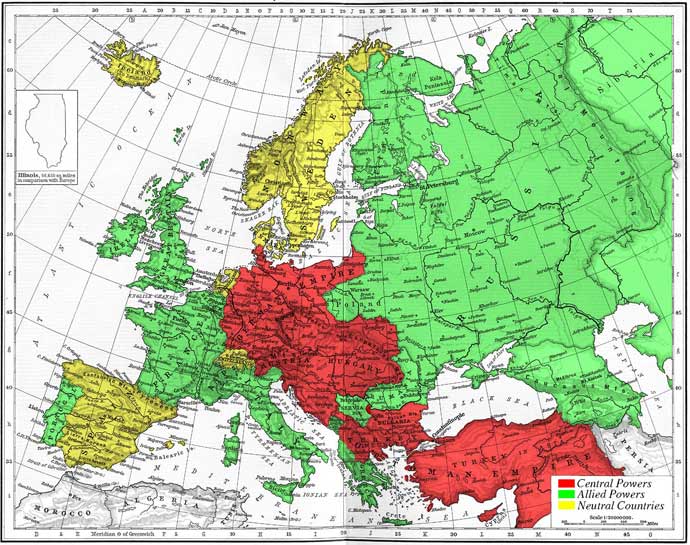
This map of Europe clearly shows the surrounding of the Central Powers by the Allies.