


Poland’s Underground State: 1939-90 | History Hit

Poland’s Underground State: 1939-90

Alex Browne

30 Aug 2018

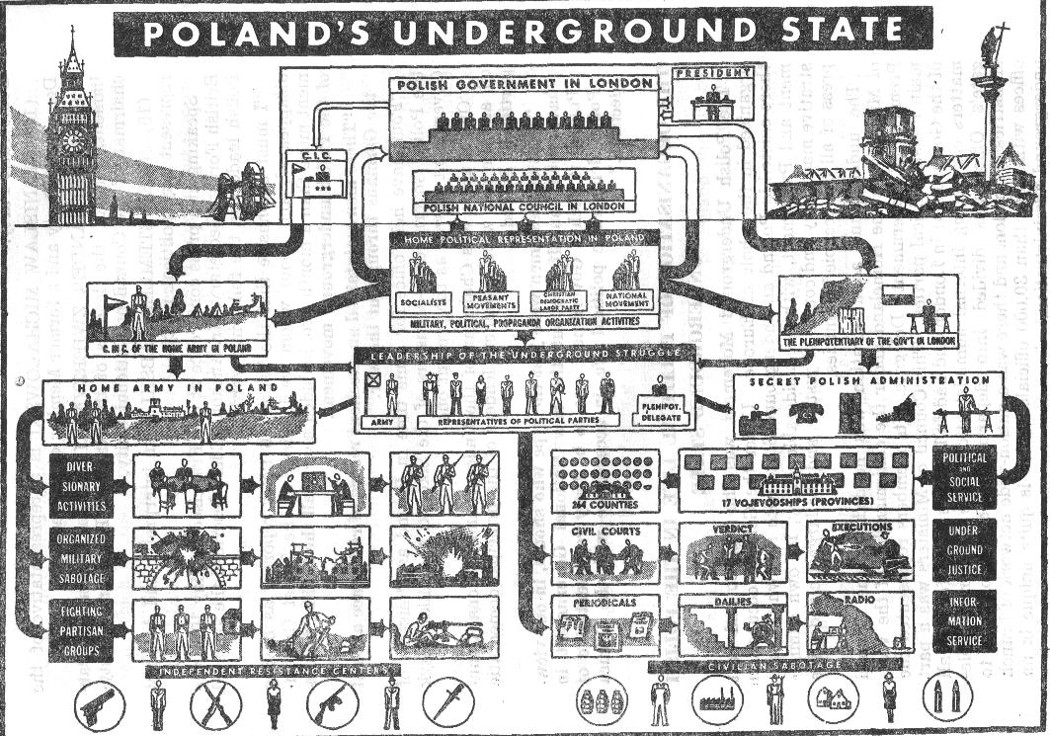
The Polish Underground State was a secret network of underground military and civilian resistance organizations, united in their support for the exiled Polish government and their opposition to foreign tyranny.

Established during the final stages of the German invasion (September 1939) the Underground State waged a subversive campaign against Nazi and then Soviet rule. Yet the state was not purely military in its structure; it also provided various civilian structures such as education and civil courts.

The Underground State enjoyed broad popular support during World War Two and its agents provided the British Intelligence with over 50% of its intelligence from the continent. Perhaps most famously, the Polish resistance movement discovered the Blizna V-2 rocket testing site in 1944 and even helped retrieve remnants of an actual missile from one of the impact sites.

A prominent American Diplomat, and influential American statesmen, Henry Kissinger is a name known around the world. Serving as National Security Advisor and later as Secretary of State under Presidents Nixon and Ford, he prioritised national interests over ideological concerns. Known for his involvement in significant diplomatic initiatives, including the opening of relations with China and the negotiation of the Paris Peace Accords, his influence was global. However, his actions and policies have also been subject to criticism, particularly regarding human rights abuses and covert operations during his tenure. So who was Henry Kissinger, and does he deserve the reputation he has? In this episode James welcomes Professor Thomas Schwartz from Vanderbilt University, to delve into the life and career of Henry Kissinger. Looking at his early childhood in Nazi Germany, his early political career and education, along with his involvement in the several global conflicts and peace agreements - is it possible to define who Henry Kissinger was, and what can we learn about his legacy?
Listen Now

One of the State’s most famous acts during the Second World War was their major role in the Warsaw Uprising of 1944. This planned revolt attempted to liberate Warsaw from Nazi occupation at the same time as the Soviets were advancing towards the city.

Although the uprising initially met with great success, their progress soon stalled. Following 63 days of fighting, the Germans suppressed the uprising while the Soviets stood idly by in the eastern suburbs of Warsaw.

Support for the Underground State splintered throughout the Soviet backed communist takeover. Abandoned by the Allies and deprived of key leaders – who either defected or were exterminated – many of the State’s key institutions dissolved themselves.

However the State as a whole survived two illegal occupations, from 1939 to 1990. Attempts to destroy the network only hardened the resolve and tacit support of millions of Poles to what they saw as the legitimate government under Polish law.

Alex Browne

Privacy Overview
History Hit

This website uses cookies so that we can provide you with the best user experience possible. Cookie information is stored in your browser and performs functions such as recognising you when you return to our website and helping our team to understand which sections of the website you find most interesting and useful.

Strictly Necessary Cookies

Strictly Necessary Cookie should be enabled at all times so that we can save your preferences for cookie settings.

If you disable this cookie, we will not be able to save your preferences. This means that every time you visit this website you will need to enable or disable cookies again.

Advertising

Tracks conversions from Microsoft Advertising and supports ad attribution and remarketing features. Enabled only if you consent to advertising cookies.