



Between the Norman Conquest and Magna Carta, no royal couple transformed medieval Europe more dramatically than Eleanor of Aquitaine and Henry II of England. Together they forged the Angevin Empire, a vast dominion stretching across England and much of France, and founded the Plantagenet dynasty, which would rule England for more than three centuries, from their ascension in 1154 until the death of Richard III in 1485.
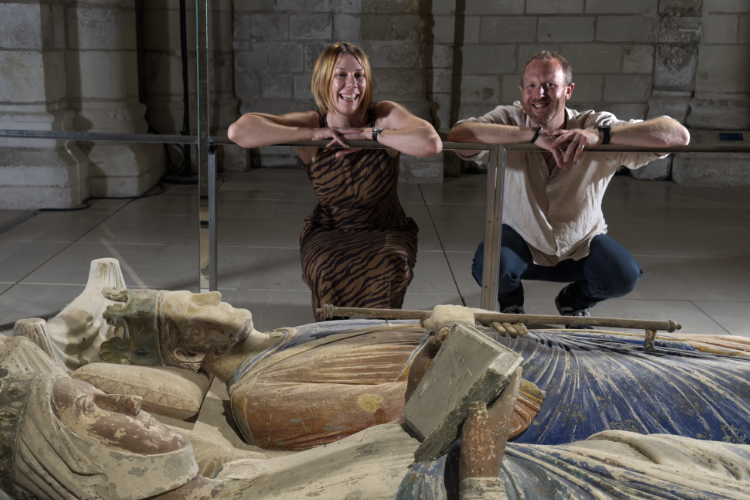
Yet behind their remarkable success lay one of history’s most turbulent marriages. Their relationship was defined by ambition, passion, rivalry, and eventual rebellion. Frequently divided by politics and war during their lives, they remain united in death at Fontevraud Abbey, where their effigies rest side by side.
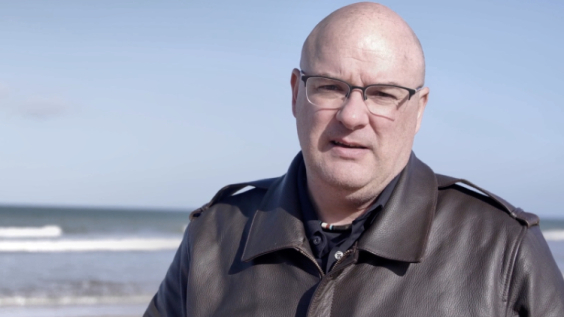
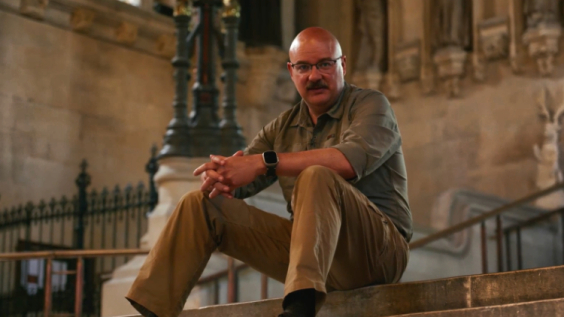
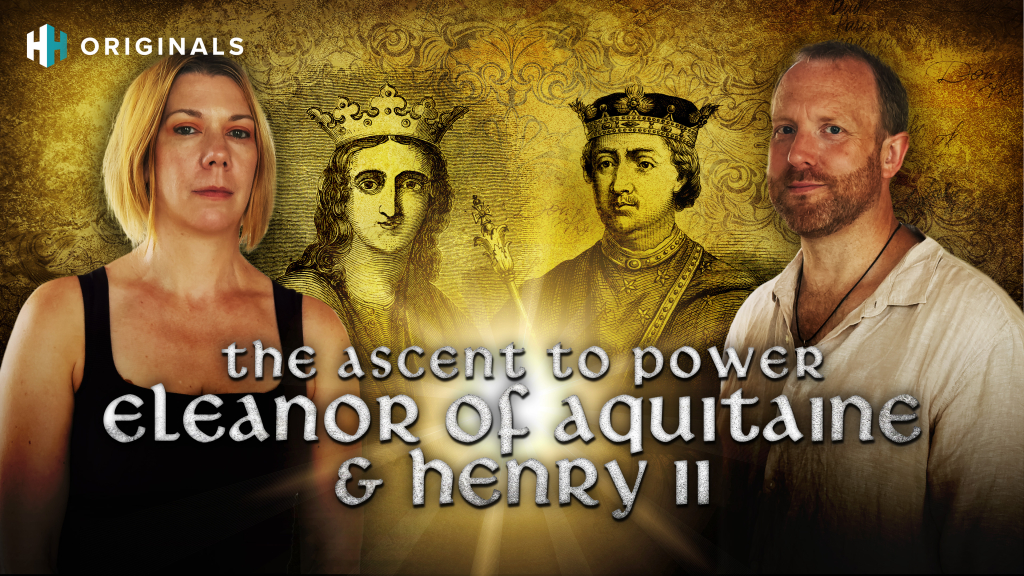
In History Hit’s documentary The Ascent to Power: Eleanor of Aquitaine and Henry II, historians Matt Lewis and Eleanor Janega trace the rise of these extraordinary figures. Janega follows Eleanor’s journey from the wealthy courts of southern France, while Lewis examines Henry’s struggle to reclaim his inheritance during England’s civil war. Together, their stories reveal how two formidable personalities created one of the most powerful partnerships of the Middle Ages.
 Watch Now
Aliénor: Heiress of Aquitaine
To understand Eleanor, one must first understand Aquitaine. 12th century southern France was culturally and economically distinct from the feudal north. The region of Occitania was renowned for its wealth, wine, and vibrant artistic culture.
Born Aliénor of Aquitaine, Eleanor belonged to one of Europe’s most powerful noble families. The Dukes of Aquitaine controlled vast territories and cultivated a sophisticated courtly world. Their wealth is still reflected in the grand halls of Poitiers, where magnificent architecture proclaimed their prestige.
Aquitaine was also the birthplace of the troubadours – poet-musicians who travelled between aristocratic courts performing songs of politics, satire, and love. Eleanor’s grandfather, Duke William IX, is widely regarded as the first troubadour, helping to establish a cultural tradition that spread across Europe.
When a series of family tragedies left 13 year-old Eleanor as sole heir to Aquitaine in 1137, she became the most desirable bride in Europe. Unlike many regions, Aquitaine permitted female inheritance, and Eleanor had been educated to rule. To secure this immensely valuable duchy, the French crown arranged her marriage to the 17 year-old Louis VII, who soon became King of France.

Eleanor Janega and Matt Lewis in Aquitaine vineyard
Image Credit: History Hit
A failed royal marriage
The marriage quickly proved ill-suited. Eleanor was confident, charismatic, and politically engaged. Louis was deeply pious, having originally been raised for a religious life before the death of his older brother unexpectedly made him heir.
As royal historian Professor Kate Williams explains in the documentary, Louis’s upbringing left him deeply uncomfortable around women. Although Eleanor eventually bore two daughters, the absence of a male heir placed increasing strain on the relationship. Hostile chroniclers and political rivals fuelled rumours and accusations that further damaged the marriage.

Eleanor Janega and Professor Kate Williams discuss Eleanor of Aquitaine and Louis VII’s marriage.
Image Credit: History Hit
By 1152 the union had collapsed. After years of tension, church authorities annulled the marriage on the grounds of consanguinity, ruling that the couple were too closely related as fourth cousins. Aged 28, Eleanor found herself divorced but still in control of one of Europe’s richest territories.
Her independence made her powerful, but also vulnerable. She needed a strong ally capable of protecting Aquitaine and preserving her authority.
Henry of Anjou
That ally emerged in the form of Henry of Anjou.
Born in 1133 in Le Mans, Henry was the son of Geoffrey of Anjou and the Empress Matilda, daughter of King Henry I of England. Following Henry I’s death, Matilda’s claim to the English throne was challenged by Stephen, triggering the prolonged civil war known as The Anarchy.
Henry grew up amid violence and uncertainty. From an early age he believed the English crown belonged to him by right and dedicated himself to securing it. Contemporary accounts portray him as energetic, intelligent, and relentless, with exceptional military ability matched by fierce ambition.
As Matt Lewis notes, Henry was a rare medieval ruler whose strategic brilliance matched his determination. By his late teens he was already leading campaigns and negotiating with powerful rulers across Europe.
The documentary highlights a remarkable piece of evidence from the British Library: a series of 12th-century horoscopes compiled by the scholar Adelard of Bath. Drawing upon newly translated Arabic astronomical knowledge, the charts reveal that King Stephen’s court was consulting the stars to predict whether the formidable young Henry would successfully invade England – the medieval equivalent of forecasting a looming political crisis.

Series of 12th-century horoscopes compiled by the scholar Adelard of Bath, at the British Lilbrary
Image Credit: History Hit / The British Library
The marriage that created an Empire
Henry and Eleanor first met while she was still Queen of France. Whether romance played a role remains uncertain, but both recognised the political advantages of an alliance.
Following her annulment, Eleanor is said to have approached Henry with the prospect of marriage. On 18 May 1152, just eight weeks after her separation from Louis VII, the 28 year-old duchess married the 18 year-old duke at Poitiers Cathedral.
The consequences were immense. Through their union, Aquitaine joined Henry’s existing territories of Normandy, Anjou, Maine, and Touraine. The balance of power in France shifted overnight, leaving Louis VII facing a rival whose lands far exceeded his own.
Eleanor soon gave birth to a son, William, strengthening the new dynasty and providing the heir Louis had never had.
Meanwhile, Henry continued his campaign for the English throne. In 1153 he forced King Stephen into a settlement recognising him as heir. When Stephen died the following year, Henry and Eleanor were crowned King and Queen of England.
Their accession marked the birth of the Angevin Empire, a realm stretching from the Scottish border to the Pyrenees and encompassing some of the wealthiest territories in Europe.
Ambition behind the crown
The documentary also challenges romanticised portrayals of Eleanor and Henry’s early relationship. While later generations often imagined a great medieval love story, the evidence suggests a partnership driven as much by political necessity as personal attraction.
Both were fiercely ambitious rulers determined to expand and defend their power. Their marriage united vast territories, strengthened dynastic claims, and transformed the political landscape of western Europe.
Yet the same qualities that made them such an effective team would later drive them into bitter conflict. During their rise, however, they proved formidable partners. In a fascinating discovery, Professor Nicholas Vincent examines a newly deciphered 12th-century manuscript containing the writings of the hostile chronicler Ralph the Black. Following this lead, Matt Lewis uncovers evidence that sheds new light on the realities behind the royal marriage – a relationship shaped not simply by romance, but by dynastic duty, political ambition, and a shared determination to wield power.

Professor Nicholas Vincent and Matt Lewis study Ralph the Black’s hostile 12th-century manuscript at The British Library.
Image Credit: History Hit / The British Library
The beginning of a dynasty
The story of Eleanor and Henry is ultimately one of resilience, ambition, and statecraft. Eleanor survived royal divorce and retained control of her inheritance in a world dominated by men. Henry emerged from civil war to become one of England’s most formidable monarchs.
Together they laid the foundations of the Plantagenet dynasty and created an empire that would shape the history of England and France for generations.
The Ascent to Power: Eleanor of Aquitaine and Henry II reveals how two extraordinary individuals transformed their fortunes – and medieval Europe itself – through a partnership that was as powerful as it was volatile.