



For nearly 1,000 years, historians and tradition held that King Harold Godwinson of England defeated the legendary Viking giant Harald Hardrada on 25 September 1066 at Stamford Bridge in Yorkshire. Boulders were placed, monuments erected, and streets named after the heroes and villains of that fateful day. Yet despite thousands of men clashing in brutal, hand-to-hand combat, no archaeology (no broken weapons, fragments of armour, or human remains) was ever found there.
Now, groundbreaking new evidence uncovered by metal detectorists and archaeologists is shattering the accepted history. In History Hit’s documentary 1066: The Lost Battlefield, Dan Snow follows a landmark investigation that pinpoints what’s now thought to be the real battlefield, roughly a mile south from its traditional location – unearthing weaponry and military gear that reconnect us with a pivotal moment in English history.
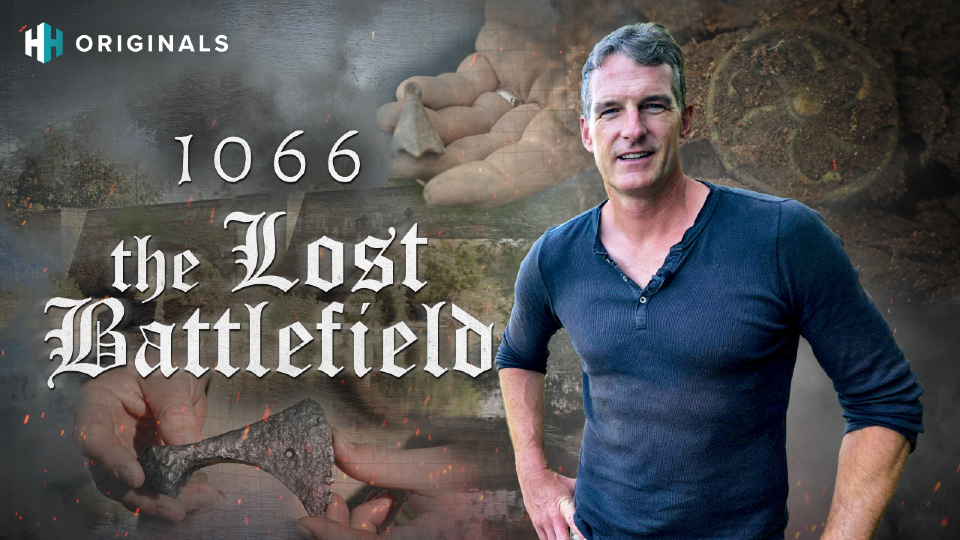 Watch Now
Unearthing the evidence
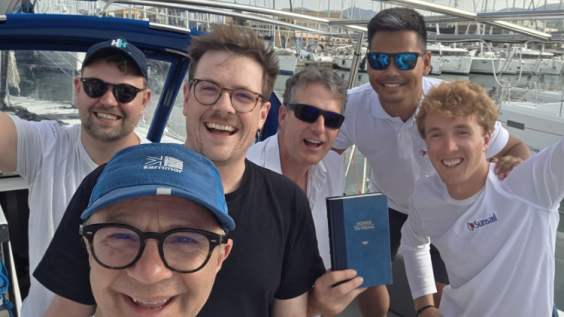
The search for the true site began when lead metal detectorists Simon Richardson and John Benfield, working alongside the Battle of Stamford Bridge Heritage Society, targeted an area near the village of Low Catton. Aerial surveys and crop marks revealed that during the 11th century, the main crossing point over the River Derwent was not the modern town site, but an older Roman bridge further south.

Stamford Bridge detectorists at work
Image Credit: History Hit
Armed with careful grid plans and working under strict archaeological licenses, the team began surveying the fields and the riverbed. What emerged was an extraordinary, concentrated concentration of 11th-century military artefacts. No civilian items were mixed in.

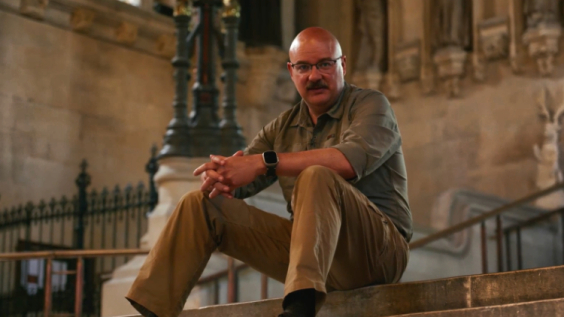
Metal detectorist Simon Richardson shows some of the finds to Dan
Image Credit: History Hit
Key discoveries uncovered:
- A Viking sword and armour: A heavy 11th-century iron sword pommel and shattered links from a riveted iron mail shirt (‘hauberk’)
- Buckled Weaponry: A sharp Viking battle-axe head with a unique wooden sheath peg-hole, alongside a S-bent Norwegian arrowhead that must have struck a hard target at high speed.
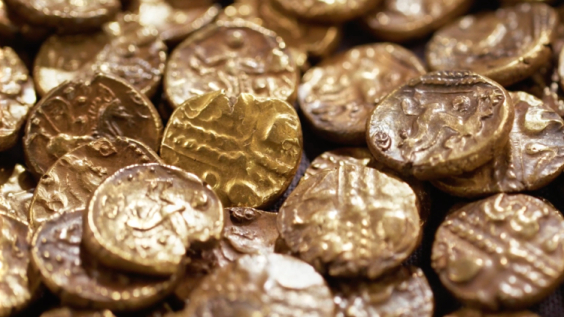
- River Artefacts: Massive hand-forged iron ship nails, bridge timbers, and a rare Khazar-style sword guard from Southeastern Europe – a tantalising link to Hardrada’s early career in the Byzantine Varangian Guard.

Some of the new discoveries
Image Credit: History Hit
The road to Stamford Bridge
To understand the importance of this discovery, Dan explores the events of the volatile summer of 1066. After the death of King Edward the Confessor in January, Harold Godwinson claimed the English throne. However, he faced immediate threats on two fronts: Duke William of Normandy in the south, and his own exiled brother Tostig, who allied with King Harald Hardrada of Norway, in the north.
Following their victory over Anglo-Saxon earls at Fulford on 20 September, Hardrada’s invading Norse forces marched to the River Derwent expecting a routine exchange of hostages.

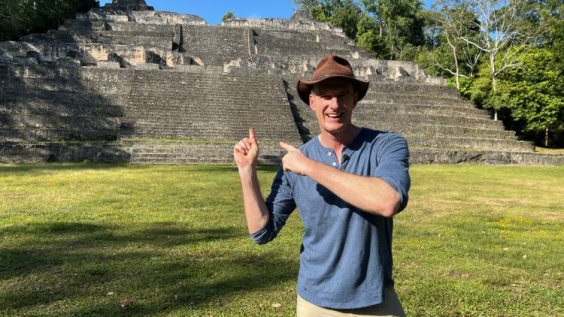
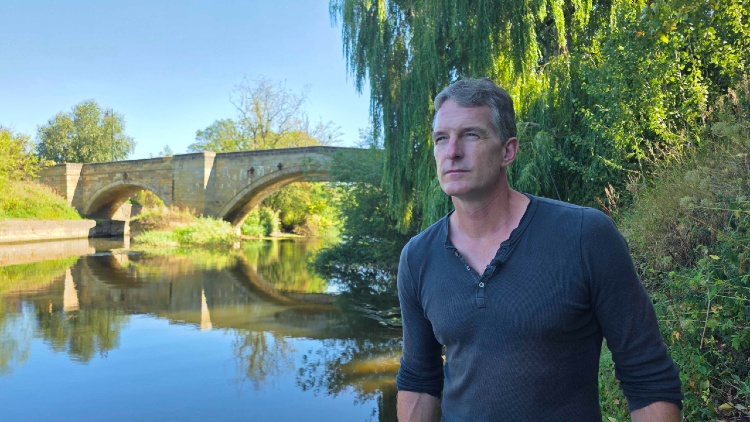
Dan by River Derwent
Image Credit: History Hit
Expecting no resistance, many of the Norse warriors left their heavy mail armour at their ships 10 miles away in Riccall. Unbeknown to the Vikings, King Harold had force-marched his English army 180 miles north in just five days, catching the invaders completely off-guard.
Despite ferocious resistance – including the legendary Viking warrior who single-handedly held the narrow wooden bridge until an Englishman pierced him from beneath – the unarmoured Viking’s desperate shield wall eventually collapsed. Although Viking reinforcements had rushed overland from Riccall to join the fray, they arrived exhausted and too late. By evening, both Hardrada and Harold’s traitorous brother Tostig were dead.

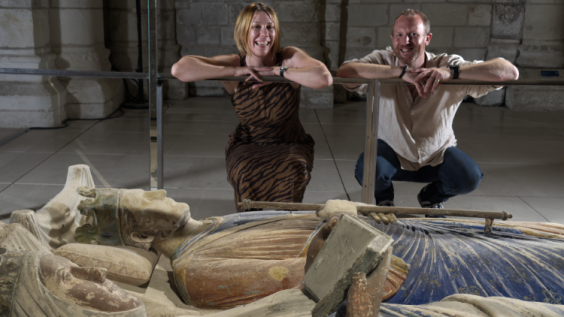
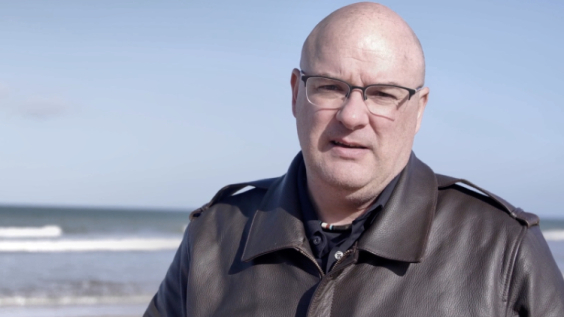
Lead metal detectorists Simon Richardson and John Benfield, working alongside the Battle of Stamford Bridge Heritage Society, with Bill Locke and Dan Snow from History Hit
Image Credit: History Hit
1066: The Lost Battlefield feels like a live-action archaeological detective story, pairing state-of-the-art metal detecting and river dives with historical chronicles and expert re-enactments to rewrite the story of this momentous day. Yet King Harold’s triumph would be fleeting. Just three days later, William, Duke of Normandy, landed near Hastings, setting the stage for the ultimate battle for the English crown.