


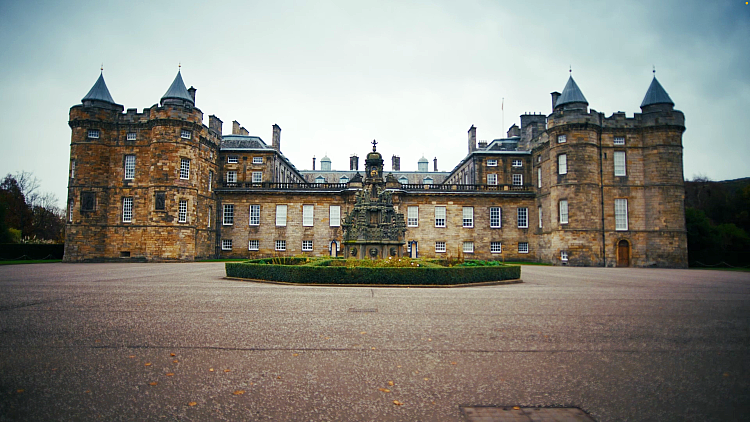

At the end of Edinburgh’s historic Royal Mile, framed against the dramatic, extinct volcanic crag of Arthur’s Seat, stands the Palace of Holyroodhouse, a building whose walls echo with nearly five centuries of bloody intrigue, dynastic ambition, and royal glamour.
Today, Holyroodhouse serves as the British monarch’s official residence in Scotland – a bustling venue for state ceremonies, garden parties, and diplomatic audiences. Yet beneath its pristine state apartments lies a darker, far more volatile past.
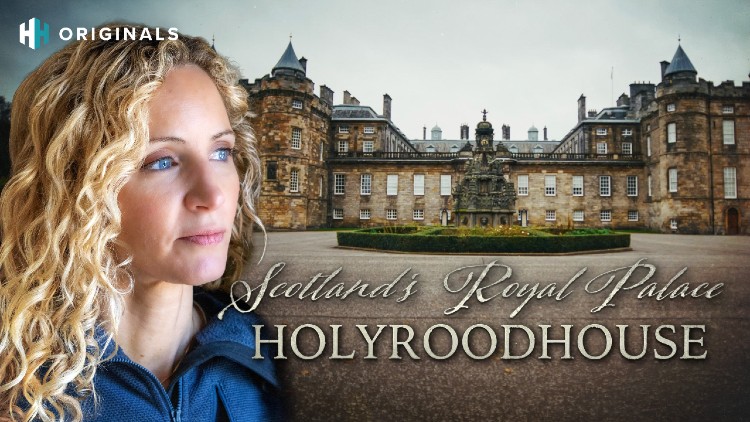
In Scotland’s Royal Palace: Holyroodhouse, historian Professor Suzannah Lipscomb takes viewers behind the scenes to explore a landmark celebrating over a century since King George V first opened its state apartments to the public. From the dark murder sites of the 16th century to the opulent reception rooms of the 20th, Suzannah unlocks the hidden treasures and turbulent memories embedded within this legendary palace.
 Watch Now
The Tower of Terrors: Mary, Queen of Scots
The story of Holyroodhouse as a royal epic truly begins in 1528 with the construction of its formidable Northwest Tower by King James V. Yet it was his daughter, Mary, Queen of Scots – who cemented the tower’s place in history.
Returning from France in 1561 as a 19-year-old widow shrouded in white mourning silk, Mary took up residence in Holyroodhouse to rule a fiercely divided, newly Protestant kingdom. Her private chambers quickly became the epicentre of high-stakes court drama and tragic bloodshed.
On the evening of 9 March 1566, one of the most brutal assassinations in royal history took place. As a heavily pregnant Mary dined with her closest confidants, her jealous husband, Henry Stuart, Lord Darnley, burst through a hidden spiral staircase accompanied by armed conspirators. They seized David Rizzio – Mary’s private secretary and close friend – and dragged him screaming through her bedchamber into the outer room, where he was stabbed 56 times.
Visitors to the palace can still view the very rooms where this harrowing attack occurred, standing on the floorboards where centuries of tourists have stared at the infamous “bloodstain” – a grisly reminder of a queen’s perilous reign (even if largely now acknowledged as Victorian dramatic licence).
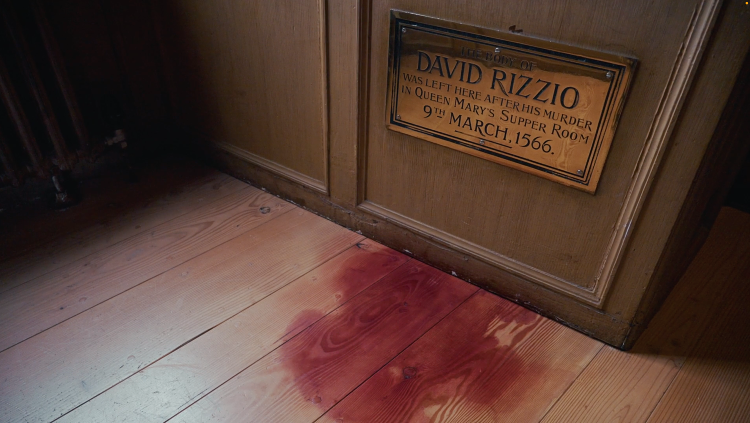
Rizzio’s alleged murder scene, complete with ‘bloodstain’
Image Credit: Holyroodhouse / History Hit
Coded jewels and Catholic martyrs
Suzannah’s journey through the palace highlights how history is preserved not only in architecture, but in extraordinary personal artefacts.
Among the palace’s most compelling treasures is a rare, graphic 17th-century portrait depicting Mary’s ultimate fate at Fotheringhay Castle in 1587. The painting captures her holding a crucifix and rosary alongside a vivid inset of her execution, explicitly framing Mary as a Catholic martyr for generations to come.
Equally breathtaking is the Lennox Jewel, a heart-shaped gold locket encrusted with rubies, emeralds, and intricate enamel work. Commissioned for Margaret Douglas, Countess of Lennox (mother of Lord Darnley), the jewel is packed with 28 secret symbols, allegorical figures, and coded inscriptions in Scots. Designed to be worn close to the chest, it secretly signalled the family’s desperate hope that Darnley’s son, the future King James VI of Scotland and I of England, would one day unite the crowns of both realms.
Propagandist painters and the ‘Stuart Nose’
When King Charles II set about remodelling Holyroodhouse in the 1670s into a harmonious, symmetrical Baroque palace, he commissioned Dutch artist Jacob de Wit to execute a monumental task: paint 110 portraits of Scottish monarchs for the palace’s Great Gallery – at a gruelling pace of roughly one portrait per week.
De Wit’s gallery stretches all the way back to Fergus, the mythical first king of Scotland, and includes a dark, brooding portrait of Shakespeare’s notorious Macbeth. To visually enforce the unbroken legitimacy of the Stuart bloodline, de Wit gave every single monarch – from legendary ancient kings to Mary, Queen of Scots – a striking, identical feature: the long, prominent “Stuart nose.”
Looking closely at Mary’s portrait in the gallery today, you can even spot a faint boot mark – a physical scar left by an English officer during an occupation of the palace centuries ago.
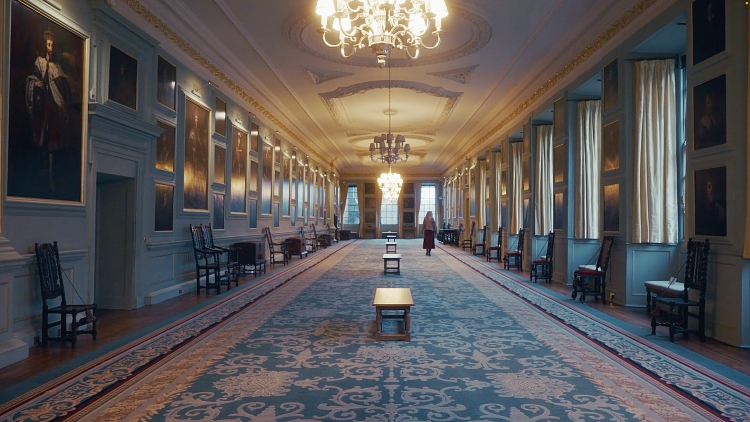
The Great Gallery at Holyroodhouse
Image Credit: Holyroodhouse / History Hit
Bonnie Prince Charlie’s six-week court
In 1745, the long-neglected palace roared back to life when Charles Edward Stuart – better known as Bonnie Prince Charlie – marched into Edinburgh aged 24.
Determined to reclaim the throne for his father, the young prince established a glittering temporary court at Holyroodhouse for six weeks. To win the hearts of the Scottish public and prove his divine right to rule, Charlie hosted lavish candlelit balls in the Great Gallery, dined in public view, and performed the ancient royal ritual of “touching for the king’s evil” to heal the sick.
Though his Jacobite dream collapsed seven months later on the bloody field of Culloden, the prince’s brief, romantic reign at Holyroodhouse left a lasting mark on the palace’s identity.

Bonnie Prince Charlie by John Pettie
Image Credit: John Pettie, Public domain, via Wikimedia Commons
From the ‘King’s Jaunt’ to a modern living palace
Holyroodhouse’s story is one of constant reinvention:
- The 1822 revival: King George IV arrived for a flamboyant visit dubbed the “King’s Jaunt” – being the first reigning monarch to visit Scotland in 171 years. Guided by historical novelist Sir Walter Scott, over 2,000 Scottish gentlemen and ladies flocked to the palace, with ladies instructed to wear headdresses featuring no fewer than nine court feathers and practice backing out of the royal presence without tripping over their trains.
- The 1920s transformation: King George V and Queen Mary modernised the palace with electricity and plumbing, turning it into a comfortable, functional modern residence. In 1925, they officially opened the 17th-century state apartments and throne room to the public, transforming Holyroodhouse into the first working royal palace where visitors could walk through the active quarters of the sovereign.
Step inside Scotland’s living history
As Robert Louis Stevenson famously wrote, the Palace of Holyroodhouse is “a house of many memories.” It stands as a magnificent, living timeline where political manoeuvring, tragic romance, and cultural transformation continue to unfold.
Join Professor Suzannah Lipscomb in Scotland’s Royal Palace: Holyroodhouse as she navigates the secret passages, grand galleries, and hidden chambers of this incredible national icon.