




This article is an edited transcript of Italy and World War 2 with Paul Reed, available on History Hit TV.
 Listen Now
The Italian campaign of September 1943 marked a real turning point in World War Two because Germany could no longer sustain a conflict on two fronts.
As the Allies pushed deeper into Italy, the Germans were forced to pull troops from the eastern front, just to stem the tide of the Allied advance – precisely what Stalin and the Russians had wanted. The Italians were also taken out of the war by the Allied assault.
The Germans were thus beginning to be stretched thin; therefore, when we look at the Allies’ success in Normandy the following year and the following 11 months of the campaign in north-west Europe, we should never see it in isolation.
German weaknesses

Allied troops arrive under shell fire during the landing at Salerno, Italy, in September 1943.
It is important to remember that what was going on in Italy was vital to tying up German forces there who could have been deployed to France or Russia. Events in Russia were equally vital to the Italian campaign and, eventually, to Normandy as well.
Despite the remarkable ability of the German army to put troops everywhere and to fight well, with this combined Allied effort German forces were stretching themselves so much that you could argue that the outcome of the war was almost guaranteed.
 Watch Now
Learning lessons
The Allies invaded Italy via Salerno and the toe of the country, arriving by sea. The invasion was not the Allies’ first amphibious combined arms operation – they had also utilised such operations in North Africa and in Sicily, which served as the staging post for the invasion of the Italian mainland.
With each new operation, the Allies made mistakes which they took lessons from. At Sicily, for example, they dropped glider troops too far out and, as a result, gliders crashed in the sea and many men drowned.
If you go to the Cassino Memorial in Italy’s Province of Frosinone today, you will see the names of men from the Border and Staffordshire Regiments who sadly died in the sea when their gliders hit the water rather than land.
Of course, as the memorial demonstrates, the lessons learnt from such mistakes always came with a cost, whether a human cost, a physical cost or a material cost. But lessons were nonetheless always being learnt and the Allies’ capacity for, and skill at, carrying out such operations was subsequently always improving.
By the time it came to invading Italy, the Allies were ready to roll out their first large-scale D-Day-style operation on the European mainland.
 Watch Now
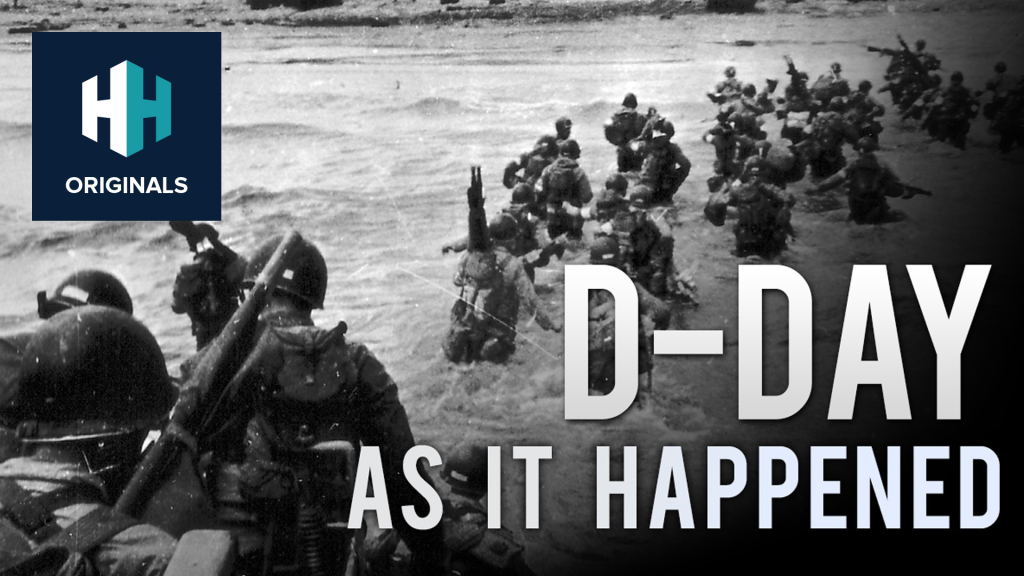
Less than a year later, the Allies would launch their invasion of France – codenamed “Operation Overlord” – with the Normandy landings, what remains the largest amphibious invasion in history.