


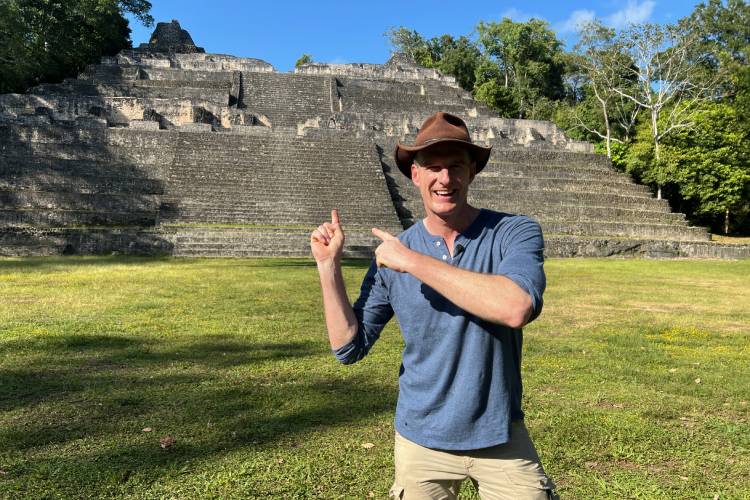

For generations, popular imagination has viewed the ancient Maya through a hyper-dramatic lens: an enigmatic people who built monumental stone temples, devised an apocalyptic calendar, and suddenly vanished into thin air.
But as Dan Snow reveals in History Hit’s gripping documentary, Secrets of the Maya, the true story is far more sophisticated. Travelling through the rugged terrain of Belize – the absolute crossroads of the ancient Maya world – Dan joins pioneering archaeologists to strip away the overgrowth. What they uncover is not a short-lived empire like the later Aztecs or Incas, but an astonishingly urbanised, interconnected network of independent kingdoms that flourished for more than 3,000 years.
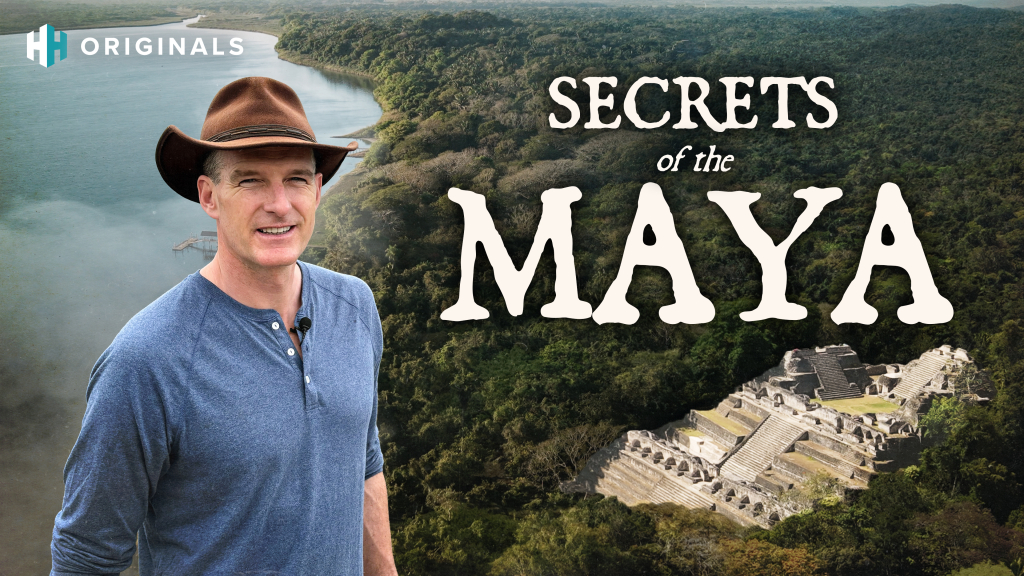 Watch Now
Terraforming the jungle: the sprawl of Caracol
Deep in the jungles of western Belize lies Caracol, a vast ancient metropolis that at its peak around 650 CE stretched across 200 square kilometres – vastly larger than modern-day Belize City.
Dan meets archaeologists Drs. Arlen and Diane Chase. When they first arrived in the 1980s, the site was invisible, buried beneath centuries of dense jungle growth. Early explorers had even mistaken its colossal central structures for natural hills.
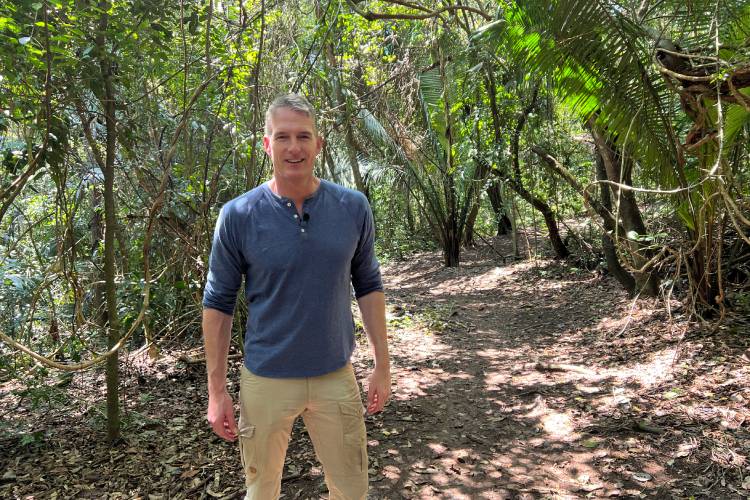
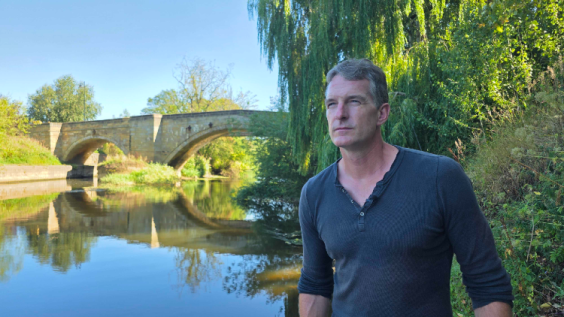
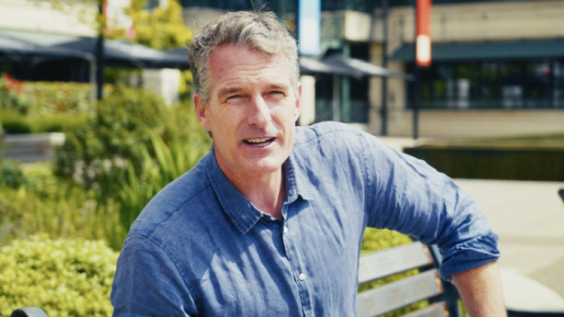
Dan in the jungles of western Belize
Today, the excavated, uncovered downtown core is dominated by Caana (Maya for “Sky Place”), a breathtaking palace-temple complex that, at 141 feet tall, remains the tallest building in Belize.
What makes Caracol a true revelation is its progressive layout. Rather than an elite enclave isolated from the working class, it was a highly integrated “sprawl city” where different social classes lived side-by-side.
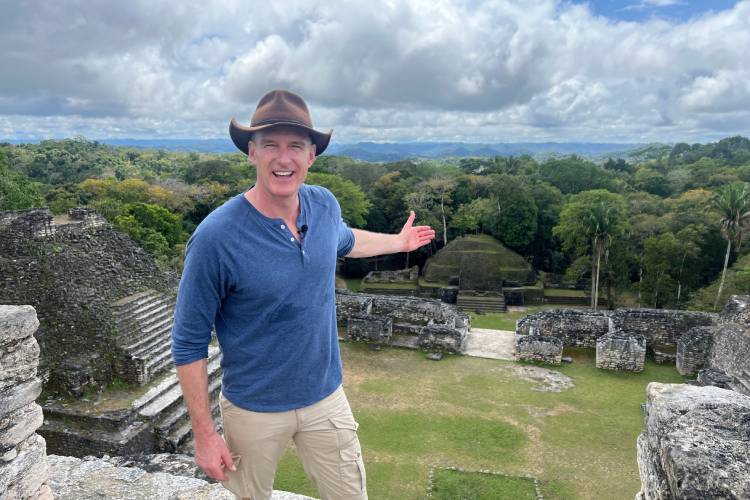
Dan on top of pyramid in Caana, Belize
Equally staggering is how the Maya sustained an urban population of over 100,000 people deep within a jungle isolated from major rivers. They were master environmental engineers who “terraformed” the landscape. By constructing thousands of agricultural terraces and practicing intensive “night soiling” – recycling waste into high-phosphorus fertiliser – they generated exceptionally fertile soils. At its height, Classic Period Central America was one of the most densely populated and urbanised landscapes in the ancient world.
Face-to-Face with a founding king
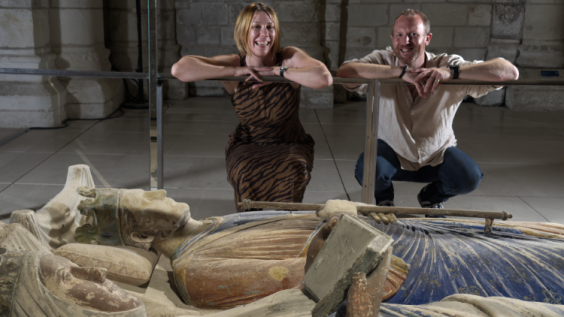
The documentary captures an unforgettable milestone in Mesoamerican archaeology: the discovery of a pristine, open-air royal tomb tucked beneath a residential terrace wall. Unveiled by Diane Chase after 40 years of digging, the chamber yielded an extraordinary treasure – a life-sized royal death mask meticulously crafted from jadeite and shell.
In Maya culture, jade was a sacred gemstone synonymous with water and the immortal soul. Because jade does not occur naturally in Belize, this find tracks extensive trade routes reaching deep into the Motagua River Valley of Guatemala, hundreds of miles away.
Crucially, this tomb aligns perfectly with Caracol’s complex hieroglyphic record. The elaborate logo-syllabic script – which experts only began decoding in the late 20th century – identifies the occupant as Tikab Chahk, the legendary founding king who established Caracol’s royal dynasty in 331 CE.
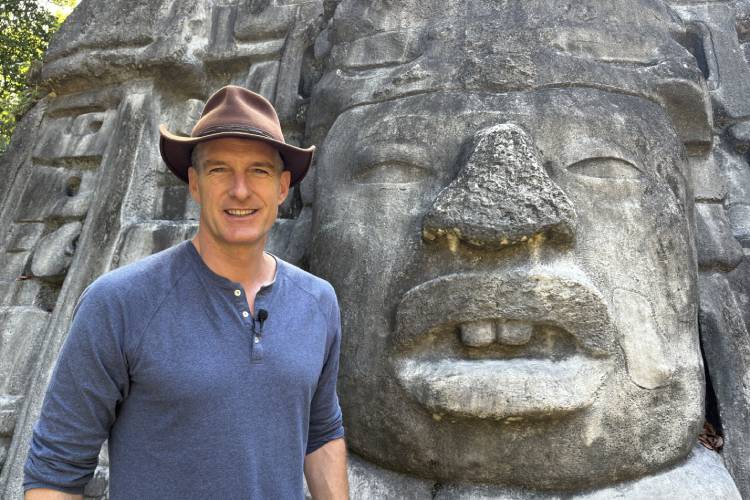
Dan by a monument to Tikab Chahk
Image Credit: History Hit
Into the womb of Earth
To explore the spiritual forces that bound this society together, Secrets of the Maya plunges deep into the restricted underground limestone caverns of Belize. The Maya viewed this subterranean world as a sacred, liminal zone – the womb of Mother Earth and the gateway to the supernatural underworld.
Guided by local archaeologist Rafael Guerra, Dan enters a dramatic, subterranean world discovering ancient stone altars surrounded by millennia-old offerings. But when severe environmental crises and prolonged droughts pushed these communities to the absolute edge of survival, the rituals turned grim. The team confronts haunting evidence of the ultimate sacrifice: the remains of high-status individuals offered to the dark in a desperate bid to appease the rain gods.
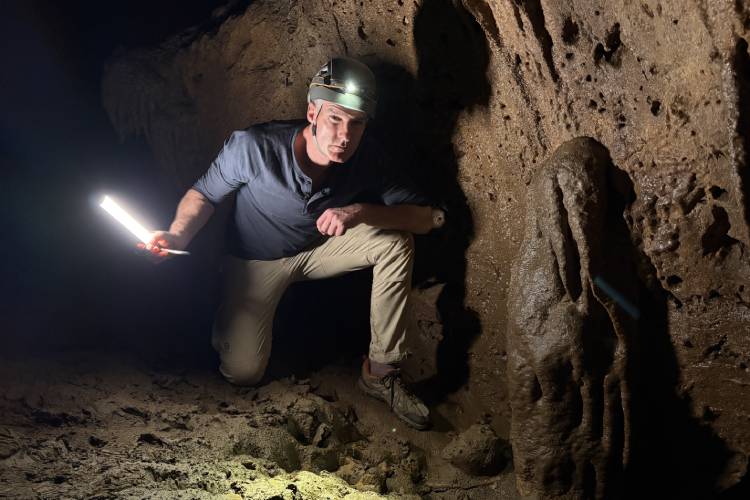
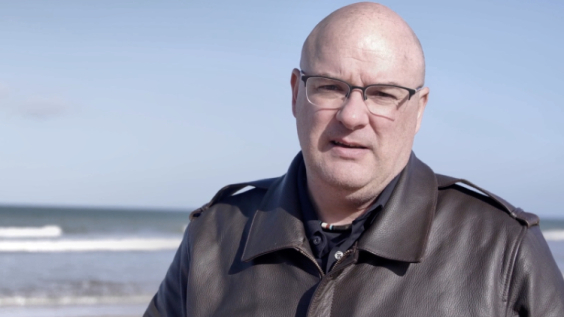
Dan heads deep into restricted underground limestone caverns, Belize
The living legacy: adaptation and survival
The climax of the documentary tackles one of the grandest historical mysteries of all: what actually caused the great Maya collapse between 800 and 950 CE? To find the answer, Dan travels by water to the coastal ruins of Lamanai (“Submerged Crocodile”).
While inland super-cities like Caracol buckled under severe droughts, Lamanai’ unique access to a massive fresh-water lagoon allowed it to thrive for centuries longer, surviving right up to the arrival of European explorers, meeting them face-to-face.
When climate change destabilised the inland kingdoms, the populations didn’t mysteriously vanish; they adapted, overthrew the rulers who failed to conjure rain, and migrated to reshape their society.
Ultimately, Secrets of the Maya delivers an inspiring conclusion: the Maya are not a lost, dead civilisation. Today, their descendants make up over 10% of Belize’s population. Witnessing modern families grinding corn on four-generation metate stones, preparing elite cacao drinks, and playing Pokta-Puk – the oldest team sport in the world – proves that the real secret of the Maya is their magnificent, unbroken survival.
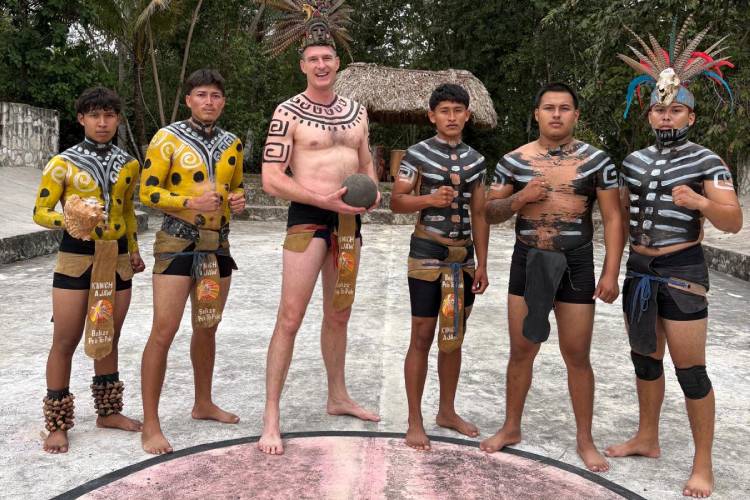
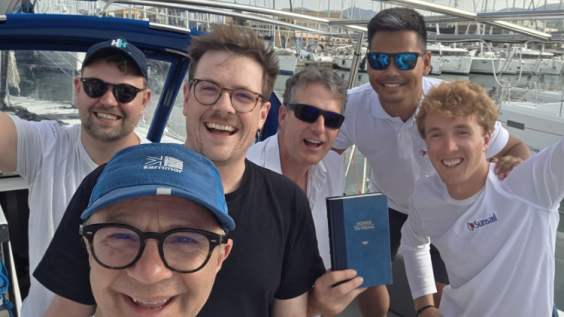
Dan with a Pokta Puk team
Image Credit: History Hit