




The year 2026 marks a monumental milestone in global history: the 250th anniversary of the United States Declaration of Independence. To commemorate the birth of a nation that transformed the modern world, History Hit has been granted unprecedented access to a collection of highly significant documents preserved within the conservation area of the UK’s National Archives in London.
In History Hit’s powerful documentary, American Revolution: Declarations of War and Independence, Dan Snow meets specialist curator of the Revolution 250 exhibition Dr. Graham Moore to examine these historic original papers. Together, they strip away centuries of myth to reveal a complex, transatlantic story of shifting identities, political gambles, and hidden ciphers.
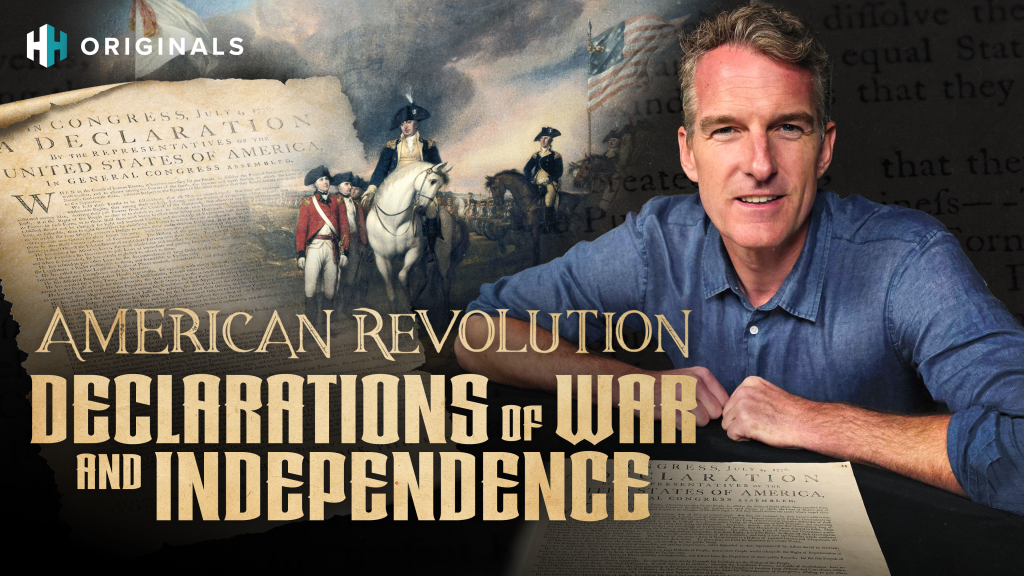 Watch Now
Redrawing the imperial map
The story of the American Revolution does not begin with an innate desire for separation, but with a shared triumph. Following the conclusion of the Seven Years’ War in 1763, Great Britain found itself victorious but saddled with a massive mountain of war debt, along with a vastly expanded global empire, including newly acquired territories in Canada and Florida. Parliament’s solution was to bring the structurally disparate, self-governing 13 colonies under tight imperial control – and force them to pay for their own defence.
In the documentary, Dan and Graham examine a striking, original land agreement from upper New York between British colonists and representatives of the Mohawk Nation. Signed with clan pictograms of wolves and turtles, it illustrates Britain’s early attempts to enforce a hard colonial border along the Appalachian Mountains to protect indigenous alliances.
However, imperial management required direct revenue, leading to the fateful passage of the Stamp Act of 1765. By levying the first direct parliamentary tax on everyday items like legal documents and newspapers, Britain inadvertently alienated colonial lawyers and journalists. This sparked an ideological resistance under the battle cry of “taxation without representation,” setting the colonies on a path toward open defiance.

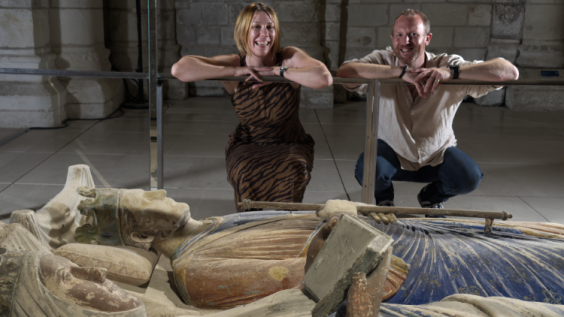
Dan Snow with Dr Graham Moore, Curator, Revolution 250, National Archives in Kew
Image Credit: History Hit
Mid-Atlantic crossroads: The lost chance for peace
By April 1775, political friction erupted into open warfare at Lexington and Concord. In the Archives’ conservation room, Dan analyses the original, meticulously penned British casualty return from that bloody encounter, signed by General Thomas Gage.
Yet, the documents reveal that total war was not yet inevitable. In July 1775 – a full year before the push for independence – the Continental Congress drafted the “Olive Branch Petition.” Looking closely at the signatures of Thomas Jefferson, Benjamin Franklin, and John Hancock, Dan notes the remarkably deferential language. The colonists still saw themselves as faithful British subjects arguing for their constitutional rights, explicitly praying for King George III to enjoy a long, prosperous reign.
Tragically, this message of peace crossed paths mid-Atlantic with the British government’s hardline response. Unwilling to concede to armed rebellion, George III issued the “Proclamation of Rebellion”, declaring the colonies to be in open treason and authorising full military force to suppress them. The window for a political solution slammed shut.
200 copies that changed the world: 4 July 1776
By the summer of 1776, compromise had transformed into a demand for complete severance. The documentary features an unparalleled look at one of the few surviving original broadsides of the Declaration of Independence, run off the Philadelphia printing press of John Dunlap on the night of 4 July 1776. Designed to be distributed quickly and pinned up on public walls, only 26 of these original copies survive today – and the National Archives holds the largest single collection of them.

One of the few surviving original broadsides of the Declaration of Independence
While the document contains the immortal philosophy of “life, liberty, and the pursuit of happiness,” the bulk of the text is actually a highly specific legal indictment directly targeting George III. The copy Dan examines was intercepted and sent to London by Vice Admiral Richard Howe, who noted how the declaration immediately upended the geopolitical landscape – prompting General George Washington to refuse any British correspondence unless it formally recognised his independent military titles.
The logistical end of an empire
As the conflict wore on, the theatre of war expanded into a global struggle. The documentary masterfully illustrates the final military endgame in 1781 through a highly sensitive, coded letter written in a complex military cipher between British Commanders Henry Clinton and Lord Cornwallis. Using a cipher wheel to decode the text, the film reveals the exact, breathless moment the British realised Washington and a massive French army were closing in on Yorktown, trapping Cornwallis by land and sea.
Following Cornwallis’s inevitable surrender, the legal end of British rule was codified in the 1783 Treaty of Paris. Dan examines the provisional draft of the treaty, bearing the signatures of Benjamin Franklin and John Adams, where the British Crown finally recognised the United States as sovereign and independent states.
To conclude this fascinating exploration, the documentary unveils a jaw-dropping artefact recently restored by archive conservators: a gargantuan, meticulously detailed ledger documenting every single piece of army storage used by the British in New York during the final evacuation of 1783. Listing precise figures – from 7,000 hatchets to exactly 138,816 pins, alongside millions of pounds of beef and thousands of gallons of rum – this massive “18th-century spreadsheet” brings home the staggering financial and logistical cost that ultimately forced Britain to cut its losses and let go of the 13 colonies.

Dan Snow and Dr Graham Moore view the meticulously detailed ledger documenting every piece of army storage used by the British in New York during the final evacuation of 1783
By grounding the grand narrative of the war in the physical reality of the papers, ciphers, and ledgers that directed it, American Revolution: Declarations of War and Independence reminds us that while wars are fought on the battlefield, empires are won and lost on paper.
Watch American Revolution: Declarations of War and Independence on History Hit to see these fragile, world-changing documents up close and discover the hidden logistics behind the birth of the United States.